








Truth and Reconciliation Commission to investigate Duterte's war on drugs
Announced yesterday, the body includes Cardinal David, bishop of Kalookan, former International Criminal Court Judge Pangalangan, and a prominent medical doctor. It will assist survivors and grieving families in their quest for the truth about one of the most painful chapters in the country’s recent history. Reports and recommendations on its work will be published every six months.
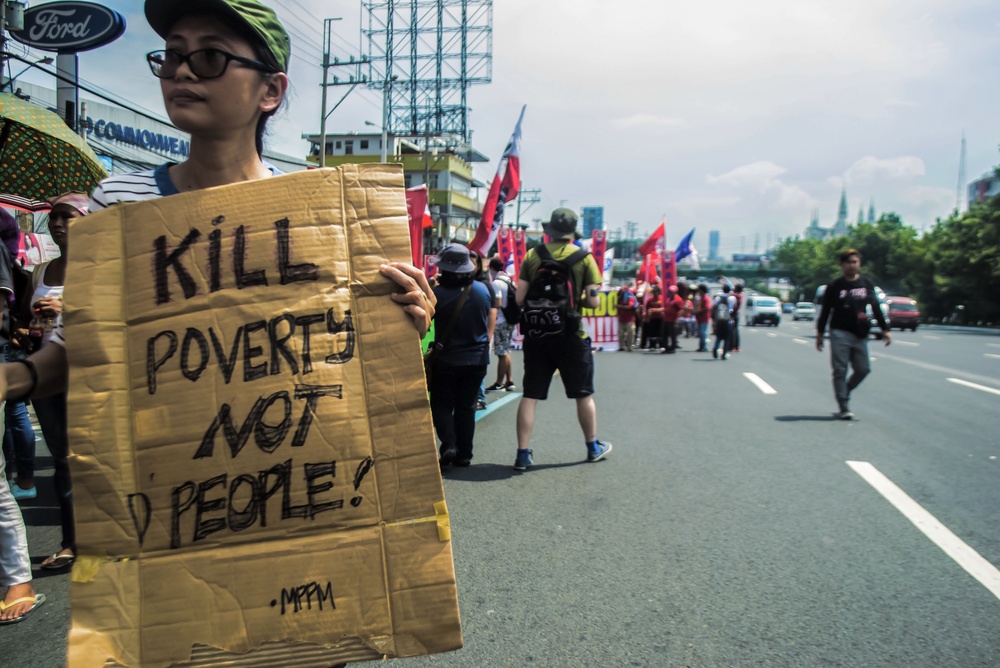
Manila (AsiaNews) – In an effort to heal the still-open wounds of a significant part of the country, an independent, civilian-led Truth and Reconciliation Commission on Extrajudicial Killings (EJK) was established yesterday.
The new body aims to serve as a reliable public archive of past extrajudicial executions and related violations, particularly during the "war on drugs" waged by former President Rodrigo Duterte.
The EJK commission, which will also assist survivors and grieving families in their search for the truth, healing, and reconciliation, was convened by Cardinal Pablo Virgilio S. David, who will serve as its advisor.
Other members include former International Criminal Court Judge Raul Pangalangan, forensic pathologist Raquel Fortun, peace-building activist Al Fuertes, theologian Father Daniel Franklin Pilario, and human rights activist Carlos Conde.
The commission's primary task is “finding out the truth”, which currently lies buried alongside victims killed during anti-drug operations, Cardinal David said, because they were said to have "fought back”.
“What really happened? Did they truly fight back? How did we so easily accept that thousands of Filipinos all resisted arrest?” the prelate said.
The truth commission, Cardinal David explained, plans to help the victims, their families, and even repentant law enforcement officials finally find closure for one of the most painful chapters in the country’s recent history.
“This is an opportunity for a catharsis . . . so we can recover our dignity as a country,” David said. “Ultimately, what we aspire for is healing not only for the victims but also our institutions.”
According to the prelate, the commission will not replace the courts or determine criminal liability for individuals connected to anti-drug operations and related abuses.
“The court looks for criminal liability; the Truth Commission seeks a deeper truth,” added the bishop of Kalookan, who chaired the Catholic Bishops' Conference of the Philippines from 2021 to 2025.
For David, civil society movements, academia, religious groups, and others should cooperate with the commission in its investigation, to end a national rift and help in the healing of affected communities.
“As long as wounds continue to bleed and the pain, trauma, and grief of families remain unrecognized, our nation cannot truly heal,” David said.
The commission’s chairman, Raul Pangalangan, who served for years as a judge on the International Criminal Court (ICC), said the commission he will head “was created to ensure that the stories of victims, survivors and families are heard, verified and preserved.”
“This,” he explained, “is not about replacing the courts or assigning guilt. It is about building a credible truth record that can guide accountability, healing, reform, and the prevention of future violence”.
The commission stated that hearings may be public, semi-public, or confidential, depending on the consent of the victims, security concerns, and the needs to protect witnesses.
The work will be non-adversarial and survivor-centred. Its safeguards aim to document lived experiences, institutional patterns, and the broader social effects of violence.
The commission will issue periodic reports and recommendations every six months to institutions, including the Commission on Human Rights, Congress, the National Police Commission, and the president.
Ultimately, the government will be able to use its findings in the investigations and pursue accountability.
According to truth commission member Raquel Fortun, a forensic pathologist with the state-run University of the Philippines, ascertaining all the details of the alleged killings will be hard, as some officers involved in the killings have attempted to evade accountability.
For example, after Duterte left office, the death certificates of 13 suspected drug traffickers whose remains were exhumed, listed natural causes, such as heart attack and pneumonia, as the cause of death.
“When I examined the remains, I found that they were hit by gunfire,” he said.
Duterte is currently before the ICC in The Hague, Netherlands, for alleged crimes against humanity related to his brutal war on drugs, which claimed thousands of lives.
President from 2016 to 2022, he was arrested in 2025 and taken to Europe to appear in court. His trial is scheduled to begin on 30 November.

.png)










