

Milan (AsiaNews) – “May the intercession of the Queen of Heaven grant the believing community in China the grace of unity and give everyone the strength to witness the Gospel in their daily struggles, so that they might be seeds of hope and peace,” said Pope Leo XIV said last Sunday at the Regina Caeli.
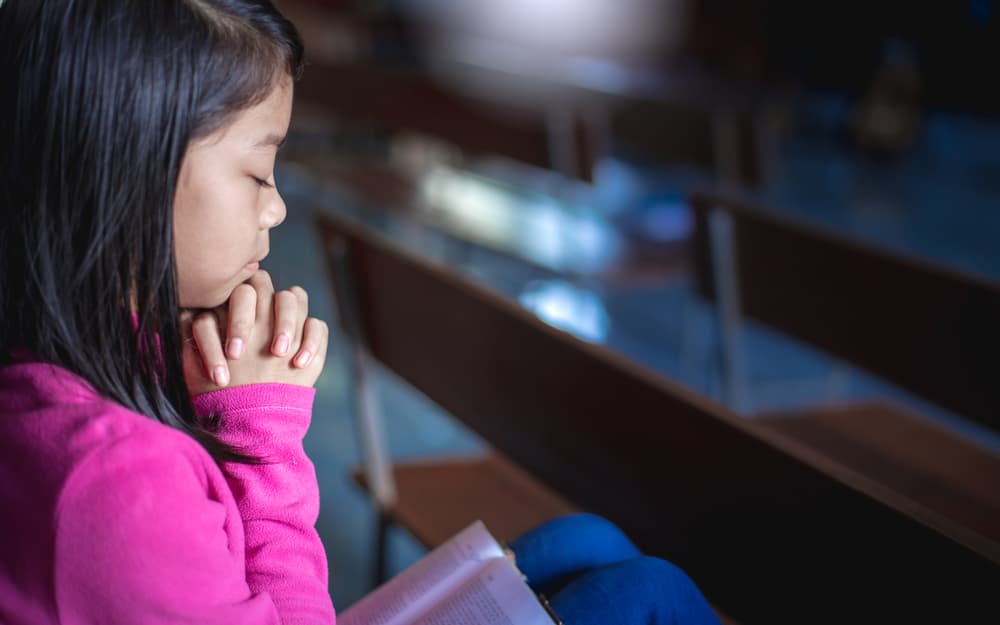
With this intention, the pontiff called on the faithful to mark the Day of Prayer for the Church in China, celebrated on the feast of Mary Help of Christians, venerated in the Shrine of Sheshan. Yet, Chinese Catholics increasingly face the challenge of the strict enforcement of the ban on minors' participation in religious activities.
Such a restriction, applied to all religions, and described as a “protective administrative procedure”, actually represents a serious violation of religious freedom and a clear obstacle to Christian witness. Regarding this topic, we publish below a reflection written by a priest living in the People's Republic of China, which was sent to AsiaNews.
There is one thing that I have never been able to understand. Today, a minor can enter a shopping mall, watch short videos until late at night, access all sorts of chaotic information on the Internet, or even go to many entertainment venues with no one trying to stop them.
Yet, when a child wants to enter church, he or she is stopped at the door by a sign: “Minors not allowed”. I would really like to ask a question: Who could be threatened by a child sitting calmly in church?
Many view the ban as part of “ordinary administration”, but this is precisely the problem: the administration cannot deprive people of their fundamental rights.
A child might only go along with their parents to Mass; maybe they might just want to listen to hymns, or maybe just to look at the Bible. Perhaps the child might simply want to sit in silence in church for a while. What is so dangerous about that?
Children coming into contact with faith is something that does not deserve monitoring. What truly needs to be monitored is a society that begins to fear children who come into contact with the true, the good, and the beautiful.
For now, let us talk about the law, not religion. According to Article 36 of the Constitution of the People's Republic of China, citizens enjoy freedom of religious belief. Note: the law says “citizens”, not “citizens over 18”.
Furthermore, a child is first and foremost a “citizen”, then, and only then, a "minor”. Children too, according to the law, enjoy equal personal dignity, the right to spiritual growth, access to culture, and fundamental rights.
If a child is not even allowed to enter a religious building, then you tell me: Who will respect their spiritual world?
Today, many people discuss every day teenage depression, anxiety, school bullying, spiritual emptiness, confusion of values. Yet, those venues that originally helped people calm down, discover love and forgiveness, learn respect for life, as well as moderation and kindness – i.e. churches – are in some places directly off limits to children.
Is this not a contradiction?
On the one hand, we worry that, “Children don't have spiritual strength;” on the other, we tell them: “You can't connect with the spiritual world.”
A truly mature and self-confident society will never be afraid of young people reflecting on questions like: Why we live? What is truth? What are good and evil? What is called conscience?
All great civilisations understand that the true future of a nation does not depend only on skyscrapers, or the economy, but relies even more on whether the new generation has a soul, a sense of the sacred, whether it has a sense of values or not.
If a society allows children to wallow in consumerism, in entertainment, and is only afraid of children coming into contact with faith and meaning, then children are really no longer the real issue.
Of course, we understand the concerns of managing reality; not imposing religious activities, not engaging in extreme indoctrination, not exploiting minors: all of this should be taken seriously. But "avoiding imposition" and "banning entry to church" are two completely different things.
We cannot, out of fear for "indoctrination”, deprive children of the opportunity to experience faith, learn about religious culture, and accompany their parents in worship.
The true level of civilisation of a society is not determined by how many skyscrapers it has; but rather by the following: When a child begins to search for meaning, is this society willing to open a door for him or her, or does it quickly shut it?
What is truly dangerous is having children never enter a church. What is truly dangerous is an age that systematically deprives children of the opportunity to connect with truth, goodness, and beauty.
If one day even a child sitting quietly in church arouses “uneasiness”, then what we should really reflect upon is the age itself, not children.














