








1 May in Seoul: Clash over bonuses for Samsung workers
A trade union is threatening an 18-day production stoppage if its demand for bonuses proportional to the group’s record revenues is not met. The production halt would create a shortfall of nearly 0 million. President Lee calls on workers and trade unions to act “responsibly” against excessive demands and urges greater “solidarity”.
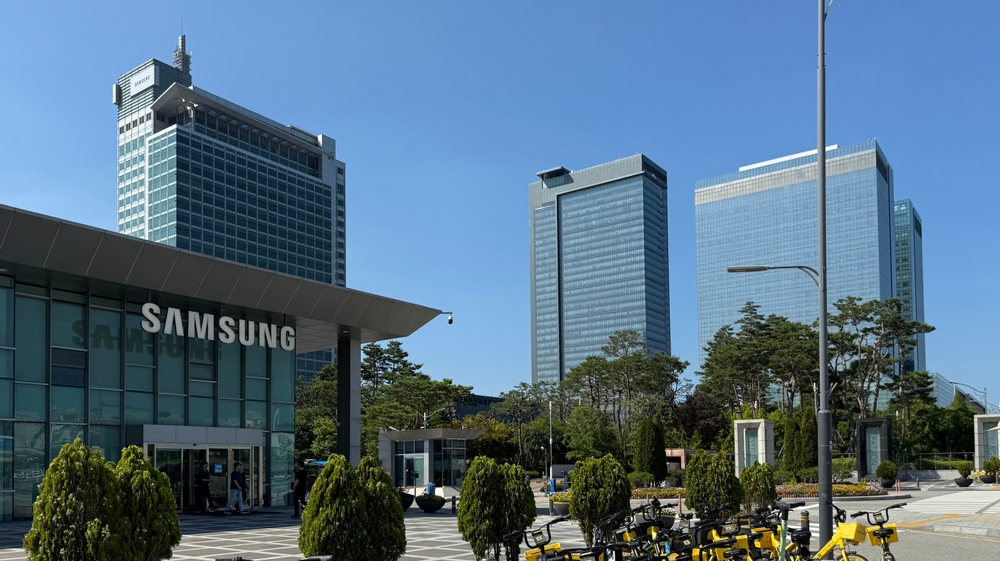
Seoul (AsiaNews) - On the occasion of Labour Day, celebrated today, 1 May, South Korean President Lee Jae Myung has warned against “excessive” demands regarding rights and protections, which would ultimately harm both trade unions and colleagues, whilst calling for a more “responsible” approach.
“Whilst companies should treat workers as valuable partners in business management, workers and trade unions,” warned the head of state during a meeting with staff at Cheong Wa Dae (the Blue House, the presidential residence), “must also have a sense of responsibility.”
The South Korean leader’s remarks yesterday come at a turbulent time for the country, with a major union within Samsung Electronics Co. threatening to call an 18-day general strike starting on 21 May. Among the demands made to the company is for bonuses to be paid in proportion to the record revenues recorded recently. However, analysts and scholars note that a strike of such a large scale could cause operational losses of up to 10 trillion won (673.6 million dollars).
“If certain trade unions promote public protests for excessive, unjust or self-serving demands, they would harm,” warns President Lee, “not only the unions themselves but also other workers.” Hence the call for greater “solidarity” amongst fellow workers.
Yesterday morning, Samsung itself acknowledged that its first-quarter net profit had increased more than fivefold, reaching 47.22 trillion won from the previous year’s 8.22 trillion won. This surge is linked to robust demand for high-end memory chips used in artificial intelligence (AI) applications. “At a time when the transition to artificial intelligence is exposing the labour and industrial sectors to fundamental change,” he emphasised, “there is a need for a spirit of coexistence and cooperation to overcome this critical challenge.”
Finally, the Head of State also noted that 1 May is being recognised as an official public holiday for the country for the first time, whilst stressing the need for greater efforts to reduce market disparities and ensure workplace safety.
He warned that last month’s sharp rise in production costs could lead to increases in consumer goods prices within the next two months, urging officials to make every effort to stabilise the situation. Of particular concern are the costs of agricultural, livestock and fisheries products, alongside logistics, which require more effective stabilisation policies.
At this stage, as the Head of State noted, the situation involving the tech giant Samsung Electronics is a cause for concern, with trade unions on a war footing in an attempt to secure higher production bonuses in line with the revenue boom.
Beyond the potential losses the strike could cause the company – estimated at nearly 0 million – and possible disruptions to the global memory chip supply chain, this threat poses a broader test for Korea: it raises questions about how windfall profits should be distributed, what the future implications might be in similar disputes, and how public opinion and political interests could influence the outcome.
Another aspect that makes this strike threat noteworthy is the limited support it has garnered. Even considering that the union leading the dispute among the five – the Samsung Electronics Labour Union (SELU) – is not affiliated with either of the two Korean trade union confederations, politicians and civic groups have largely refrained from expressing solidarity. Even the pro-worker administration of Lee Jae Myung has expressed opposition to the potential strike, indicating that the issue at Samsung is not viewed as a normal dispute between workers and employers.
The first strike in Samsung Electronics’ history dates back to 2024, when the substantial losses recorded the previous year by the Device Solutions (DS) division, which specialises in chips, led to the suspension of performance bonuses and subsequently resulted in a walkout.
In reality, the opposite is true today: in the wake of surging demand, Samsung Electronics began to see a strong recovery in profits in the second half of last year and posted an incredible operating profit of 57.2 trillion won in the first quarter of 2026 alone, becoming the fourth most profitable company in the world.
The current dispute centres on how these high profits should be distributed among employees: the unions are calling for the removal of the cap on performance-related bonuses and a distribution amounting to 15% of annual operating profit; the company opposes this, arguing that such measures would jeopardise future sustainability.
It is widely believed that the unions’ demand is linked to the case of SK hynix, Samsung’s main competitor in the memory chip sector, which has also benefited from extraordinary gains thanks to the expansion of the chip market. In September, the unions and management agreed to remove the cap on performance-related bonuses and to allocate 10% of operating profit to such payments over the next 10 years. Under the agreement, it is estimated that each SK hynix employee could receive around 700 million won for the current year alone. This high estimated bonus is seen by Samsung union members as a factor widening the pay gap with employees of the rival firm, even though the memory operations of Samsung’s DS division and those of SK hynix are similar.
Analysts and experts point out that in South Korea there has been insufficient discussion on how to distribute profits when companies are facing a production super-cycle and earnings of this magnitude.
“The conflict between workers and employers is not just about money, but demonstrates how one of Korea’s leading companies can build governance based on trust within a changed working environment,” explains Kim Dae-jong, professor of economics at Sejong University. “A prolonged strike,” he warns, “could cause irreversible damage, so it is necessary to strike a balance between increasing performance bonuses and maintaining the cap.
” The professor urges companies to introduce greater flexibility by diversifying the structure of performance bonuses or expanding long-term performance incentives, so that employees are encouraged to contribute to long-term value creation. Experts and academics argue that companies should strike the right balance in profit distribution, bearing in mind their long-term future, so as not to kill off a sector that is currently regarded as ‘a goose that lays golden eggs’.

.png)
12/02/2016 15:14
01/05/2020 15:46
06/10/2020 10:16










