








Bangkok: after Anutin's victory, Burmese migrants again invisible
Crucial to the economy but ignored in public debate: workers who fled Myanmar were not among the topics of the latest election campaign. With the victory of Thai Prime Minister Anutin Charnvirakul and his conservative Bhumjaithai party, many expect to see their situation legalised, after work permits were approved last year for refugees in refugee camps to replace Cambodian migrants.
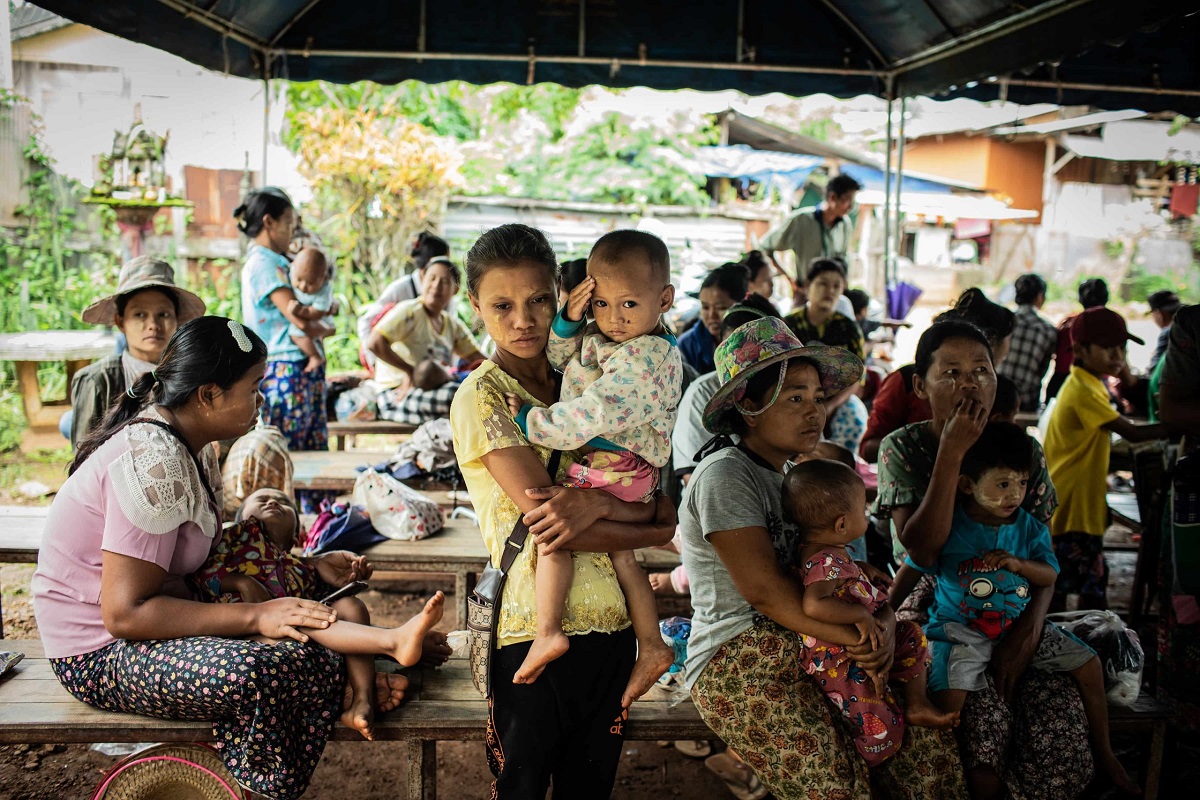
Bangkok (AsiaNews) - The recent election victory of Thai Prime Minister Anutin Charnvirakul and his conservative Bhumjaithai party is redrawing Thailand's political balance, but leaves millions of migrant workers from Myanmar in limbo, a presence that is fundamental to the country's economy but almost absent from political debate.
The 8 February general election gave Bhumjaithai about 194 seats out of 500 in the House of Representatives, almost triple the number it had in 2023. Anutin's campaign was driven by nationalism and tensions with Cambodia, with an emphasis on security issues, national sovereignty and the fight against cross-border criminal networks.
In this climate, however, the issue of migrant workers, particularly Burmese workers, who form the backbone of key sectors such as construction, agriculture and fishing, has remained in the background.
According to official data, more than 2.3 million Myanmar citizens are legally registered to work in Thailand, accounting for 75% of the migrant workforce from Southeast Asian countries (Cambodia, Laos, Myanmar and Vietnam). Other estimates suggest that the actual number exceeds 5 million when including irregular workers.
Following the 2021 military coup, with the introduction of compulsory conscription and the intensification of civil conflict, the flow of migrants from Myanmar to Thailand has reached its highest levels in a decade. The International Organisation for Migration estimates that migrant workers contribute between 4% and 6% of Thailand's GDP. But despite this crucial role, issues such as their legal status or working conditions have been virtually absent from the agendas of the Thai parties that took part in the elections.
According to labour rights activists, 2025 was a year of “mismanagement” of migration policies due to political instability: three governments and therefore three different labour ministers in less than three years have produced fragmented and inconsistent policies. ‘Frequent ministerial changes have created inconsistencies and regulatory gaps,’ explained Adisorn Khamkhun of the Migrant Workers Group in Thailand.
The problem became clear in October 2025, when the Department of Employment introduced a new online system for work permits, run by a private company. The system collapsed within a week due to technical problems, leaving nearly 200,000 migrant workers in legal limbo. According to human rights organisations, the malfunction prompted many workers to turn to expensive intermediaries, increasing corruption, exploitation and indebtedness.
The political narrative on the Burmese crisis has also changed. While until 2023 the debate revolved around human rights, democracy and support for the National Unity Government (composed of deputies from the previous Burmese government in exile), in recent years Bangkok has placed the emphasis on border security and transnational crime. Online scam centres and illegal casinos along the Thai-Myanmar border have become the main topics of debate.
Myanmar, therefore, appears less and less like a political crisis and more and more like a security risk to be contained.
The People's Party, the second largest party with 116 seats, has promoted a platform against “grey money” linked to criminal groups operating along the border. The Pheu Thai, down to 76 seats, has instead focused on economic recovery, avoiding addressing Myanmar's internal situation. The Democratic Party has limited itself to general statements. ‘We will support anyone who comes here to contribute to the Thai economy, including migrant workers,’ said deputy leader Issara Soonthornvut. ‘The most important thing is equal economic opportunities for all.’
One of the few voices out of the chorus was that of the new Phalawat Party, led by former MP Kannavee Suebsang, who put Burmese workers at the centre of his platform. ‘We must stop seeing them as a burden and start seeing them as an asset,’ he said. " If we legalise millions of migrants, the state will collect taxes, Thai workers will strengthen their unions, and corruption will be reduced." However, the party did not achieve significant results in the last election.
In a pre-election interview with TIME, Anutin spoke of the Burmese crisis as an issue to be resolved through the forms of cooperation proposed by ASEAN, the Association of Southeast Asian Nations: ‘Dialogue does not mean approval,’ he said. ‘We are working with all parties to reduce suffering and support the solutions proposed by ASEAN.’
After his victory, the prime minister promised to keep the border crossings with Cambodia closed and to strengthen military capabilities.
A positive sign for Burmese migrants came in August 2025, when the government legalised for the first time the status of some 80,000 refugees in border camps to address the labour shortage following the flight of more than 100,000 Cambodian workers after armed clashes along the border. However, this measure only applies to refugees registered in the camps, leaving millions of Burmese workers living in cities without a clear regulatory framework.
With the new government led by Anutin, this silent workforce, which builds Thai cities and tends to the crops, is waiting to see whether it will have to deal with more temporary policies or whether a stable and transparent system will finally be introduced.

.png)
07/02/2019 17:28
11/08/2017 20:05










