








Beijing and the trap of permanent exports
Despite the tariff war in 2025, China broke through the trillion mark in its trade surplus, 45% of which is now generated in Southeast Asia, Africa and Latin America. However, this wealth is not driving domestic consumption, because the fall in producer prices in the name of competitiveness is also squeezing wages and incomes. This is an issue that the new five-year plan due in March does not seem likely to address.
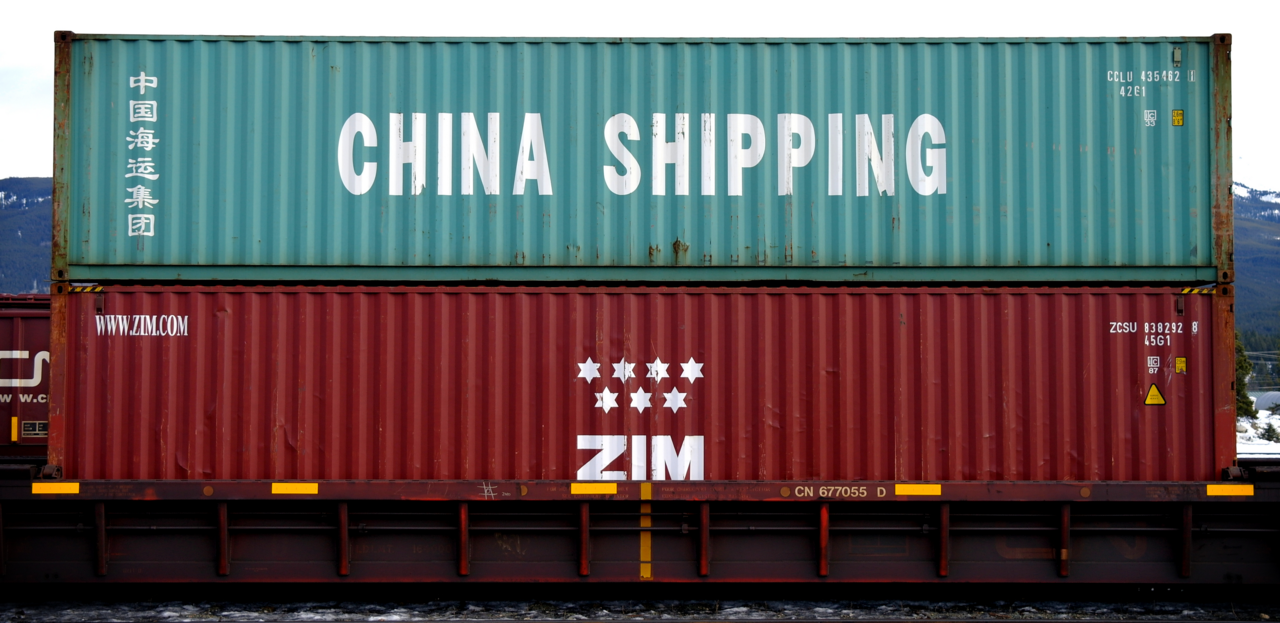
Milan (AsiaNews) - In 2025, China recorded a trade surplus of more than trillion, the highest ever in contemporary economic history. Containers continue to leave Chinese ports and export figures are setting new records, but this extraordinary influx of revenue is not reflected in the trend in foreign exchange reserves. The latter have remained essentially stable, rising from .2 trillion at the end of 2024 to just .3 trillion in November last year. So where does this capital end up?
The answer lies in a profound change in the way China manages its trade wealth. Whereas in the past the government tended to accumulate trade revenues directly in the form of state reserves, today the system has changed: a significant portion of inflows remains in the hands of exporting companies and finds its way abroad through private investments, such as electric vehicle factories in Europe or semiconductor plants in Southeast Asia. These are no longer isolated infrastructure projects, as in the first phase of the Belt and Road Initiative, but the transfer of entire industrial groups that set up outside the country's borders, bringing suppliers and subcontractors with them.
Another portion of the capital is directed towards dollar-denominated financial instruments, although no longer towards US Treasury securities, which China has reduced to their lowest levels in 17 years. Chinese companies and investors now favour private sector assets, limiting their direct exposure to Washington but continuing to seek returns on the US market. At the same time, many companies are repaying foreign currency debts or choosing to keep their profits outside their national borders.
All this has concrete repercussions on the territory. As reported by the New York Times in a report from Ningbo, the world's largest port in terms of cargo volume, ships sail non-stop loaded with goods while, a few kilometres away, shopping streets appear deserted and shops are recording a collapse in sales, with many residents short of money. In other words, the trade surplus generates numbers without translating into widespread prosperity and ends up highlighting a structural imbalance that continues to widen.
The trap of permanent exports
The current imbalance is rooted in the very architecture of the Chinese economy. Household consumption accounts for 39% of gross domestic product, compared to an average of 60% in advanced economies. This is a very large gap, reflecting decades of policy choices geared towards favouring industrial investment and infrastructure at the expense of people's purchasing power. The result is a system that produces much more than citizens are able to absorb, forcing the country to export excess goods in order to keep factories running and preserve employment stability.
In 2025, this gap widened further. Domestic consumption slowed, private investment declined and the boost provided by infrastructure projects began to weaken, while the real estate sector continued to struggle for the fourth consecutive year, with sales and investment falling sharply from previous levels. Added to this is a deflationary phase that has now lasted three years, fuelled by overproduction. The fall in producer prices allows companies to export at ever lower costs, strengthening the competitiveness of Chinese goods on international markets.
This creates a vicious circle. Falling domestic prices make Chinese products very competitive abroad, but at the same time reduce corporate profits, increase the real weight of debt and squeeze wages and incomes. Faced with an uncertain future, households consume less, fuelling further deflation and overproduction, which must be absorbed by foreign markets. The government has introduced limited measures to support consumption, such as scrappage incentives and targeted subsidies, but these are piecemeal interventions that are insufficient to change expectations.
Although they could increase transfers to households or social protection, the authorities continue to favour public investment in strategic industries and infrastructure. The reason is simple. As long as exports continue to grow, Beijing can meet its economic growth target of 5% per annum without having to address structural issues. International commercial success becomes an excuse to postpone difficult reforms. In other words, the strength of exports paradoxically becomes an obstacle to internal rebalancing.
An unsustainable situation
This model is now showing increasingly obvious cracks, as protectionism is on the rise externally. The European Union, for example, has imposed tariffs on Chinese electric vehicles, and French President Emmanuel Macron has called Beijing's surplus “unacceptable”, while on another front, many developing countries are beginning to suffer from competition from goods sold at very low prices and will be forced to defend themselves. According to some observers, China's trade surplus now poses an even greater threat to the global trading system than US tariffs.
To alleviate these pressures, China is seeking to diversify its trade outlets. Its surplus with the Belt and Road Initiative countries has surpassed that with the United States, accounting for 45% of China's total surplus, compared with 24% attributable to trade with the US. Exports to Southeast Asia, Africa and Latin America have grown significantly. However, this geographical redistribution fuels suspicions that some Chinese goods are still reaching Western markets via indirect routes, circumventing tariffs. If confirmed, this phenomenon could trigger new retaliatory measures.
Contradictions are also becoming more pronounced domestically. China has consolidated its manufacturing and industrial dominance in strategic sectors, from rare earths to electric vehicle batteries, achieving significant technological advances, including in artificial intelligence. At the same time, the social base of this industrial power appears increasingly fragile. Consumer confidence is at an all-time low and the rapid ageing of the population is accompanied by a collapse in births, which fell in 2025 to their lowest level since 1949, a sign that the country is heading towards contraction. Some economists describe the situation as a widening gap. On the one hand, exports and technological capabilities are growing, while on the other, consumption, birth rates and confidence in the future are declining. The risk is that a deflationary mindset similar to the one that has paralysed Japan for decades will take hold, making it increasingly difficult to escape the spiral.
The 15th Five-Year Plan, expected in March 2026, represents a crucial step. The drafts that have emerged so far suggest a strong continuity with previous choices: innovation, technological self-sufficiency and the development of sectors such as robotics and quantum computing remain at the centre. The stated goal is to increase China's share of global production from 30% to 40%, while the scope for strengthening domestic consumption appears limited.
Sooner or later, however, rebalancing will have to take place. Exports cannot grow without limits, especially in a context of increasing trade barriers and a slowing global economy. When this momentum fades, China will find itself faced with the urgent need to provide greater support to domestic demand without being able to rely on external drivers. Further postponing rebalancing means accepting that deflation will become a permanent condition, with a very high price to pay and an economy that would end up stuck in a dead-end trajectory, with all the political and social consequences that this entails.

.png)
30/07/2007
13/04/2015










