








Bashkortostan's economic crises
The decline in the extractive industry, linked to the fall in oil exports, is dragging what was traditionally one of the richest republics in the entire Russian Federation into stagnation. This is in contrast to Tatarstan, the other Tatar region, where the war economy, driven by drone manufacturing, is boosting the manufacturing sector.
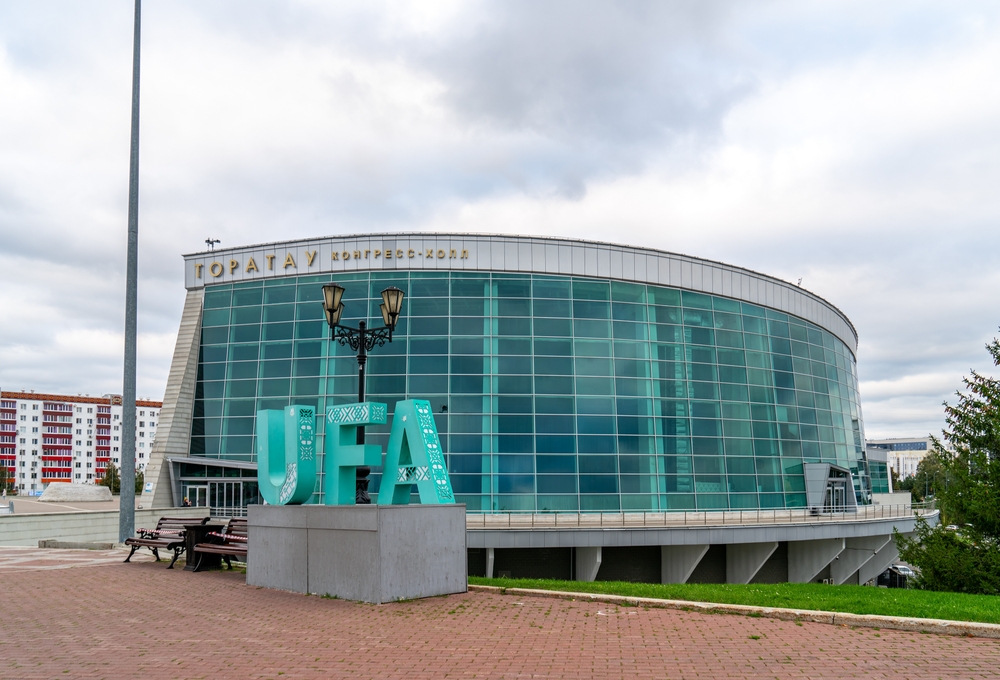
Moscow (AsiaNews) - A renowned Russian economist and lecturer at Moscow State University, Natalia Zubarevič, stated in an interview with the Ufa-based television channel Utv that Bashkortostan is showing negative trends across all major economic sectors, with indicators pointing to systemic stagnation in the region’s economy, which is traditionally one of the richest in the entire Federation.
Experts interviewed by Idel.Realii agree with Zubarevič’s main conclusions, noting that Tatarstan, the larger of the two Tatar republics, has adapted better than Bashkortostan to the conditions of the military economy in recent years.
The whole of Russia is sliding towards stagnation in many sectors and towards recession, the economist emphasised, and the civilian manufacturing industry is clearly in decline. The only sectors maintaining an overall positive trend are the defence industries.
The extractive industries have been in decline for three years, mechanical engineering is in the red, the production of building materials is in the red, ferrous metallurgy is in the red, and consumer goods and cars are in the red. Only the defence industry is driving the entire sector upwards, but it is already clear that this single engine – defence production – is unable to reverse the general negative trend in civilian industries.
Tatarstan’s budget revenue last year stood at nearly 700 billion roubles (around 7 billion euros), whilst in Bashkortostan it was around 370 billion. “Overall, it’s almost -3%, processing is almost -3% and production is almost -1%,” said Zubarevič, adding, “it’s mainly oil.” Almost all oil-producing regions, with rare exceptions, show similar trends; Tatarstan is also in the red, but has not seen a decline in its manufacturing sector, which grew by 16% last year thanks to the Alabuga Special Economic Zone, where a large number of attack drones used by the Russian army in the war against Ukraine are produced.
Tatarstan is also far more resilient because Rustam Minnikhanov’s government invests heavily in regional development; Kazan’s budget revenue last year amounted to almost 700 billion roubles, because Tatarstan still owns the oil company Tatneft, whereas Ufa’s has been nationalised by Rosneft, and most of the revenue from these activities does not remain in the republic. According to the expert, Tatarstan also excels in terms of agricultural efficiency, despite the Bashkirs enjoying better agro-climatic conditions.
Tatarstan is recording zero growth in the construction sector, whilst housing construction in Bashkortostan has suffered a sharp slowdown, with a 10% decline, due to the ineffectiveness of the Ufa government’s investment policy. “I was shocked to learn that in Bashkortostan the share of investment from companies’ and organisations’ own funds is only 53%, whereas nationally it stands at around 60%, and in Tatarstan it reaches 69%. Public investment is certainly necessary, but if it is extended excessively, there is a risk of a huge budget deficit.”
Other commentators, who prefer to remain anonymous, note that Radij Khabirov’s government in Bashkortostan “has intelligent people, but no strategic thinkers”. Entrepreneur Ramil Vagapov, who previously worked in Bashkortostan and Tatarstan and left Russia last year, notes that Bashkortostan “is a typical example of an oil-producing region that is losing some of its potential due to the outflow of revenue and less effective diversification”. Bashkortostan is a significantly larger republic: 143,000 square kilometres compared to Tatarstan’s 68,000, but the population is comparable, at around 4 million versus 4.1 million. Furthermore, Tatarstan’s demographic structure is more similar to that of Western European regions: more compact, more urbanised and more connected. Bashkortostan, on the other hand, is a vast territory with scattered rural areas, many of which are truly isolated. The urban population in Tatarstan stands at around 77–78 per cent, whilst around 62 per cent of Bashkirs live in towns and cities.
A significant proportion of Bashkortostan’s inhabitants perceive the republic simply as a place of residence, an administrative address, whilst they regard Russia as a whole as their country. Ultimately, Vagapov argues, where society feels that a republic is its own, it demands more, exercises stricter control over the elites and defends local interests more consistently. Where the republic is perceived as a regional office of the federal centre, society delegates responsibility upwards, and receives a corresponding level of governance in return.

.png)
03/06/2021 17:07










