








Erbil Archbishop Warda: Kurds want to stay out of the Mideast powder keg
Speaking to AsiaNews, the Chaldean prelate described a situation on hold, with schools and universities closed amidst great instability. Iraqi Kurdistan is once again impacted by foreign wars. People are concerned about the future and are trying to avoid being dragged into the conflict between Israel, the United States and Iran. Christians pray for peace, remember Francis’s visit to Iraq, and receive support from Pope Leo XIV.
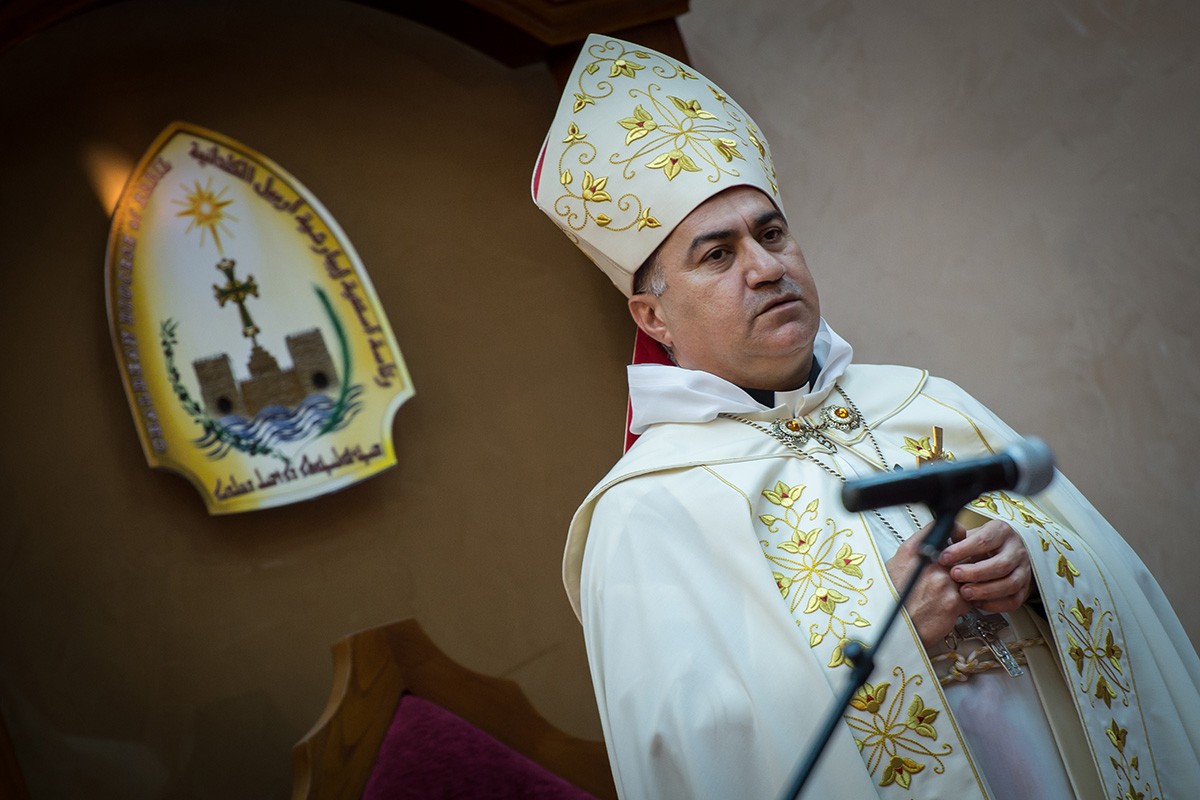
Milan (AsiaNews) – Archbishop Bashar Warda of Erbil, the capital of Iraqi Kurdistan, spoke to AsiaNews. His diocese is in one of the areas most affected by the escalating war that followed the attack by Israel and the United States on Iran on 28 February.
The region is in a limbo with life that “has just stopped” with “schools and universities” closed, a situation that is "unstable” in which “everyone is worried about the future.”
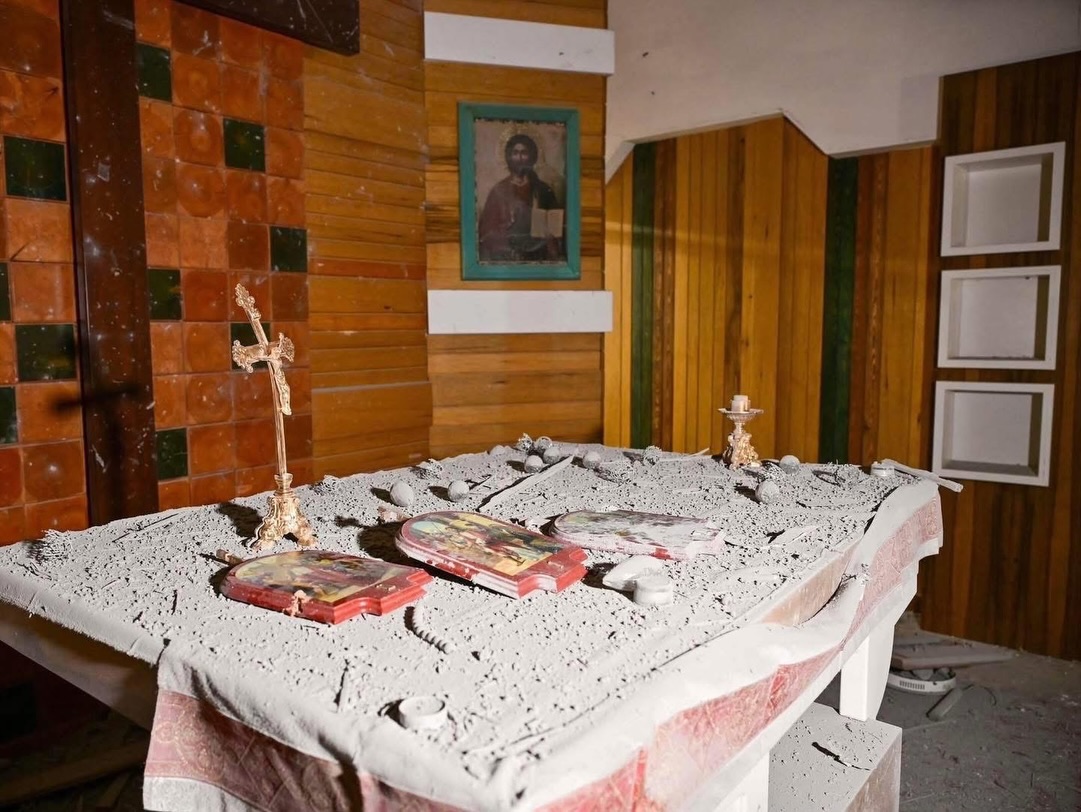
The new war is inflaming the Middle East, directly affecting the Christian community, after Iran launched an attack from across the border striking two Church buildings that belong to the Archbishopric of Ankawa (pictured).
“When it comes to attacks,” the prelate said, “like missiles and drones, we have six, seven, eight a day at different times. And that really makes it quite difficult for the people, [with] the feeling of uncertainty, worries.”
From the Gulf countries and Lebanon to Iraq and the shores of the Mediterranean, the new war between Israel (and the United States) and Iran is causing havoc in the region, even as the Iraqi government and the leaders of the autonomous Kurdistan Region try to avoid direct involvement.
Both the Iraqi and Kurdish governments have issued statements to that effect, reiterating their intention to remain neutral from the two warring sides, expressing their opposition to any ground operations involving Kurdish forces.
Iraqi experts note that the war represents an "existential threat" to Iraq and endangers the very future of the country, which is at risk of becoming a place where external powers settle heir scores.
"For our generation," Archbishop Warda noted, “old wounds have begun to bleed again. Living eight years of war with Iran, the first Gulf War, the sanctions [for] 13 years, then the second [Gulf War] (with the US invasion that toppled Saddam Hussein), and ISIS (Islamic State group).”
"All of these memories are just there," he warns. “What we call fear, uncertainty, worries, concerns: You can name all of these feelings.”
For this reason, there is a strong desire to stay out of the war and not get involved in military operations, in any capacity.
“The reality is that the Kurdish people and the Kurdish government have made it quite clear they would not get involved in this messy situation; it’s quite chaotic," the prelate said. “They will not be used by any forces because the whole case is quite complicated".
“The message from the Kurdistan government” is that “they do not want to get involved”; in fact, “they are working for stability, an end to violence, an end to the war. That," he stressed, “is the message, and that is the reality.”
Fear of direct involvement in the war is more than justified given the repeated launches of missiles and drones from Iran into Kurdistan, which have also hit Christian buildings.
“Ankawa is attached to the airport," Bishop Warda explained. “As you know, there is a military base for coalition forces," both of which are sensitive targets for Iran. “That's why all these missiles and drones are attacking the airport and that base.”
Parts of a drone struck the roof of the nuns' convent, at 8 pm on 4 March, and a Katyusha rocket struck the chapel of the Chaldean complex.
“Luckily, the damages were on the chapel, the first roof, seven cars, the cleaning system supply (sic), the sewage supply (sic), [and] one of the generators also was damaged.”
At present, the Chaldean Church has suspended youth meetings, external activities, catechism, and other non-essential initiatives; however, "Its Lent season so we have morning and evening Masses, which people attend. The Way of the Cross every Friday morning and evening, and the people usually attend that.” For the rest, “it is just quiet.”
Some schools have brought forward the Nowruz holiday, which guarantees at least two weeks of vacation; other schools, such as the International School, are nearing the end of the academic year because they have completed their programme.
Communications with Iran are currently cut. “I tried to contact our Bishop Imad (Khoshaba Gargees, Metropolitan Archeparchy of Tehran for the Chaldeans). We couldn’t really get through because all the communications are being stopped,” the prelate noted.
Conversely, the war and tensions have strengthened ties between different Churches, denominations, and Christian leaders. First and foremost, between Catholics and Orthodox, among whom ecumenism remains strong, nurtured by the memory of Pope Francis's visit in March 2021, with his message of peace, coexistence, and tolerance entrusted to the Iraqi people.
The troubled situation in “The Middle East is not going to be settled,” Archbishop Warda lamented. Yet, “We hope that this time there will be a final settlement. People will come and agree on not just peace, but also coexistence, a way of living together.”
With respect to ecumenism, the message remains one of hope that “would be felt one day,” he said. “As Christian communities, we are in a way collaborating, working together, walking together to pass this difficult time."
Finally, the archbishop of Erbil makes an appeal to Catholics in the West and around the world: "I would like everyone to keep us in their prayers, thanking his Holiness for reminding continuously the world that there is a need for peace in the Middle East and the world.”

.png)










