

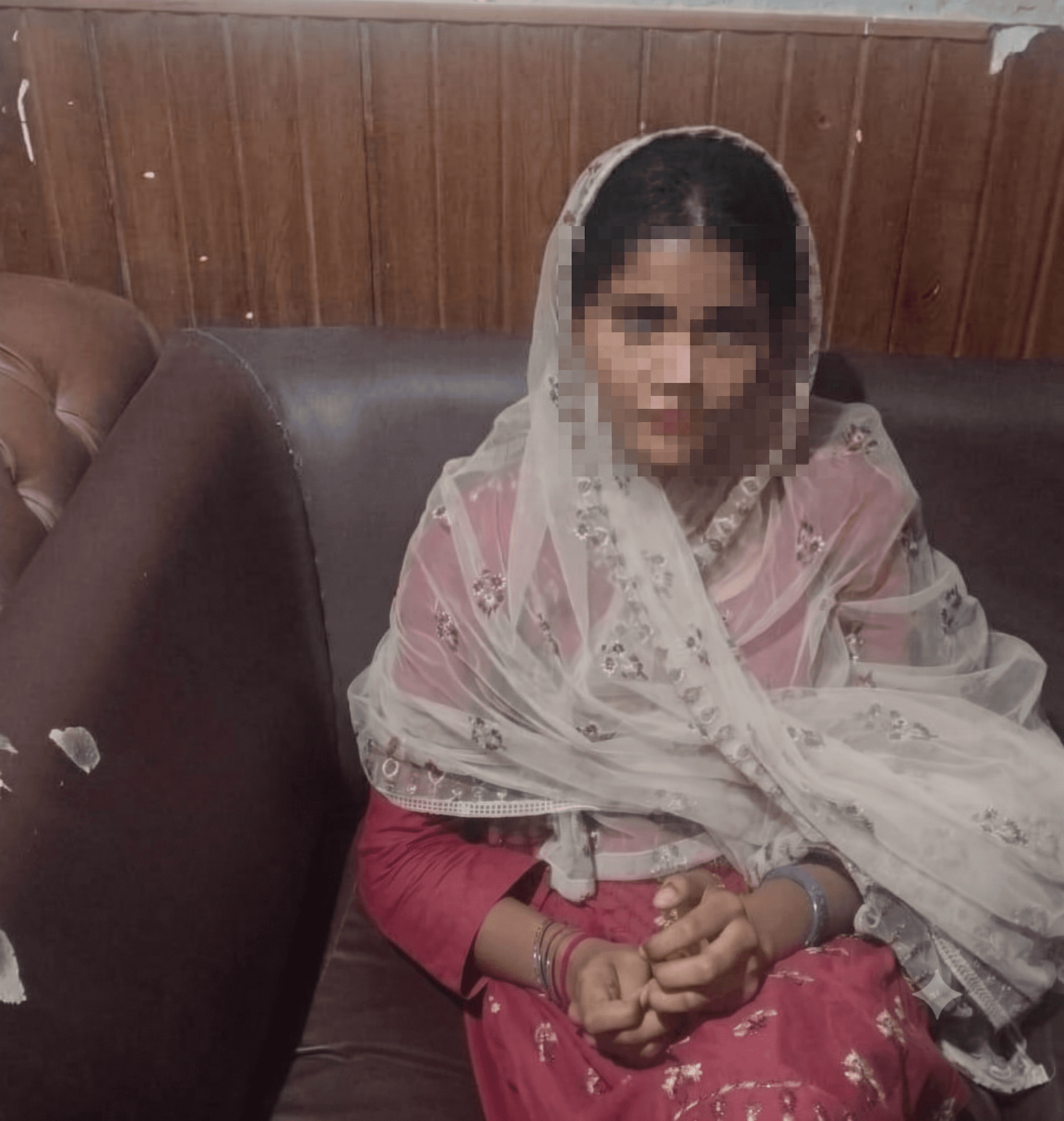
Faisalabad (AsiaNews) – A 13-year-old Christian girl from Faisalabad, in the province of Punjab, was reportedly abducted on 12 June 2026 by Mohsin Liaqat whilst she was at a local market. Following her disappearance, a complaint was filed on 15 June 2026 under Section 365-B of the Pakistan Penal Code at the Raza Abad police station in Faisalabad. Thanks to legal action and the intervention of Voice for Justice, the police located her, placed her in protective custody and arrested the alleged abductor.
The victim was placed in the care of the Faisalabad Gender-Based Violence Unit (Kotwali) whilst legal proceedings were ongoing. On 27 June 2026, a hearing was held regarding the girl’s custody and the legality of an alleged marriage and religious conversion. Whilst she was in custody, the officers allowed her parents and her legal team to meet her at Gulberg police station in Faisalabad.
During this meeting, the brother of the alleged abductor reportedly arrived accompanied by a bailiff and took the girl before the Court of First Instance. At the hearing, the family of the alleged abductor submitted documents stating that the girl had converted to Islam and married Mohsin Liaqat. The marriage certificate presented indicated that the alleged bride was 18 years old. The legal team representing the victim’s parents, tasked with securing her release and led by Malik Mehmood Hussain Awan, alongside Sohail Shahid Gill and Faisal Anwar Bhatti, a local lawyer from Faisalabad, the activist Aslam, and Joseph Janssen, president of Voice for Justice, contested these claims.
The defence argued that the girl is only 13 years old and presented key documentary evidence, including her birth certificate issued by the church. Malik Mehmood also contested the age stated on the marriage certificate by presenting her parents’ marriage certificate, which shows that they were married in 2012. The defence also relied on the “Punjab Child Marriage Restraint Act 2026”, emphasising that the law defines the concept of a child and protects them from harmful practices, such as child marriage.
The lawyer read out in court the reference in the Act to the best interests of the child, which encompasses safety, health, dignity, education and protection from abuse and exploitation. During the proceedings, a worrying legal interpretation emerged when the presiding judge stated that, although marriages involving minors cannot be registered, they may still be solemnised.
The legal team representing the victim’s family raised a strong objection, arguing that the law prohibits child marriage per se: not only its registration, but also its solemnisation. The lawyers representing the alleged abductor argued forcefully that the victim had converted to Islam and that, therefore, she could not return to her Christian parents.
They claimed that renouncing Islam would constitute apostasy and used religious arguments to oppose her return to her family. The legal team representing the girl’s family strongly objected, arguing that such claims should not take precedence over Pakistani laws protecting minors. They emphasised that the central issue before the court was not religion, but whether a 13-year-old minor could legally consent to religious conversion, marriage or a change of custody.
After hearing the preliminary arguments, the Court of First Instance referred the matter to a special judicial magistrate to record the victim’s statement and conduct further questioning. During the hearing before the judicial magistrate, the mother was questioned first. She stated that she had married in 2012 and that her daughter, her first-born, had been born in 2013. The girl was then questioned directly by the magistrate about her age. Initially, she replied that she was “old enough to get married”. The magistrate asked her again for her exact year of birth.
The girl then replied that she had been born in 2008. The magistrate noted the contradiction between the girl’s statement and the family registers. When asked how she could have been born in 2008 if her parents had married in 2012, the girl stated that members of the alleged abductor’s family had told her to say she was born in 2008. This statement raised serious concerns regarding possible coercion, instruction or undue influence on a minor witness.
At the conclusion of the hearing, the magistrate ordered that the girl remain in police custody and directed that a formal age assessment procedure be initiated to establish her legal age. The next hearing is scheduled for today, 30 June 2026. Throughout the proceedings, the parents displayed obvious distress, repeatedly imploring the court to ensure their daughter’s safe return. These emotionally charged scenes highlighted the trauma that families face in such cases.
Speaking to the media after the hearing, lawyer Malik Mehmood Hussain Awan stated that the documents submitted by the alleged abductor’s family appeared to be forged and had been used to falsely pass the girl off as an adult. Lala Robin, a Christian political leader, urged the Punjab government to ensure the effective implementation of the law restricting child marriage. Joseph Janssen, president of Voice for Justice, said: “This is not a matter of religion; it is about child protection and the enforcement of the law restricting child marriage.”
Pakistan has international obligations under several key human rights treaties, including the United Nations Convention on the Rights of the Child (CRC), the Convention on the Elimination of All Forms of Discrimination against Women (CEDAW) and the International Covenant on Civil and Political Rights (ICCPR). These treaties require Pakistan to protect children from exploitation, trafficking, forced marriage and discrimination.
This case could become a key test of Pakistan’s willingness to enforce both its national child protection laws and its international commitments. Voice for Justice has called for a transparent trial, full protection for the victim and the prosecution of those responsible should criminal conduct be established, as well as the enforcement of laws designed to protect children from exploitation and abuse.














