








Former Mosul Archbishop Nona is the new Patriarch of the Chaldeans
Elected by the synod underway in Rome after the resignation on 10 March of his predecessor, Louis Sako, the new primate chose the name Paul III. The 58-year-old, originally from Alqosh, led the community in Mosul during difficult years and accompanied the communities in exile after the Islamic State takeover. He must now implement the mandate of unity among Iraqi Catholics Leo XIV entrusted to the synod.
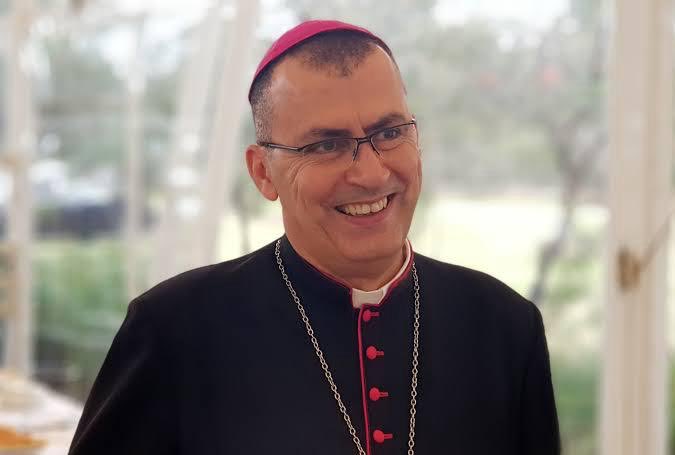
Vatican City (AsiaNews) – His Eminence Bishop Amel Shimoun Nona is the new Patriarch of the Chaldean Church. The 58-year-old led the Chaldean Archdiocese of Mosul until 2014 when he was forced into exile when the city was taken over by the Islamic State (IS) group.
He was elected today by the Synod of the ancient Eastern Church representing Iraqi Christians, meeting in Rome to elect Patriarch Sako's successor. The new leader chose the name of Mar Paul Nona III.
“His Beatitude,” reads a statement issued by the Chaldean Church, “announced his acceptance of the election in accordance with Church laws, expressing his reliance on God’s grace, and his commitment to exercising his patriarchal service in a spirit of faithfulness and responsibility, in full communion with the Synod Fathers, and in service to the unity of the Chaldean Church and its mission in the homeland and the countries of the diaspora.”
The press release goes on to say: “As the Synod Fathers raise their prayers to the Lord Jesus Christ, the Good Shepherd, beseeching Him to support the Patriarch-elect with the graces of wisdom and strength, they affirm their confidence that this ministry will contribute to strengthening the faithful in the faith, enhancing their unity, and revitalising the Church’s mission of bearing witness to the Gospel.”
Born in 1968 in Alqosh, northern Iraq, Patriarch Nona has long been a prominent figure in the Chaldean Catholic Church. Selected as archeparch of Mosul n 2009, he served the local Catholic community through one of the most difficult periods in its history, during the rise of the Islamic State in 2014 and the displacement of thousands of Christians from the city and surrounding areas.
He subsequently assumed the role of Apostolic Visitor for Chaldean Catholics in Europe, expanding his pastoral responsibilities in diaspora communities.
He will now be responsible for carrying out the mandate Leo XIV entrusted to him at the audience held on 10 April.
“May the new Patriarch be, first and foremost, a father in faith and a sign of communion with all and among all," the Pope said during a private audience with the 17 Chaldean bishops who met in Rome on 9 April to elect the new patriarch to replace Card Louis Raphael Sako, who resigned on 10 March.
In his address, the pontiff stressed the importance of “living according to the Gospel, that is, in meekness and the patient pursuit of unity," which does not mean going “against the grain” or being “counterproductive,” but rather proves to be the “wisest path,” which is the role the primate must have in one of the oldest and more authoritative Eastern Churches, plagued recently by internal dissension and divisions.
“What prevails and never ends is the charity of which the Apostle Paul spoke,” Leo said: “patient, persevering, capable of excusing and enduring everything, without ever disrespecting anyone."
"His Beatitude should be a man of the Beatitudes: not called to extraordinary gestures and to cause an outcry, but to daily holiness, made up of honesty, mercy, and purity of heart. May he be a Pastor capable of listening and accompanying for authority in the Church is always service and never hegemony.”
The patriarch, the pope noted, “should be a true leader, close to the people, not a flashy figure, aloof. May he be a man rooted in prayer, capable of bearing the burden of difficulties with realism and hope, a pastoral teacher who identifies concrete paths for the good of the People of God together with his brother Bishops, in that spirit of harmony that must characterise a patriarchal Church, whose authority is represented by the Synod of Bishops presided over by the Patriarch, promoter of unity in charity" in "full cohesion" with the Bishop of Rome.
In his address to the Chaldean bishops, the pontiff also reminded them that they are "guardians of a living and noble memory, of a faith passed on through the centuries with courage and fidelity,” a faith and testimony that, especially in the last 20 years, has led to martyrdom of bishops and priests.
“Your history is glorious,” the Holy Father said, but one that has seen grave trials: “wars, persecutions, and tribulations that have affected your communities and scattered many faithful throughout the world.”
Yet, “And it is precisely in these wounds that the luminous testimony of faith shines forth, because if your Church bears the scars of history, it is the risen Lord himself who shows us how the most painful wounds can become in Him signs of hope and new life."
Patriarch Nona’s predecessor, Cardinal Louis Sako, did not participate in the Synod that elected him as the new patriarch because, as he explained in his letter of resignation, he wanted to leave the bishops free to choose without external influence, pressure, or interference in a Church that has seen more than one crisis in the past.
By resigning, Card Sako sought to make a clean break in a Church rife with complexities and problems, offering an opportunity to turn a new page under a different leadership to address internal disagreements, which at their most acute came close to a schism.
The new patriarch will have to address many issues, from the Christian exodus and the wars in the Middle East to the state of diaspora communities and internal unity within the Chaldean Church, counting on the prayers and silent support of his predecessor.
The Chaldean Catholic Church is a direct descendant of the Church of the East, tracing its origins to ancient Mesopotamia and its saints, Mar Addai (Saint Addai) and Mar Mari (Saint Mari), disciples of Saint Thomas the Apostle. St Joseph's Cathedral in Baghdad is the patriarchal see, but it encompasses several eparchies and dioceses in Iraq and around the world, from Canada and Australia to the United States and Northern Europe.
The faithful number over 600,000, most of whom (approximately 300,000) live in the Arab country, although the number once exceeded a million. Since the US invasion of Iraq in 2003, hundreds of thousands fled to escape war, violence, and persecution, swelling the ranks of diaspora communities.
In addition to Islamic radicalism, which drove people out of the country, the Chaldean Church also experienced intense internal tensions and conflict with the Iraqi authorities, best exemplified by a row between Iraqi President Abdul Latif Rashid and Patriarch Sako, which was eventually settled but not without great efforts.
While referring to these critical situations, without mentioning them directly, Leo ended his address making a “fraternal and paternal" appeal.
"I urge you to be careful and transparent in the administration of assets; sober, measured, and responsible in your use of the media; prudent in your public statements, so that every word and behaviour contributes to building – not harming – ecclesial communion and the Church's witness."
In addition to priestly training and accompanying the laity, the pontiff called on the prelates to be bearers of “signs of hope in a world marked by absurd and inhuman violence, which in these times, driven by greed and hatred, spreads ferociously in the very lands that saw the rise of salvation, in the sacred places of the Christian East, desecrated by the blasphemy of war and the brutality of business, with no regard for people's lives, considered at best a collateral effect of their own interests.”
“You, called to be tireless workers for peace in the name of Jesus, help us to clearly proclaim that God blesses no conflict; to cry out to the world that those who are disciples of Christ, the Prince of Peace, are never on the side of those who yesterday wielded the sword and today drop bombs.”
For Pope Leo XIV, “military action will not create spaces of freedom or times of peace, only the patient promotion of coexistence and dialogue between peoples will.”

.png)










