








From Bangladesh to Nepal, measles is spreading again in the Himalayas
Over the past five months, Nepal has reported new outbreaks in nine districts, at least 300 cases since the outbreak began. The government has launched a vaccination campaign with 200,000 doses, but shortages, past natural disasters, and the difficulty of reaching rural communities are weighing heavily.
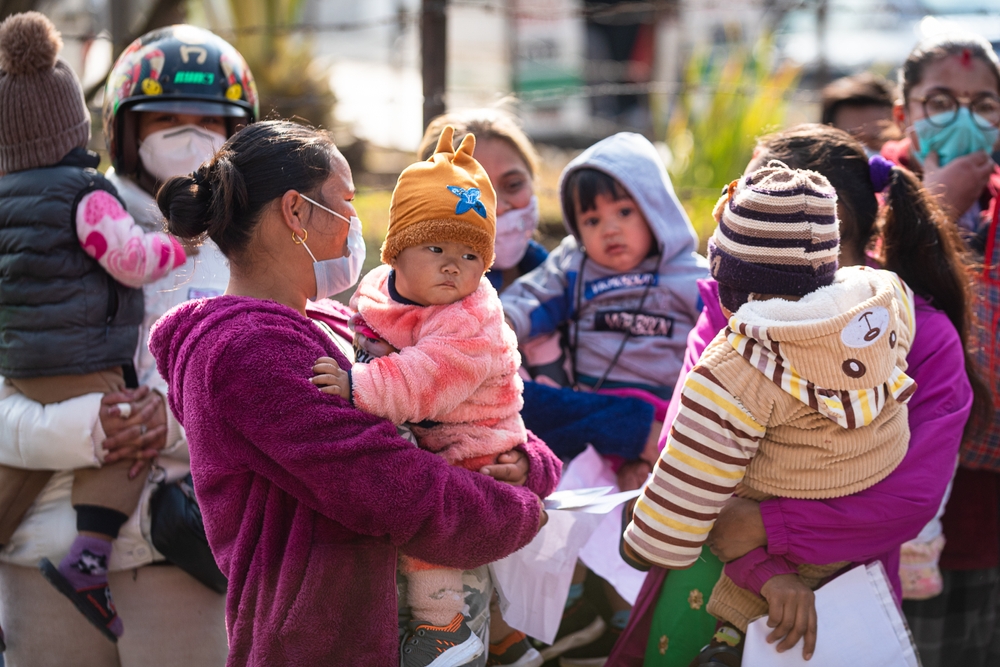
Kathmandu (AsiaNews) – After Bangladesh, a measles epidemic has broken out in Nepal, highlighting the fragility of a prevention system that had achieved significant results against a disease once endemic in the country.
Thanks to vaccination campaigns launched in 1979, which gradually expanded nationwide, cases dropped considerably from around 90,000 recorded annually between 1994 and 2004.
In recent years, however, the virus has returned, spreading to several regions. In the past five months, outbreaks have been reported in nine districts, the latest in Jajarkot and Surkhet, both in Karnali province, where Kalikot and Dailekh districts had also been previously affected.
Cases have also been reported in Sarlahi, Mahottari, and Siraha districts in Madhesh province, Baglung in Gandaki province, and Achham in Sudurpashchim province.
These are particularly vulnerable areas, where measles continues to occur regularly, along with other infectious diseases.
Jajarkot district, for example, was hit by a serious cholera epidemic in 2009, followed by new outbreaks of diarrhoeal diseases and viral fevers in subsequent years.
Country-wide, Nepal also had to cope with the resurgence of measles in 2022 and 2023, a trend that pushed the goal of eliminating the disease entirely by 2026 further into the future.
This highlights the need for constant monitoring in isolated areas as well as those with tough environmental conditions, demonstrating the persistent challenges faced in preventing and managing health emergencies.
Since the start of the year 2026, Nepali health authorities said that more than 300 children and young people have been infected. The inability of reliably verifying whether any had been vaccinated is of particular concern.
In addition to the healthcare system’s structural shortcomings (such as shortages limiting the coverage of vaccination campaigns), earthquakes and other natural disasters have forced many families in recent years to live in precarious conditions, making it harder to monitor people’s health.
To contain the spread of the virus, the government has announced a new large-scale vaccination campaign involving approximately 200,000 doses, with the support of international organisations operating in the country.
Meanwhile, there is concern over the situation in neighbouring Bangladesh, where a large-scale measles epidemic has been ongoing since March, reportedly causing some 500 deaths among children.
In fact, children but also pregnant women, senior citizens, and immunocompromised individuals are the most at risk.
Measles initially causes a high fever and other flu-like symptoms, followed by a typical rash that appears on the face, neck, and then spreads to the rest of the body.
In severe cases, especially among unvaccinated individuals, it can lead to life-threatening complications, such as pneumonia and encephalitis.

.png)
09/04/2026 11:56
18/11/2022 17:44










