








From Henan to the Red Moon, collective anxiety in the Year of the Fire Horse
According to popular tradition in China, the year of the two opposing fire elements heralds great social upheavals. The last time this occurred was in 1966, the start of the Cultural Revolution. Two incidents during the New Year period, the sudden interruption of the Henan TV Gala and the messages about the "Red Moon" during the Lantern Festival, confirm how deeply rooted the idea of a connection between heaven and earth remains in times of intense social pressure.
Beijing (AsiaNews) – The Year 2026 coincides with the Year of the Fire Horse (Bǐngwǔ) in the traditional Chinese calendar.
In the Chinese theory of the Heavenly Stems (tiāngān), the Earthly Branches (dìzhī), and the Five Elements, Bǐng and Wǔ belong to fire. With two overlapping fire elements, this year is popularly called the year of the "red horse" or "fire horse."
Following ancient beliefs, the Bǐngwǔ year is thought to possess very strong energy, with an "impetuous" nature – excessive fire and extreme heat are reflected in the human world as major social transformations or structural change.
A proverb says: "The sixty-year cycle always repeats itself." The last Bǐngwǔ year (1966) marked the beginning of the Cultural Revolution: collective enthusiasm and the reshaping of society. In that year, the "fire horse" was invested with a sort of sacredness: to destroy the old world and build a new one. This is why many are wondering: What will happen in 2026?
The Lantern Festival of the Bǐngwǔ year is now over. With the last wave of university students back in class and migrant workers returning to the cities, the great Chinese New Year transportation exodus is also coming to an end.
However, two events occurred during the New Year celebrations that – along with the international clouds brought by geopolitical conflicts such as the war in Iran – seem to resonate with the collective unconscious expectation of "destroying the old and creating the new" or further major historical upheavals.
The strange interruption of the Spring Gala in Henan
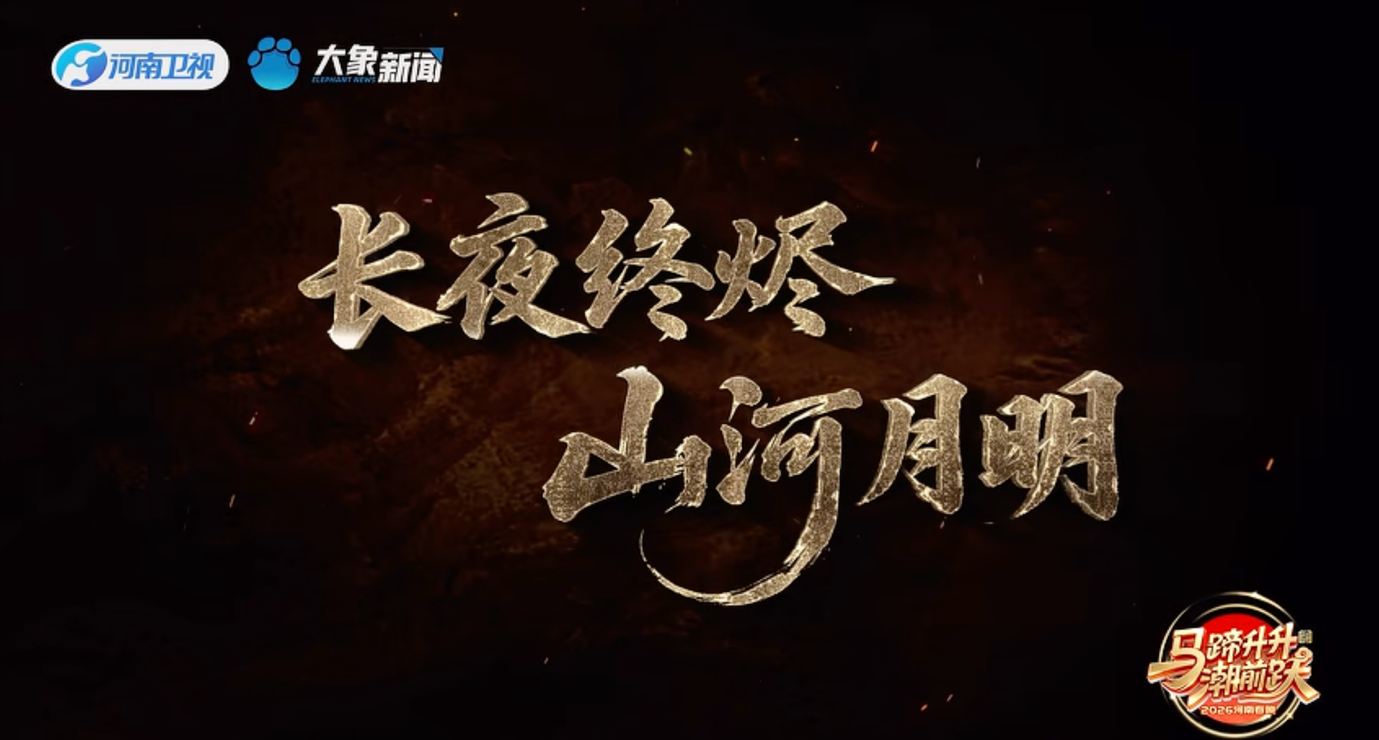
“The long night finally ends, mountains and rivers shine in the moonlight" was the title of one of the Spring Gala programmes aired this year on Henan Television.
In China, the Spring Gala was originally just a Chinese New Year show broadcast on national television. Since 1983, every year at 8:00 pm on Lunar New Year's Eve, the show combines singing, dancing, comedy sketches, humorous dialogues (xiangsheng), acrobatics, and magic in a long, festive live broadcast that lasts about four and a half hours, until the New Year.
The Gala is not only a television show watched by Chinese people around the world, but also a kind of "national ritual" that intertwines politics, culture, and social psychology.
Through grand storytelling, it builds national identity and cohesion, becoming one of the country's most influential cultural symbols. Participating artists can become famous overnight, and popular songs and expressions see their first light at the Gala.
For this reason, over time, even provincial television stations have understood the value of that time slot and begun producing their own shows. Thus, during New Year's Eve, almost all local broadcasters host their own Gala, seeking to attract audiences with distinctive programmes.
In 2021, the satellite channel of Henan Television and Radio was suddenly in the spotlight for its decision not to invite big celebrities or chase online traffic; instead, its Gala focused on traditional culture. That year, a phenomenal work went viral: “The night banquet of the Tang Palace”.
The makeup, costumes, and movements of the dancers were inspired by the musical figurines of the Sui and Tang dynasties preserved in museums.
Digital technology took scenes from famous paintings such as "A thousand miles of rivers and mountains”, "The preparation of silk”, "Beauty under the tree”, "The departure of the escort on horse”, and “Emperor Minghuang on his journey to Shu” and turned them into backdrops on stage.
People danced within the painting while the young musicians and dancers of the Tang Dynasty, vibrant and graceful, created an emotional resonance between past and present.
This original way of "rediscovering cultural roots" sparked enthusiasm and pride in the splendid civilisation of the great Tang Dynasty, offering the Gala a new form of expression.
In subsequent years, Henan Television produced similar programmes, all rich in cultural tradition and praised by audiences as “models of Oriental aesthetics worthy of collection”.
On 16 February, however, the live broadcast of this year's Henan Spring Gala encountered an unprecedented hitch. With eight million viewers connected online, it was suddenly interrupted for unknown reasons, with no official explanation provided in the following days.
According to viewers, the theme of the show was "The horse's hooves advance with the tide," featuring performances such as the stately ballet "Ten thousand galloping horses" by Yang Liping's troupe and "Yongle Endless," which recreated the spirit of the Yongle Temple frescoes.
But when the programme reached the segment "The long night ends, mountains and rivers illuminated by the Moon”, the image disappeared, leaving only floating subtitles. As the lineup descended into chaos, blank screens and repeated ads appeared on the screen.
The organisers had presented the show as a blend of the traditional art of "striking iron into flowers of sparks" and national spirit, conveying a message of hope and perseverance in the face of adversity.
Although the programme had already undergone several stages of content review, it was never broadcast in its entirety.
This has raised questions about censorship: What irresistible force can cause a cultural show aimed at promoting tradition offend at the last moment the sensibilities of those in power?
Many explanations began circulating regarding the episode. One holds that the programme, by highlighting the defence of the borders in the Han, Tang, Song, and Ming dynasties, excessively exalted the Han culture of central China, interfering with the political narrative of ethnic unity and the "shared destiny of humanity”.
Another, more politically sensitive view concerns a certain symbolism. Some observers noted that statements like “using fire to dispel the darkness”, “the long night ends”, “the gods return to their places”, or “endless Yongle”, in the context of the changes at the top of the Military Commission, could be interpreted as subversive poetics alluding to military action or invoking a new virtuous ruler.
Others still think that the references to "darkness" and "long night" were perceived as metaphors for the current political situation; some internet users even praised the provincial television station's courage for addressing such a topic.
In fact, many viewers who watched the programme online maintain that it was simply a combination of the traditional art of "striking iron into sparks" and the national spirit: It was intended to express confidence that darkness will end, encouraging people not to lose the will to fight in the face of adversity.
Evidently, the collective resonance evoked by words such as “darkness" and "long night" also stimulated the imagination of those who wield the power of life and death over a programme. More than direct content censorship, the interruption seems to reflect an excessive sensitivity of those in power to uncertainty.
In a year like Bǐngwǔ, a symbol of violence and change, any historical metaphor about "night" and “darkness” can be interpreted as a challenge to the existing order.
When those in power fall prey to irrational fears about the correspondence between heaven and man, the only way to silence the collective resonance is to pull the plug on the broadcast and leave the screen blank.
The "Blood Moon"
Curiously, the "blood moon" that appeared during last week's Lantern Festival (the dark red colour of the moon during a total eclipse) also sparked many interpretations.
In the traditional Chinese concept of "the correspondence between heaven and man," celestial phenomena are closely linked to human affairs; anomalies in the sky are a warning to the ruler who has lost his virtue. The moon belongs to the yin sign and represents imperial consorts, officials, and criminal justice.
The appearance of a blood moon has often been interpreted as a sign of disorder in the corridors of power, usurpation by ministers, legal injustices, or foreign invasions, omens of a breakdown of order.
Ancient astrological texts note that a red lunar eclipse could herald drought, famine, or inflation, ultimately leading to a state of unrest and popular suffering.
Coincidences between "blood moons" and calamities are often cited to demonstrate the efficacy of ancient theories. But this is essentially confirmation bias: Given that total eclipses occur on average every 0.8 years worldwide and approximately every 2.5 years in the same place, it is inevitable that they sometimes coincide with human tragedies.
Scientific refutation, however, is not enough to eliminate the cultural significance of the “blood moon”. What the latter reflects is not an astronomical truth or proof of divination, but a deep contemporary fear of the loss of control and order.
In 2026, when people enthusiastically spread prophecies about the “Year of the Bǐngwǔ Fire Horse”, the fundamental need is the quest for certainty and extreme vigilance against systemic risks.
In a highly stressed social context, when it is hard to understand how the rule of law, the economy, and society function, some people seek comfort by returning to the archaic vision of the correspondence between heaven and man.
Through prophecies, they construct a fatalistic explanation of the present: If everything is part of a predestined cycle, the anxiety provoked by the unknown can perhaps be alleviated.
These interpretations of signs are not just popular gossip; otherwise, they would not be enough to explain why Henan Television stopped at once a programme called "The long night ends, mountains and rivers illuminated by the Moon."
In fact, the “Records of the Grand Historian” and the "Book of Han" had already thoroughly analysed the mobilisation mechanism of the first peasant revolt in Chinese history, when, at the end of the Qin Dynasty, in Dazexiang, Chen Sheng and Wu Guang used stories of omens, such as messages hidden in the belly of a fish or mysterious nocturnal calls, to skilfully activate the psychological lever of the correspondence between heaven and man.
When the harsh Qin laws drove the lower classes to desperation, people needed a “heavenly mandate” that transcended reality, capable of giving sacred legitimacy to survival and rebellion.

.png)
22/08/2018 12:51










