








From the suburbs to Tehran, protests shake the foundations of the Islamic Republic
The authorities have cut off the internet throughout the country to obscure the demonstrations. Khamenei threatens those who “devastate the streets” to “please” Trump. In reality, discontent is much more deeply rooted and widespread, due to an increasingly devastating economic crisis. And alongside pro-rights and freedom slogans, monarchist nostalgia is also trying to make its way.
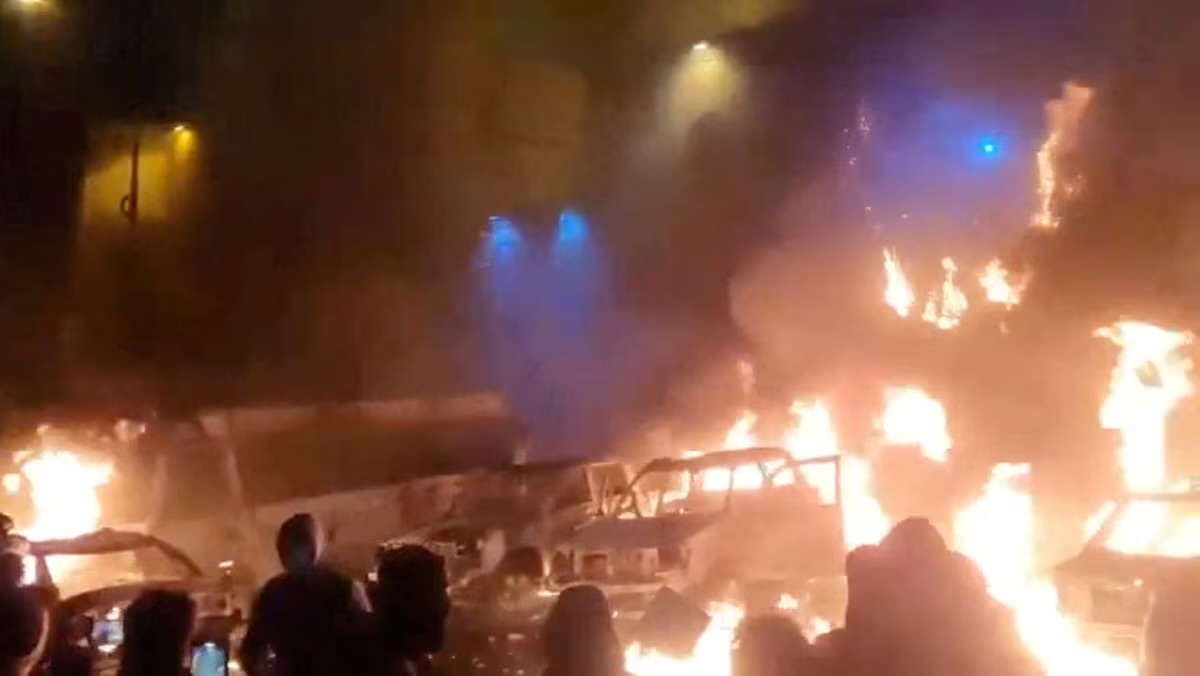
Tehran (AsiaNews) - From the suburbs to the heart of the Islamic Republic: the anti-government protests that have been inflaming the streets and squares of Iran for days did not flare up, as in the past, in the capital or in large urban centers, but started in small towns and villages across the country, in the outskirts, and then spread like wildfire towards Tehran. Since the first demonstrations in the second half of December, places that rarely attracted local or international attention in the past have emerged. These are smaller towns, often neglected by the media and national politics, but which today represent the fuel that has allowed discontent to spread throughout much of the country. In response, the authorities have so far made an unknown number of arrests, in addition to deaths and injuries. And the supreme leader himself, Ayatollah Ali Khamenei, warns protesters that they are “devastating the streets” to “please the president of another country,” referring to US leader Donald Trump.
Despite the tightening of security measures, data collected on January 5 show that in a single day—and the picture has broadened in the days since—demonstrations took place in over 340 locations scattered across all 31 provinces of Iran. Most of the protests took place in small towns and rural counties, reflecting widespread discontent that is not limited to cities such as Tehran or symbolic places such as Qom.
The constant presence of demonstrators in these lesser-known areas also suggests that the heart of the unrest has shifted from large urban centers to smaller, more remote areas. After all, although these regions receive limited media coverage, they are among those most severely affected by the worsening economic and political crisis that has long gripped the Islamic Republic and the power of the ayatollahs.
A more in-depth analysis by IranWire of four of these areas—the cities of Abdanan, Malekshahi, Azna, and Neyriz—indicates that the wave of protests is closely linked to long-standing economic grievances and unfulfilled promises of development. In these regions, official rhetoric about “industrial growth” and “economic transformation” contrasts sharply with widespread poverty, poor or decaying infrastructure, and chronic unemployment.
Decades of mismanagement by the ruling leadership and a framework of substantial neglect—both locally and nationally—have left local populations with few opportunities to pursue their demands. In the absence of effective institutional responses, frustration has spilled onto the streets, pushing these once-neglected areas to the forefront of the protest movement.
One of the bloodiest episodes of recent days occurred in Malekshahi County, north of the city of Abdanan, both in the province of Ilam. Despite strong tribal and social support networks, the area has not been spared by the economic crisis, and the population has suffered so much that they have taken to the streets and joined the protests. The clashes that ensued with the police revealed the harshness of the repression: on January 3, in what is now known in the area as ‘Malekshahi's Bloody Saturday’, the Revolutionary Guards (Pasdaran) opened fire on demonstrators, causing numerous deaths and injuries.
However, as there are no adequate medical facilities in the area, the injured protesters were transferred to Imam Khomeini Hospital in nearby Ilam. Reports subsequently emerged that officers had surrounded and raided the hospital, sparking international criticism. Economic indicators further highlight the severity of the challenges facing the county: last year, Ilam province had one of the highest unemployment rates in the country. While officials emphasize the launch of projects and announce development policies, residents report factory closures, limited investment, and deteriorating infrastructure as a daily reality. These conditions, combined with a security-focused response, have made Malekshahi a hotbed of protest.
Analysts and scholars say the discontent is driven by a prolonged economic crisis exacerbated by Western sanctions, coupled with a significant loss of confidence in the state following military and foreign policy defeats last year. First and foremost is the so-called ‘12-day war’ with Israel, compounded by the weakening of allied Shiite factions in the Middle East, from Hezbollah in Lebanon to the Houthis in Yemen. Hence the belief among some that 2026 could be ‘the most critical year’ in the history of the Islamic Republic.
After all, the popular unrest is not developing in isolation, but rather seems to be the result of continuous external pressure, legal constraints, and strategic exposure that have reduced the Ayatollahs' room for maneuver. Furthermore, the protests should not be seen as an isolated internal episode, but as the manifestation of a broader convergence: the application of sanctions, isolation in terms of international law, military friction, and fiscal pressure, which now have a more direct impact on the regime's ability to manage society. At the heart of this picture is a structural tension that risks undermining the very foundations of the institutional and power apparatus, which some believe has never been so at risk.
Tehran has long prioritized maintaining its coercive apparatus as the ultimate guarantor of the regime's survival, assuming that it could continue to finance and mobilize the forces of repression, even at the expense of the population itself. Now, the protests of recent weeks are also undermining the basis of this theory. The question, in fact, is no longer simply whether the state can repress the protests—as it has done in the past—but whether it can sustain this approach under prolonged economic pressure.
A final factor characterizing these protests, which the state leadership has tried to obscure by shutting down the internet in recent days, is the slogans used: from the reformist appeals of the 2009 Green Wave to the cry of "Woman, life, freedom" after the killing of Mahsa Amini in 2022, to the current demand for a return of the monarchy that collapsed in 1979 following the Ayatollahs' Islamic revolution. In 2009, many protesters chanted “Ya Hossein, Mir Hossein,” framing the disputed elections in the language of religious legitimacy and around Mir Hossein Mousavi, a former prime minister who contested the vote but was still part of the establishment. And when a 22-year-old woman was killed by the morality police for not wearing her hijab, the Islamic veil, correctly, the demand for rights and freedoms was overwhelming. Today, different refrains are being heard, one of which states: “This is the last battle, Pahlavi will return,” referring to the last Shah of Persia.
For experts, the shift from reformist slogans—in a religious perspective—to open monarchist nostalgia shows that a growing part of society no longer sees the factions within the Islamic Republic as a path to change.

.png)
11/08/2017 20:05










