Gujranwala (AsiaNews) – Human Rights Focus Pakistan (HRFP) has expressed grave concern over what it calls a false blasphemy accusation against Sarwar Masih, a Christian resident in Gujranwala, allegedly to illegally take his home.
HRFP has urgently called on the authorities to ensure the protection of Sarwar Masih and his family, and to conduct an impartial investigation into the matter, bringing the perpetrators to justice.
An HRFP fact-finding team visited the scene of the incident on Tuesday and met with Sarwar Masih and his family, ensuring they received every possible assistance. The team also met with neighbours, police officials, and other stakeholders, gathering evidence indicating that blasphemy threats are being used to illegally seize the Christian-owned property.
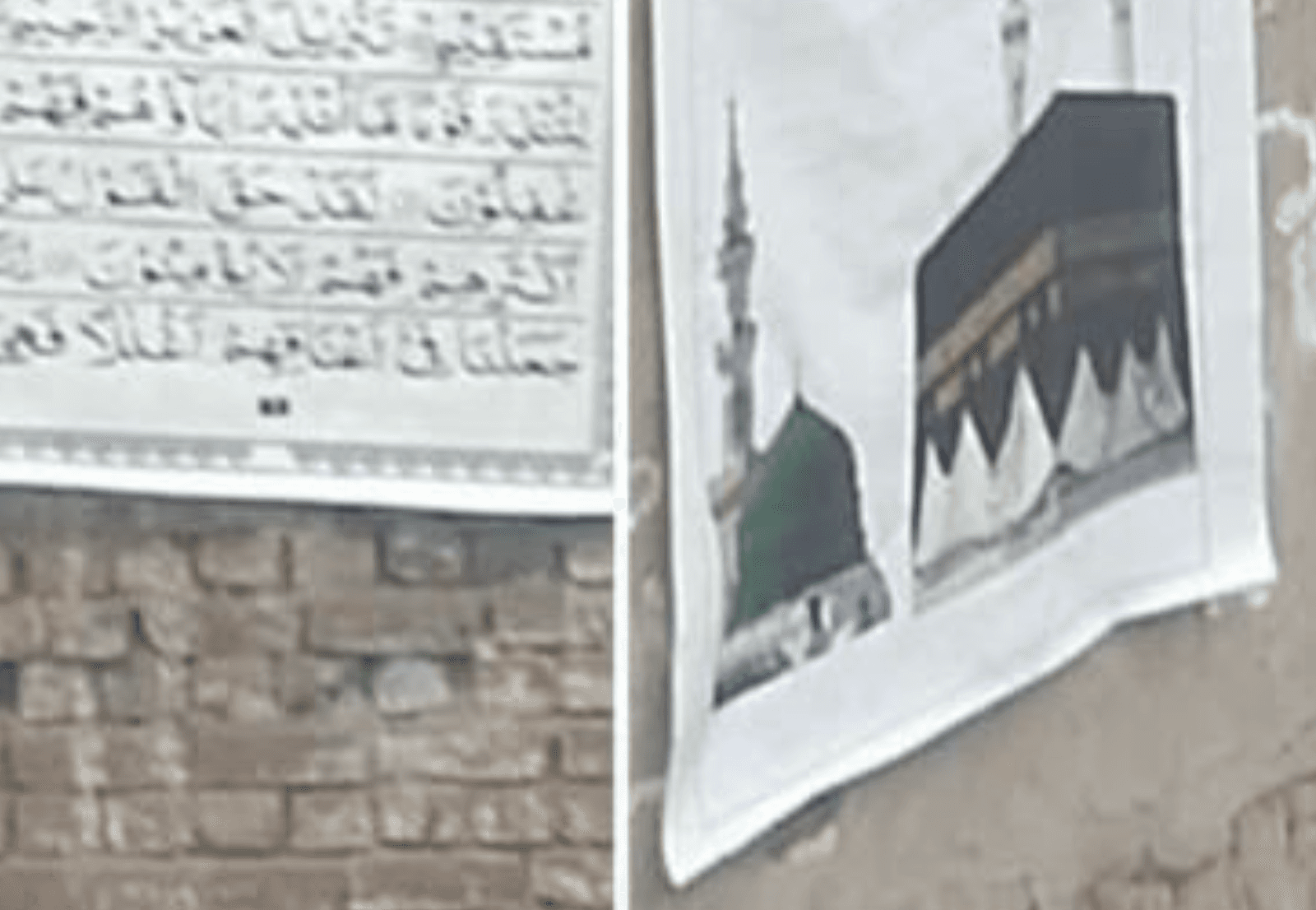
Following the allegedly unlawful occupation, perpetrators displayed religious banners, Quranic verses, and images of Madinah (a city in Saudi Arabia, Islam's second holiest site after Makkah) on the property, apparently to portray the dispute as a religious matter.
Sarwar Masih, his wife, and his brother told the HRFP team that they were directly threatened with blasphemy charges if they attempted to reclaim their property. They also expressed fear that any attempt to remove the religious banners could escalate tensions and endanger not only their family, but also the broader Christian community in the area.
Witnesses, including Muhammad Shahid, 50, a neighbour, told the team they had known the Christian family since childhood and confirmed that the property belongs to them.
However, the occupants threatened that anyone attempting to remove the religious banners would be charged with blasphemy and that all homes in the area would be set on fire. In addition, on Monday, they posted a warning stating that anyone attempting to open the property's door would be accused of desecrating Islam.
HRFP’s investigation revealed that Sarwar Masih's family had lived at the same property for over 70 years, with no legal disputes or court cases related to the ownership.
The family described the blasphemy accusation as a major obstacle to seeking justice, citing previous incidents in which Christian homes were attacked and torched following similar charges.
Naveed Walter, president of Human Rights Focus Pakistan (HRFP), said that this case reflects a disturbing pattern. This is not the first time land grabbers have reportedly used threats of blasphemy charges to silence Christian families and force them to abandon their homes.
In many cases, victims are attacked or left isolated, frightened, and forced to relocate, rather than seeking justice.
Naveed Walter cited similar cases in which threats of blasphemy have escalated into false accusations and attacks stemming from personal disputes, ownership conflicts, and workplace tensions.
He noted that during the illegal occupation of Sarwar Masih's property, law enforcement failed to intervene and did not even register a preliminary complaint.
The fear surrounding blasphemy charges often discourages timely intervention by the authorities and community members.
HRFP emphasised that human rights advocates have criticised Pakistan's blasphemy laws – i.e. Sections 295-A, 295-B, and 295-C of the Pakistan Penal Code – for their misuse and disproportionate impact on religious minorities.
The NGO has called for legal reforms, including safeguards against false accusations, protection for vulnerable communities, and procedural changes to prevent abuse.
HRFP also reiterated its commitment to defending the rights of marginalised communities and called on civil society groups, the media, and government authorities to ensure justice and protection for all citizens, regardless of creed or religion, in line with the vision of Pakistan's founder, Ali Jinnah.