





-future-of-Turkeys-Christian-heritage-65440.html&is_video=&description=Halki+and+the+Adana%27s+church-library%3A+the+%28uncertain%29+future+of+Turkey%E2%80%99s+Christian+heritage)


Halki and the Adana's church-library: the (uncertain) future of Turkey’s Christian heritage
The historic Orthodox church of Agios Nikolaos will become a public library. According to scholars, the building’s remarkable architecture offers a unique atmosphere for reading. Meanwhile, Bartholomew I has announced for September the reopening of the historic seminary with a grand ceremony, but its future use remains uncertain.
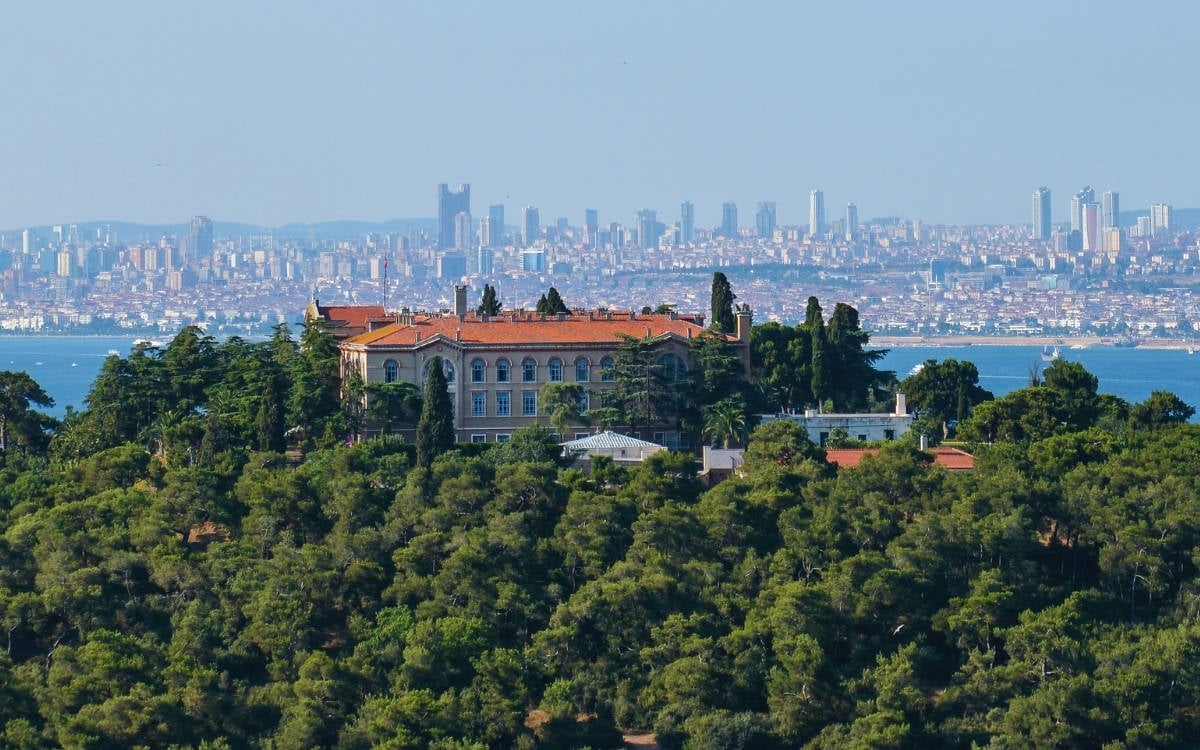
Istanbul (AsiaNews) - A historic church transformed into a public library and a seminary set to reopen after decades of closure. There are both positives and negatives for the Christian community in Turkey which, despite being a small minority, is striving to keep the country’s centuries-old historical and cultural heritage alive, as well as the memory of Pope Leo XIV’s apostolic journey between late November and early December last year.
At the same time, there is no shortage of attacks or acts of violence against individuals and communities, as well as attempts to expropriate church property or historic buildings such as Hagia Sophia and Chora and, more recently, even the Cathedral of Ani, which have been converted into mosques.
In recent days came the announcement regarding the historic Orthodox church of Agios Nikolaos, better known as the Adana Greek Orthodox Church, which has become a public library, the latest in a series of changes of use over the two centuries of the historic (religious) building’s existence. It was originally built in 1845 by the local Greek Orthodox community following the Tanzimat edict of 1839, which granted non-Muslims in the Ottoman Empire the right to establish places of worship and education. After its inauguration, the place of worship remained for decades a stable religious and cultural landmark for the faithful.
Following the 1923 population exchange between Turkey and Greece, the church was abandoned and only later repurposed as the Adana Archaeological Museum, one of the first museums of the newly founded Republic, until 1972. From that point onwards, it served as a museum storage facility before reopening in 1983 as the Adana Ethnographic Museum. Following a complete restoration between 2013 and 2015, the original place of worship was renamed the Kuruköprü Church Memorial Museum and, since 2025, has welcomed a new community of visitors.
Finally, the decision was made to relocate the Adana Provincial Public Library to the building after its historic and original premises at the Sabancı Cultural Centre were damaged in the devastating earthquake of 6 February 2023, to the extent that they were placed on the list of buildings due for demolition. Local experts and scholars say that the church’s striking architecture offers a unique atmosphere for reading, with its walls used to house the popular collection which includes, amongst others, hundreds of literary classics.
Adana, situated in southern Turkey, boasts a long and layered history and has forged historical ties with the Greek world over time, particularly during the Hellenistic and Byzantine eras. After the death of Alexander the Great (323 BC), his empire was divided among his generals and the surrounding region came under the control of the Seleucid Empire, a Hellenistic state founded by Seleucus I Nicator. The Seleucids established numerous Greek cities and spread Greek culture, language and urban planning throughout Anatolia, including Cilicia, the region in which Adana is located, which was itself influenced by Greek administration and culture during this period.
Under Ottoman rule, Adana had a Greek Orthodox minority community, a feature shared with many cities across the empire. This population remained until the 1923 population exchange between Greece and Turkey, when Orthodox Christians from Turkey were transferred to Greece and Muslims from Greece to Turkey. Although few traces remain in modern Adana, certain architectural features, cultural echoes and historical references still point to its multi-ethnic past.
Meanwhile, Ecumenical Patriarch Bartholomew I has announced that the Halki Seminary, an important educational institution for the Greek community on the island of Heybeliada in Istanbul, will reopen in September with a grand ceremony. The primate shared the update on the reopening date on 10 May, during an official visit to Athens, adding that “the countdown to the reopening has begun”. “In the coming months,” he continued, “extensive renovation work on the school complex will be completed. We will celebrate the opening in September.”
The issue of the seminary was also discussed during a meeting between Bartholomew and Greek Prime Minister Kyriakos Mitsotakis. “The positive news you have brought us regarding the reopening of the Halki Seminary is extremely important,” emphasised the head of the Athens government, who spoke of a “historic decision” that the patriarch had “long desired”, as reported by Hürriyet. The seminary has been closed for 54 years and the Patriarchate has requested that it reopen with its previous status as a private school affiliated to the Ministry of Education.
However, reports in the Turkish and Greek media suggest that various options will be considered, including an institution affiliated to state universities, a faculty of theology under a foundation university, or a vocational school. The Higher Education Council (YÖK) is now involved in discussions regarding the future of a building constructed on land belonging to the Monastery of Hagia Triada since the 9th century, which, over time, has graduated at least 12 patriarchs and around a thousand students throughout its history.
The monastery’s administrators received permission from the sultan to build the school in 1772, but the first lessons were not held until 1844 due to a fire in 1821. After the original building was destroyed in the 1894 Istanbul earthquake, it was rebuilt with the permission of Sultan Abdulhamid II and reopened in 1896. The 2,360-square-metre structure was designed in the shape of the Greek letter Pi.
Following the Treaty of Lausanne, foreign schools were required to operate in accordance with the Turkish education system; consequently, the seminary was closed in 1971 by a ruling of the Constitutional Court. Since then, only the Private Halki Greek High School for Boys has continued to operate within the monastery. Efforts towards a reopening gained fresh momentum following the patriarchal appointment of Bartholomew I in 1991, before gathering final momentum after the meeting between US President Donald Trump and his Turkish counterpart Recep Tayyip Erdoğan.

.png)
19/01/2021 09:23










