








Hungary after Orbán: What's changing for Beijing?
The Hungarian prime minister's electoral defeat deprives China of its main ally in the EU, with repercussions on investments, European cohesion, and relations with Taiwan. However, the new government led by Péter Magyar will have ample room to reposition itself along European lines without abandoning economic ties.
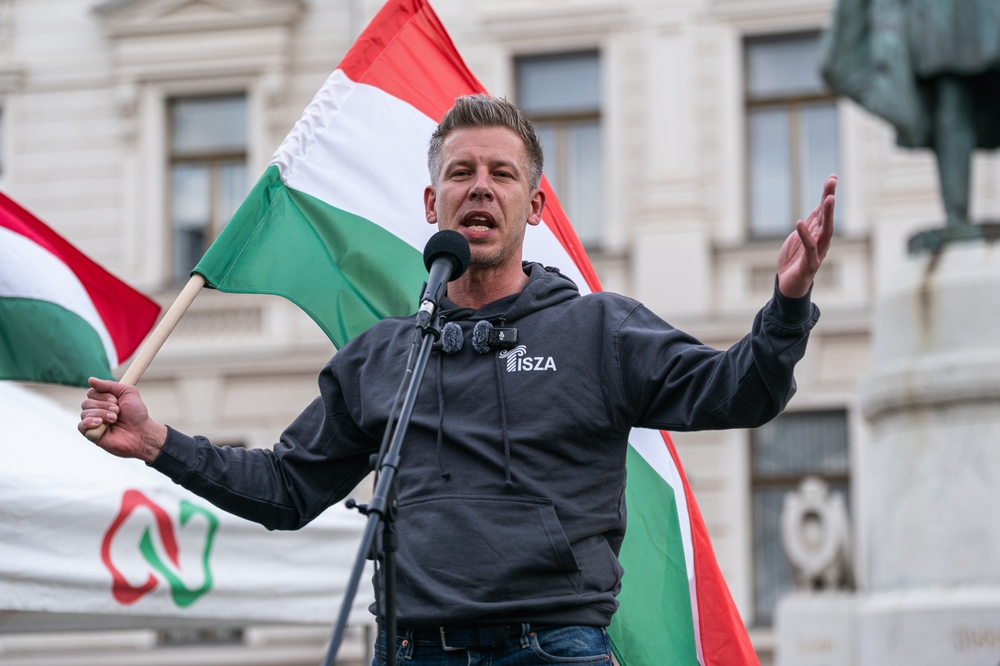
Beijing (AsiaNews) – The landslide victory of Péter Magyar and his Tisza party in the Hungarian parliamentary elections on 12 April ends 16 years of Viktor Orbán's rule and ushers in a period of uncertainty in Sino-Hungarian relations.
Under Orbán, Hungary had become the most pro-Chinese country in the European Union, and its political transformation will have consequences that reach beyond national borders.
Budapest's friendly stance vis-à-vis Beijing was not the result of Chinese pressure, but rather a political choice by Orbán himself, part of a broader agenda against liberal democracy and European institutions.
By drawing closer to China, the Hungarian leader had sent Brussels the message that his country had international connections alternative to the Western axis, with more political rather than economic leeway.
Budapest repeatedly blocked the EU's positions on human rights in China, the South China Sea dispute, and Taiwan, taking on a role that made Hungary valuable in Beijing's eyes.
Despite significant Chinese investments in recent years, China's economic presence in the country remains limited, lacking leverage to influence Hungarian political decisions.
Hungary, like other Central European countries, is deeply integrated into regional value chains and concentrates the bulk of its trade within the EU, particularly with Germany. The new government will have ample room to reposition itself.
Prime Minister-elect Magyar indicated that Hungary will become more cooperative with the EU. Anita Orbán, who is slated to be Hungary’s next foreign minister, stated that Budapest should not weaken European cohesion to the benefit of Russia and China, while recognising the importance of maintaining economic ties with Beijing.
It is reasonable to expect that a Magyar administration will not become an anti-China hawk, but will cease vetoing European criticism of Beijing, aligning itself with the prevailing position in the EU, especially with a view to unblocking the €18 billion (US$ 21 billion) in currently frozen European funds.
No alarmed reactions have come from China so far. Ding Chun, director of the Centre for European Studies at Fudan University in Shanghai, noted that Magyar is unlikely to dismantle existing relations, because bilateral cooperation is mutually beneficial and the ruling party will still have to take national interests into account.
The issue of electric vehicles
The sector where changes could be most tangible is that of electric vehicles and batteries. Over the past decade, Orbán has invited Chinese and South Korean manufacturers to open factories in the country, transforming Hungary into one of Europe's leading hubs for the sector, with major investments by tech giants such as CATL, BYD, and Samsung SDI.
However, the new government is likely to impose stricter conditions. Opening new plants will be more difficult if there are local protests, while subsidies will be cut or tied to stricter environmental regulations and transparency requirements.
Production costs are also set to rise, given the likely abandonment of the policy of sourcing energy from Moscow at favourable prices, which Orbán has tenaciously pursued despite European sanctions.
Some Chinese projects already underway – the subject of controversy even within Orbán's own party, Fidesz, due to doubts regarding the real benefits, the pressure on the country's limited energy and labour resources, and their environmental impact – could be scaled back.
It must be said, however, that Chinese investors interested in accessing the European market will continue to look to Hungary, as producing batteries outside the EU carries the risk of facing customs and regulatory barriers.
Orbán's defeat is seen as a positive factor for the development of a more coherent European policy towards China, but Beijing has other privileged interlocutors within the Union. Spanish Prime Minister Pedro Sánchez, currently on his fourth visit to China in four years, has become the face of European economic opportunism vis-à-vis Beijing.
German Chancellor Friedrich Merz also called for a trade agreement during his visit to China in February, amid economic pressure from US tariffs. The loss of Hungary as an ally weakens China's ability to block EU action, but it does not deprive Beijing of channels for dialogue and influence on the continent.
The Taiwan variable
One aspect that has so far been little explored concerns the potential repercussions on relations between Budapest and Taipei. Under Orbán, Hungary cultivated close political ties with China, but at the same time discreetly expanded economic cooperation with Taiwan, without making it an ideological issue.
Bilateral trade between Hungary and Taiwan reached US$ 1.8 billion in 2025, while Taiwanese investments in the country amounted to US$ 1.37 billion, second among European nations after the Netherlands. This relationship, in turn, is part of a broader framework. Since 2021, Central and Eastern Europe have become an important place for Taipei's projection towards the continent, with varying outcomes from country to country.
Lithuania, for example, led the way by allowing the opening of a representative office in Vilnius, although five years later, doubts have emerged about the actual benefits of this move. Czechia has established itself as a key partner through repeated visits to Taipei by Senate representatives and high-level exchanges. Slovakia and Poland have also deepened ties with the island in areas ranging from judicial cooperation to cybersecurity and the drone industry.
In this context, a Tisza government more aligned with European positions could adopt a more transparent policy towards China, while creating room for further development of relations with Taiwan, without turning this into a political stance.
Ant the winds of change are not blowing only in Budapest.
In neighbouring Serbia, another European country that, along with Hungary and Belarus, shares a "comprehensive strategic partnership" with China, President Aleksandar Vučić's term will expire in about a year, while his party has experienced a decline in support following corruption allegations.
Serbs took to the streets to protest shady deals with Chinese contractors after the collapse of a train station shelter that killed 15 people in late 2024.
If Belgrade were to change course, Beijing would lose another foothold for consolidating its influence in Europe.

.png)
28/04/2023 17:55
13/09/2007










