








In Jerusalem Modi relaunches commercial and military agreements
Two days in Israel to strengthen cooperation between New Delhi and Tel Aviv. Meetings with migrants and Indian businesses, trade, and strategic agreements consolidate an increasingly close alliance between the two countries, voluntarily keeping the Palestinian question in the background. There are also ideological affinities between the BJP and the Israeli right. According to SIPRI data, India already accounts for 34% of Israeli arms exports.
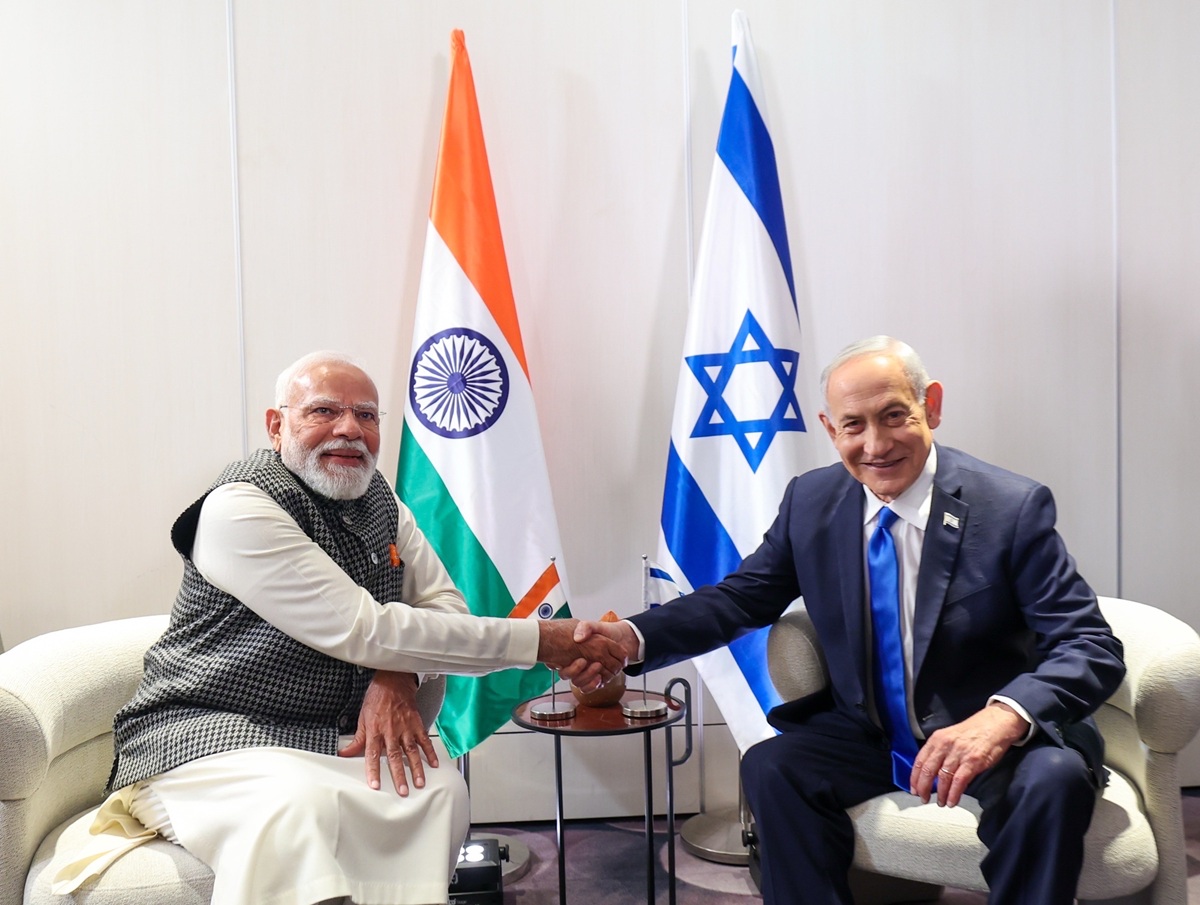
Milan (AsiaNews/Agencies) - “More than a friend, a brother”: with these words Israeli Prime Minister Benjamin Netanyahu welcomed Narendra Modi's two day to Israel with the aim of strengthening relations and cooperation between the two countries. After arriving in Tel Aviv February 25, the two leaders traveled to Jerusalem, where they visited the Yad Vashem Holocaust museum and memorial. Modi then met with the Indian diaspora in Israel and the Indo-Israeli community residing in the country.
During the talks, the two leaders discussed expanding cooperation in various sectors, including technology, innovation, defense, and security. Attention also focused on the mobility of Indian professionals, Indian corporate investment in Israel, and the India Middle East Economic Corridor, announced during the G20 in 2023. The two countries also expressed their intention to finalize a free trade agreement (FTA), which has been stalled for years, to facilitate investment, simplify customs procedures, and strengthen technological cooperation. “The bond between Israel and India is a powerful alliance between two global leaders,” Modi wrote on social media.
India is Israel's second-largest Asian trading partner, mainly for diamonds, petroleum products, and chemicals, but in recent years, cooperation in the electronics, telecommunications, and medical equipment sectors has also grown. However, defense remains at the top of the list. According to the Stockholm International Peace Research Institute (SIPRI), India has been Israel's main military customer for years, accounting for 34% of exports between 2020 and 2024. In 2025, Israel concluded arms sales agreements with India (including bombs and ballistic missiles) worth .6 billion.
Modi was already the first Indian leader to make a state visit to Israel in 2017. Although India has historically opposed Israel's occupation of Palestinian territories, today it is one of the Netanyahu government's most valuable allies. This relationship is set to strengthen, especially on the military and strategic fronts, supported by political and ideological affinities.
The Indian opposition party, the Indian National Congress, has strongly criticized the visit, especially in light of the tensions in Gaza and the West Bank. “The expropriation and displacement of thousands of Palestinians in the Israeli-occupied West Bank has intensified and drawn condemnation from around the world,” Congress Secretary General Jairam Ramesh wrote in X, accusing the government of inconsistency in its foreign policy. “The Modi government issues cynical and hypocritical statements about its commitment to the Palestinian cause. The reality is that the Modi government has abandoned them.”
In his speech to the Israeli parliament, the Knesset, Modi declared that he stood with the Netanyahu government “today and in the future,” condemning the October 7, 2023, attack as “barbaric.” According to several analysts, the visit puts a strain on Modi's relations with other Middle Eastern countries. Modi is seeking to strengthen the partnership with Israel without compromising ties with Middle Eastern powers. Against a backdrop of regional tensions with Pakistan and China, India wants to secure the best equipment and the most advanced technology for the defense of its territory, an area in which Israel excels.
Although India was among the first countries to recognize the State of Palestine on November 18, 1988, its current position, confirmed by this brief visit, marks a gradual departure from the historic diplomatic line it has maintained for decades. However, as Kabir Taneja of the Observer Research Foundation has stated, India believes that regional conflicts should be resolved by the region itself, without external interference. While maintaining this line of non-interference, New Delhi has supported diplomatic initiatives for a truce in Gaza, including the one approved by the UN Security Council in November, which is seen as a possible starting point towards “a just and lasting peace for all the peoples of the region.”

.png)
12/02/2016 15:14
11/08/2017 20:05










