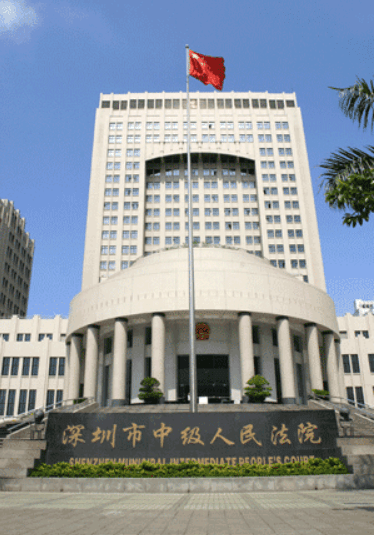
Shenzhen (AsiaNews) – Artificial intelligence is increasingly present in Chinese courts. In the city of Shenzhen, China’s Silicon Valley, judges handled 50 per cent more cases in 2025 than the previous year thanks to an experimental system based on AI applications, the Shenzhen Intermediate People's Court reported, noting that the model will now be extended to other urban centres.
According to official data, each judge handled an average of 744 cases last year, an increase of 249 cases compared to 2024. This productivity level is higher than the Guangdong provincial average, with 261 more cases per judge, approximately twice the national average of 354 cases recorded in 2024.
The system, developed in 2024, is the first intelligent judicial assistance tool in China based on large-scale linguistic models specialised for the legal sector.
The platform is currently capable of covering 85 judicial procedures in civil, administrative, and criminal litigation, and managing case filing, review, hearings, and document preparation.
“While everyone is still discussing whether artificial intelligence can be used in the universally acknowledged high-stakes field of judicial adjudication, we have already provided a practical answer," said Kuang Xiaohua, vice president of the court, speaking at a conference on artificial intelligence on 27 April.
In March Supreme Court President Zhang Jun also spoke of "excellent results" regarding the programme, which has already been implemented in 23 intermediate and local courts across 11 provinces.
Despite their enthusiasm, judicial authorities insist that artificial intelligence cannot replace judges. The Shenzhen court has clarified that the responsibility for decisions remains with judges. This is included in guidelines released on 21 April, which were drafted in collaboration with several research institutions, to clarify the limits of the technology's use.
"While encouraging innovative practices, such implementation shall also resolutely avoid the misconception of 'machines replacing judges'," read the guidelines, which also warn of the "significant risks" associated with the use of AI, including liability exemptions, misinterpretations of regulations, deviations from legal procedures, and potential data leaks.
The same guidelines stipulate that artificial intelligence cannot be used to issue rulings or final decisions, nor can it be trained with unverified data or integrated with components lacking adequate security and compliance controls.
The pilot project also poses challenges, since, in the absence of uniform national standards, each court is required to develop its own solutions.
The risk is that the model may prove effective only in Shenzhen, because that city is home to companies developing new technologies, while it is unlikely that the rest of the country will be able to find personnel with the appropriate technical and legal expertise to replicate the model.
"AI is definitely helpful, but it cannot replace the most important thing in a trial: the fair and impartial heart of the judge,” said Hao Yachao, a Beijing-based lawyer.
The limitations of the Chinese judicial system, characterised by a certain rigidity and the lack of full judicial independence, cannot certainly be overcome by automation.