








In a first, India's Supreme Court allows end to life support
Harish Rana, 32, has been in a vegetative state for more than 10 years after falling from a building. The court ruling follows his parents' request to end essential life-sustaining treatment. For Archbishop Thakur, the word euthanasia is not used, but the ruling opens the door to the “right to die”.
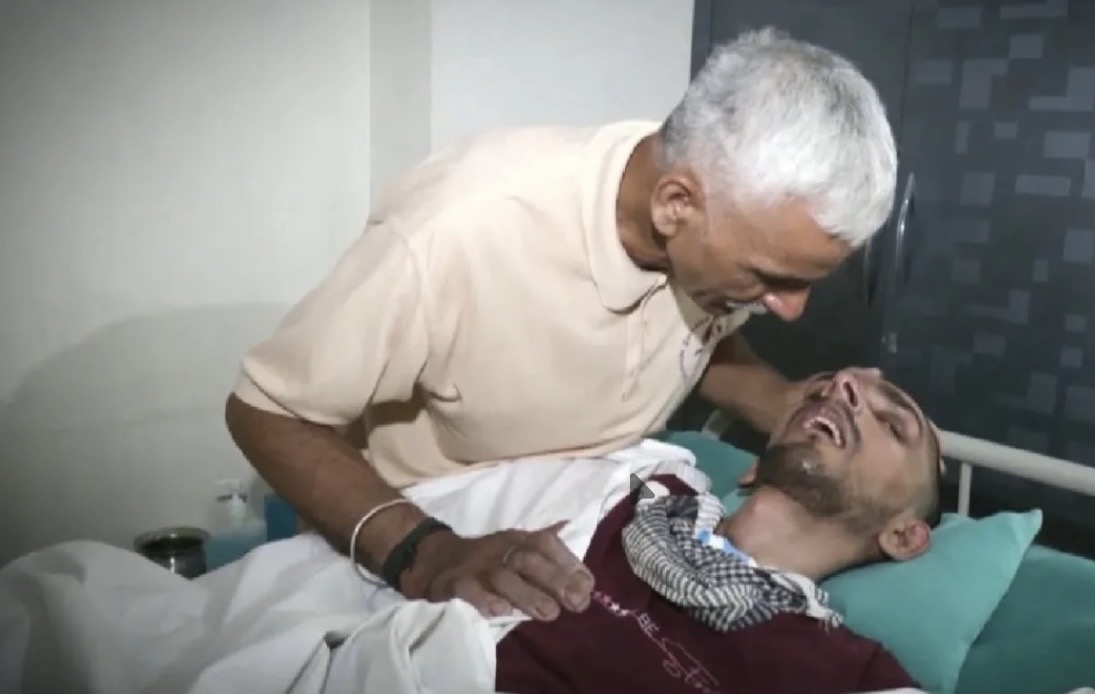
New Delhi (AsiaNews) – The Supreme Court of India issued an historic ruling today, a first for the Asian country, authorising the interruption of essential life support for a man in a vegetative state for more than a decade.
This decision is rooted in India's 2018 recognition of the possibility of withdrawing life support under defined (and regulated) conditions, to allow death to occur naturally. Almost eight years later and for the first time, the court approved its use.
Speaking to AsiaNews, Archbishop Victor Thakur of Raipur, who chairs the Board of Directors of the Society for Medical Education of the Catholic Bishops' Conference of India (CBCI), noted that the expression “passive euthanasia” was not used in this case.
According to the prelate, the Supreme Court “has very diligently dealt with the Rana case in allowing to withdraw the extraordinary medical support,” but the expression, “‘the right to die’ will open the floodgate and will be difficult to decide” in the future.
Harish Rana's parents had asked to terminate medical support for their son, who had suffered serious head injuries following a fall from the fourth floor of a building in 2013 and had since been kept on life support in a vegetative state.
Today, Justices J B Pardiwala and K V Viswanathan granted their request, stating in their ruling that the patient shows "no meaningful interaction" and is dependent on others for "all activities of self-care," including feeding, which is administered through tubes.
“His condition has shown no improvement,” the bench ruling reads. “[H]is family never left his side [. . .] to love someone is to care for them even in the darkest times,” it added, praising Rana’s parents for their dedication and care.
While granting the application in the specific case of withdrawal of treatment, the bench also urged the government to consider introducing comprehensive passive euthanasia legislation.
Having studied the case, doctors had already concluded that Rana, 32, has virtually no chance of recovery. However, since he did not have a living will, a legally binding document that establishes treatment preferences in the event of a terminal illness, he was unable to give his consent to passive euthanasia.
The parents had filed a court petition to end life support, partly because at the time of the incident, the country had not yet approved the controversial law.
India recognised passive euthanasia in 2018, a step strongly criticised by the Indian Church as part of its pro-life campaign. Active euthanasia, in which substances are directly administered to cause death, remains illegal in India.
The countrywide debate over the appropriateness of allowing someone to die dates back to the Aruna Shanbaug case of 2011, a nurse who spent 42 years in a vegetative state following a brutal sexual assault.
At the time, the Supreme Court had rejected the request by the woman's family to end her life; eventually shed died of pneumonia in 2015 at the age of 66.
This case sparked a heated political and social debate, which culminated in the historic 2015 ruling recognising passive euthanasia under strict safeguards and with judicial approval. The decision was based on previous rulings recognising the constitutional right to die with dignity and served as the legal basis for the expanded 2018 ruling.
Still, euthanasia remains a deeply controversial issue, in Asia, Europe and the rest of the world. Supporters argue that terminally ill patients should have the right to choose a compassionate end when pain has become unbearable, while opponents emphasise the sanctity of life.
Some countries, like the Netherlands, Belgium, and Canada, allow both euthanasia and physician-assisted suicide, adhering to strict regulatory and medical protocols.

.png)
09/03/2018 17:58










