








Iraq: New president brings new balance between Baghdad and Erbil
After weeks of deadlock, Nizar Mohammed Saeed Amidi has been appointed President of the Republic. Political scientist Saad Salloum tells AsiaNews: this choice is a sign of “Kurdish fragmentation” and greater centralisation of power. For the Iraqi scholar, “pragmatism, institutional continuity and conflict management” will be the guiding principles of his four-year term.

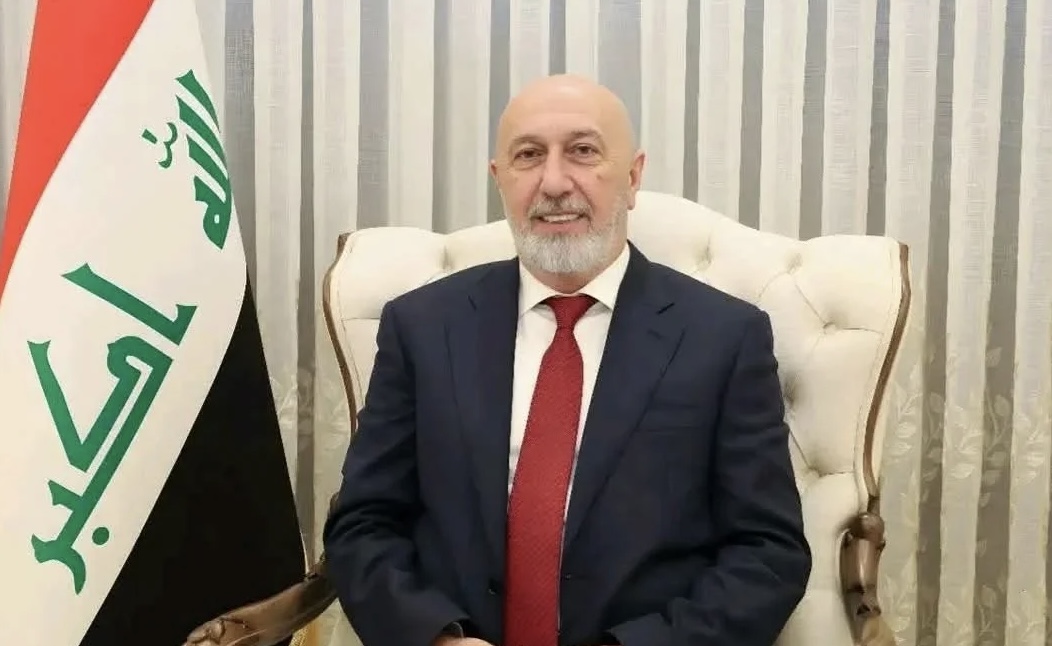
Milan (AsiaNews) - The erosion of the long-standing mechanism of “Kurdish consensus on the presidency” and the “growing role” of federal institutions in arbitrating political competition in Erbil have reshaped Iraq’s political landscape. This dynamic has produced a president who is simultaneously a product of Kurdish fragmentation and a symbol of a new way of resolving intra-Kurdish disputes—one increasingly centred on Baghdad.
This is how Saad Salloum, journalist and associate professor of Political Science at Baghdad’s al-Mustanṣiriyya University—one of the capital’s most prestigious institutions—described the election of Nizar Amidi as President of the Republic in comments to AsiaNews. The vote followed a prolonged political stalemate and has drawn limited attention amid a Middle Eastern context dominated by the confrontation between the United States (and Israel) and Iran, as well as by broader regional turmoil, beginning with Lebanon.
Yet the appointment carries considerable significance for Iraq’s internal balance of power, particularly in Baghdad—a crucial crossroads and a reflection of the tensions and competing interests between Washington and Tehran.
The new president, Nizar Mohammed Saeed Amidi, has worked for almost 20 years behind the scenes of the national political landscape, resolving constitutional deadlocks, political crises and the delicate balance between Baghdad and Kurdistan in the north. A member of the Patriotic Union of Kurdistan, he secured 227 votes in the second round of voting in mid-April, beating his rival Muthanna Amin, who received only 15 votes.
For years, Amidi has been one of the leading constitutional advisers, working alongside his predecessors Jalal Talabani, Fuad Masum and Barham Salih between 2005 and 2022. Born on 6 February 1968 in Amedi, in the province of Dohuk, he studied mechanical engineering at the University of Mosul before embarking on a political career split between Baghdad and the Kurdish region, emerging as a bridge-builder between the centre and the periphery. Fluent in Arabic and Kurdish and the father of four children, Amidi is often seen as a political mediator capable of engaging with Iraq’s competing centres of power. According to Salloum, “pragmatism, institutional continuity and conflict management” are the guiding principles of his four-year term.
Below is AsiaNews' full interview with the Iraqi scholar
Prof Salloum, what can you tell us about the new president?
From an academic perspective, Nizar Amidi is best understood as an insider figure—someone who rose through Iraq’s state institutions rather than emerging as a charismatic or mass-based political leader. His appointment reflects how Iraq’s post-2003 system often resolves political deadlock through elite negotiation rather than broad consensus.
His election followed a prolonged stalemate, particularly involving rival Kurdish factions, and highlighted a shift in how decisions are made—from traditional intra-Kurdish agreements to a more Baghdad-centered parliamentary outcome. This signals a subtle but important change in the balance between the federal center and the Kurdistan Region.
In this sense, his presidency is a test on two levels: whether Iraq can move from crisis-driven politics toward more stable institutional governance, and whether an insider figure like Amidi can effectively balance internal divisions while navigating increasing regional pressures.
What impact will he have on the country’s institutional life, at a turbulent time not only for Iraq but for the entire Middle East?
The potential impact of Nizar Amidi on Iraq’s institutional and political life will likely be incremental rather than transformative.
As a system insider, his main influence may lie in stabilizing institutional processes—helping to manage elite bargaining, reduce political deadlock, and maintain continuity within the state at a time of regional turbulence. In moments of crisis, such figures tend to act less as agenda-setters and more as mediators among competing political actors.
At the same time, the broader regional context—marked by escalating tensions across the Middle East—limits the scope of any Iraqi president. His role will likely focus on balancing external pressures, particularly between regional and international actors, while preventing internal fragmentation from escalating.
In this sense, his impact will depend less on bold reforms and more on his ability to contain crises, preserve institutional coherence, and quietly recalibrate relations between Baghdad and key domestic and regional actors.
How does Nizar Amidi fit into the Kurdish political landscape?
Nizar Amidi fits into the Kurdish political landscape as a consensus-by-necessity figure rather than a dominant partisan leader. Unlike traditional candidates firmly backed by one of the major Kurdish parties, his profile reflects a compromise emerging from within Kurdish internal divisions.
His appointment was shaped by a sequence of developments: a prolonged deadlock between the main Kurdish parties—particularly the Kurdistan Democratic Party and the Patriotic Union of Kurdistan—which prevented agreement on a unified nominee. As the stalemate deepened, the electoral process shifted toward Baghdad, where parliamentary dynamics—and alliances beyond the Kurdish bloc—ultimately determined the outcome.
In this sense, his rise reflects two parallel dynamics: first, the erosion of the traditional Kurdish consensus mechanism over the presidency; and second, the increasing role of federal institutions in arbitrating Kurdish political competition. This makes him both a product of Kurdish fragmentation and a symbol of a more Baghdad-centered resolution of Kurdish disputes.
What will be the guiding principles and priorities during his term of office?
The guiding principles Nizar Amidi is likely to adopt will be shaped by pragmatism, institutional continuity and conflict management rather than ideological transformation. His main priority will probably be to stabilise the political system, reducing deadlocks, facilitating cooperation between key actors and ensuring the smooth functioning of state institutions.
Given the circumstances of his appointment, he is also expected to place an emphasis on mediation, particularly in managing tensions between Baghdad and the Kurdistan Region, as well as between competing political blocs. Another key priority will be to address regional turmoil.
Will he be able to exert real influence within a regional context characterised by war and conflicting tensions?
In a highly unstable Middle Eastern context, he will likely aim to preserve Iraq’s relative balance by avoiding alignment with any single axis, whilst maintaining working relationships with both regional and international partners. Overall, his approach should focus on progressive and gradual governance: containing crises, strengthening institutional coherence and promoting gradual adjustments, rather than pursuing ambitious or disruptive reforms.
Prof. Salloum, with the election now over, the game of government begins with the appointment of the prime minister: sources within the Coordination Framework are currently stating that the post could be entrusted to Bassem al-Badry. What developments do you foresee?
The post-election phase in Iraq is characterised not so much by a decisive electoral mandate as by lengthy coalition negotiations between rival political blocs. Since Nizar Amidi is expected to play a constitutional role in the appointment of the prime minister, the real centre of power will shift to negotiations between parliamentary factions rather than to any single institutional figure. In practice, the president’s choice is usually constrained by the candidate capable of securing the broadest cross-party consensus. Consequently, what is most likely to emerge will not be a strong, unified executive, but a consensus-based agreement on the prime minister.
So do you doubt that we will end up with a solid executive capable of guaranteeing stability for the country in the midst of the storm?
Such governments in Iraq tend to be inherently fragile, as they are based on power-sharing between rival blocs rather than on a coherent governing majority. That said, in the Iraqi context, ‘stability’ is often achieved not through strong centralised authority, but through a carefully balanced institutional compromise. The key question, therefore, is not whether a strong executive will emerge, but whether the next prime minister will manage to maintain sufficient agreement amongst the fragmented political forces to avoid institutional paralysis during a period of regional uncertainty.
GATEWAY TO THE EAST IS THE ASIANEWS NEWSLETTER DEDICATED TO THE MIDDLE EAST. WOULD YOU LIKE TO RECEIVE IT EVERY TUESDAY? TO SUBSCRIBE, CLICK HERE.

.png)
07/02/2019 17:28










