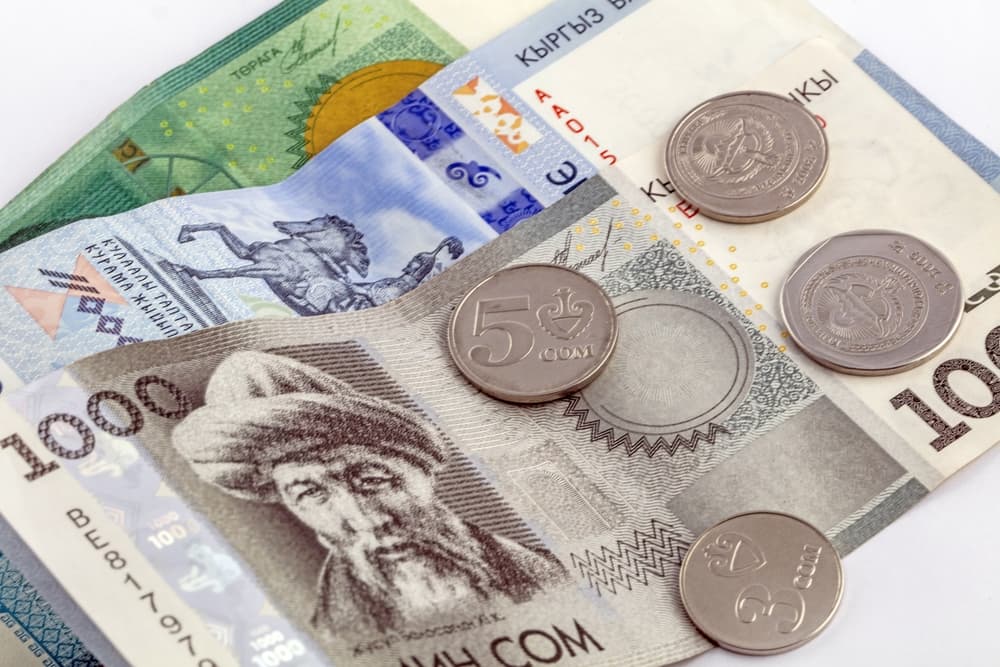
Bishkek (AsiaNews) - In Kyrgyzstan, alongside conventional loans and deposits, the principles of Islamic finance are also applied; these are officially enshrined in banking legislation and regulated by the National Bank.
The fundamental difference from conventional finance is that transactions are carried out in accordance with the principles of Sharia: money is not ‘lent’ at interest, but the system uses it as a means to purchase goods or participate in a commercial activity, whereby the bank sells a specific asset to the customer on an instalment plan, or establishes a partnership with them and shares the financial returns.
An article by Kaktus.media uses three case studies to better illustrate how financing based on Islamic principles works. In the first case, Erkinbek had long put off buying a flat. He was living in rented accommodation to settle into his new life in the capital, Bishkek, but every time he paid the rent, he thought: “I’m just wasting it.”
At 33, he had saved 1 million som, almost a thousand euros. He had enough for a deposit, but not for a flat, and his only remaining option was to go to the bank. The first bank offered him a loan: 3 million som at 18% per annum for 5 years. In this case, the money itself is the object of the sale and the interest is the price paid for its use. Erkinbek, however, walked into another bank, an Islamic bank, mostly out of curiosity, and the conversation took a different turn.
“We do not lend money at interest,” said the clerk. “We purchase a flat based on your request and resell it to you in instalments with a pre-agreed mark-up. That is how a murabaha contract works.” So Erkinbek chose a flat and submitted an application; the bank checked his creditworthiness and credit history to protect the customer from excessive debt. The bank purchased the flat from the seller for 4 million som, and then resold it to Erkinbek with a pre-agreed premium, to be paid in instalments.
Malika is 37 years old. Six months ago, she had around 500,000 som in her account, and the money was simply sitting there. A deposit seemed the most obvious solution, but standard bank interest rates were unattractive. One day, a friend casually mentioned to her:
“There are deposits based on Islamic principles. The money works differently there.” Malika was sceptical, and a deposit without a guaranteed interest rate seemed like a novelty to her, but curiosity got the better of her and she went to the bank. There, they told her about a fixed-rate investment deposit under a mudarabah agreement; the clerk explained that if the projects were profitable, she would receive her share. Malika left feeling that she hadn’t simply opened a deposit account, but had made a genuine investment.
Bakyt had long wanted to open a carpentry workshop. He found clients on his own, with orders coming in through word of mouth, but one thing was missing: start-up capital. According to his calculations, he needed around 3 million som to fully launch the business. The first bank examined the project, assessed the prospects for future income and approved the loan. But the terms were standard: a clear repayment plan and fixed interest rates.
The clerk immediately laid out strict requirements: “The risks are yours to bear, and if things turn out worse than expected, you will have to repay the bank debt in full.” He came across an Islamic bank by chance, whilst reading an online article, and secured a sharika/musharaka agreement, a partnership financing arrangement in which the bank does not provide a loan but enters the business as a co-investor, with profits shared by mutual agreement and losses borne in proportion to each party’s contribution.
The stories of Erkinbek, Malika and Bakyt are not exceptions, but rather three typical scenarios, the spirit of which already underpins the principles of Islamic finance in Kyrgyzstan. In recent years, this segment has grown significantly and is no longer a niche market: the volume of financing based on Islamic principles has reached 21.1 billion som, an increase of almost sixfold.
The principles of Islamic finance introduce a fundamentally new logic to the market, whereby a bank becomes not merely a lender but an active participant in a transaction, a project or an outcome, and it seems reasonable to expect significant growth in this segment of the banking sector.