








Kathmandu Valley: deadline for people evicted only postponed
The government granted an additional week following protests, but confirmed assistance is still limited to three months. Families forced to leave “illegal” settlements in April complain that the resettlement plan is unbalanced. Human rights groups are also critical of the government.
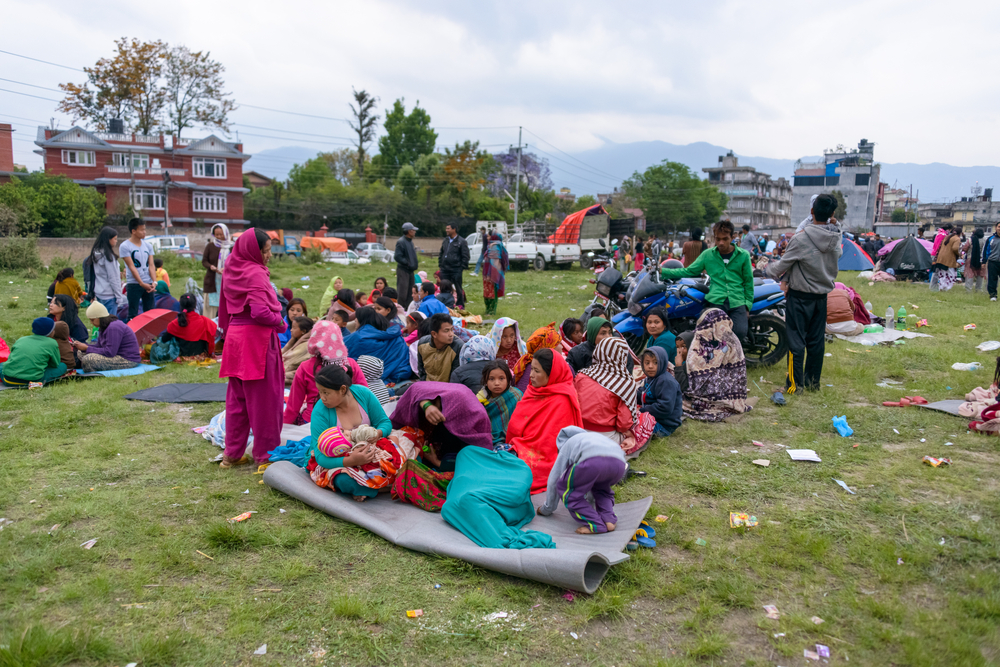
Kathmandu (AsiaNews) – The Nepali government has extended until tomorrow the deadline for people evicted in Kathmandu Valley last April to leave reception centres.
Initially set for 26 June, the deadline was postponed by a week following protests from displaced people and critics of the government for its excessively short deadline. The original financial assistance plan remains unchanged: a one-time allowance of 25,000 rupees (US$ 165) and a rent subsidy of 15,000 rupees (US$ 100) per month for three months.
Deeply worried, many displaced people accuse the authorities of undertaking temporary measures that fail to address the problem with a balanced resettlement plan.
According to the people evicted, the rent subsidy is insufficient for housing in the Kathmandu Valley and does not even cover basic expenses. Despite the extension, uncertainty remains over the fate of families once the financial assistance expires.
In April, the Nepali government launched a large-scale operation to clear illegal settlements built on public lands along riverbanks in the Kathmandu Valley. According to official figures, nearly 2,600 people were removed with approximately 1,500 still housed in shelters.
The clearing affected settlements along the Bagmati River, in the Thapathali area, and those in Bhaktapur, on the banks of the Manohara River.
People were given a 24-hour notice to gather their belongings and leave their homes before the operation began. To address the emergency, seven reception centres were set up in Kathmandu, Bhaktapur, and Kavrepalanchok.
The first one was set up at the Dasharath Stadium, in Kathmandu’s Tripureshwor neighbourhood, where displaced people could be registered before moving to other facilities.
As a result, the government led by Balendra Shah, in office since March 2026, has come under fire, drawing criticism from the United Nations and several humanitarian organisations.
Critics expressed concern about the conditions of the displaced and accused Nepal of violating their constitutional rights.
In its statement, the United Nations also cited two cases of suicide that occurred after the victims were forcibly evicted and saw their home demolished.
Amnesty International also condemned the operation, noting that it reflects a dangerous erosion of the rule of law and an increasingly authoritarian approach by the government.
Born in 1990, a former rapper, Balendra Shah served as mayor of Kathmandu from 2022 to 2026 before he became prime minister.
His political rise has been made possible primarily by young Nepalis, particularly Generation Z, who played a key role in the protest movement that led to the downfall in September 2025 of then-Prime Minister Khadga Prasad Sharma Oli and his government.
Prime Minister Shah defended the demolitions, claiming that it was necessary to move people away from "unorganized and flood-prone" areas. “This government will provide a permanent solution to this problem that has been going on for years,” he said, adding that deserving displaced people will be allocated new land.
According to Shah, this will improve the drainage system in the Kathmandu Valley, promoting cleaner rivers, which are currently severely polluted, clogged with waste.

.png)
06/03/2026 17:02










