








Khamenei's killing also inflames Shias in Pakistan and India
In Karachi, several people die in an attempted assault on the US consulate. Tensions were high across Pakistan, home to the world’s second-largest Shia community, with the authorities imposing a ban on public demonstrations. Protests also erupted in India, from Lucknow to Kashmir, as well as in the Karnataka city where Iran's late supreme leader opened a hospital in 1986.
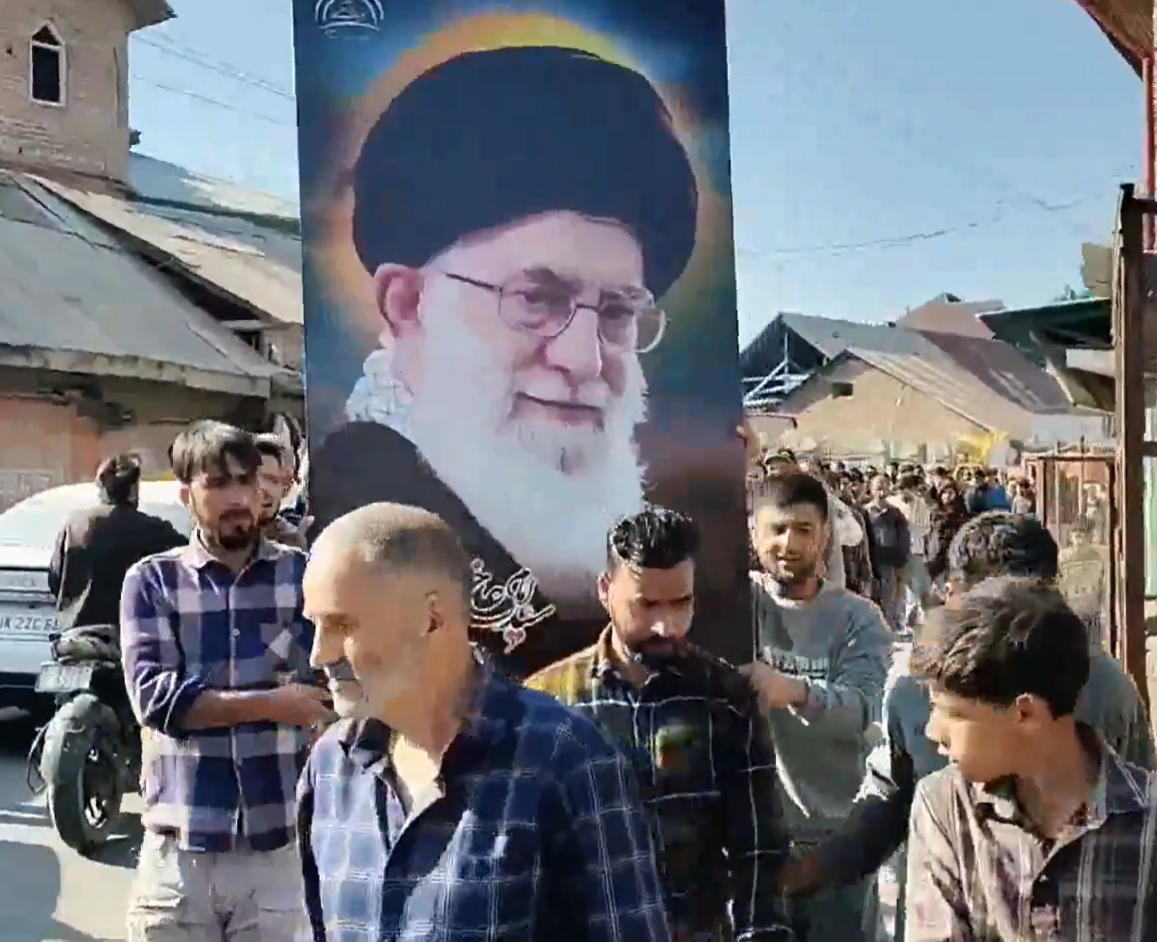
Milan (AsiaNews) – The shockwaves sparked by US and Israeli raids, which killed Iran's Supreme Leader Ali Khamenei and dozens of other senior Iranian officials on the morning of 28 February, are not limited to the Middle East and the Gulf region.
Tensions are also running high in South Asia, another region already reeling from serious local conflicts, where fighting broke out on the border between Pakistan and Afghanistan just 24 hours before strikes on Iran began. Here, relations with Shia populations, who represent a significant minority, especially in Pakistan and India, is a highly sensitive issue.
Historically, both South Asian countries have important ties with Iran, but also very close relations with the United States and, in the case of Narendra Modi's India, with Israel.
The situation is tensest in Pakistan, where Shias number in the tens of millions (representing the second largest Shia community in the world after Iran). Scores were killed yesterday in Karachi by security forces trying to stop an attempted assault on the US consulate.
Protesters tried to break through the security perimeter, eliciting a harsh response from the police. The official death toll stands at 10 with at least 73 wounded, some in critical condition -
much higher figures are reported on social media.
In Sindh Province, the government imposed a month-long ban on protests, marches, and gatherings under Article 144 of the Penal Code, setting up a commission of inquiry to determine responsibility and the circumstances of the unrest.
Violent clashes also erupted in Islamabad near the diplomatic enclave, a zone with embassies and high commissions, resulting in the deaths of at least two protesters and injuries to over 30 people, including police agents.
In the federal capital, law enforcement officers blocked the main access roads and dispersed the crowd with tear gas, after authorities banned all gatherings.
In Lahore police broke up gathering of hundreds of activists in front of the US Consulate, while the Punjab government imposed a temporary ban on public assemblies and the carrying of weapons.
The situation in Gilgit-Baltistan, things escalated further, with the authorities imposing a curfew in Skardu after protesters set fire to buildings, including UN offices. The army was deployed to restore order, while several roads and businesses remained closed.
In other areas, such as Dera Ismail Khan and other cities in Khyber Pakhtunkhwa, demonstrations of solidarity with Iran were largely peaceful.
Against this background, Pakistani President Asif Ali Zardari addressed parliament today, warning that the country will not “allow any entity, domestic or foreign to use neighbouring territory to destabilise our peace”.
This message is aimed primarily at Taliban-ruled Afghanistan, which Pakistan accuses of supporting the "terrorism" of their Pakistani counterparts in collusion with Indian intelligence,
Highlighting the authorities' concern over the Shia protests, India too was the scene of similar demonstrations. In the South Asian country, Shias represent about 20 per cent of the country’s 180 million Muslims.
In Lucknow, the capital of Uttar Pradesh and a major centre of the Shia community, Shia religious leaders announced three days of mourning for what they describe as Khamenei's “martyrdom”.
Shia cleric Maulana Kalbe Jawad called on the entire Muslim community and humanitarians to close shops and businesses in protest.
A condolence meeting was planned at the Chota Imambara, followed by a candlelight vigil, while the secretary general of the Shia Personal Law Board, Maulana Yasoob Abbas, announced a "strong protest" against the United States and Israel.
Mass protests were also held in the Kashmir Valley, where large Shia crowds, including women and children, took to the streets chanting slogans against Washington and Tel Aviv.
In central Srinagar, protesters gathered in Lal Chowk (Red Square), while the authorities deployed a large police contingent to prevent unrest.
Kashmiri separatist leader Mirwaiz Umar Farooq condemned the US and Israeli attacks and called for a general strike in the region, expressing solidarity with the Iranian people.
Demonstrations and mourning events were also held in the state of Karnataka, particularly in Alipur, a town in Chikkaballapur District where Shias make up 99 per cent of the population.
Khamenei himself visited Alipur in 1986 to inaugurate a hospital built with the support of the Iranian government. Residents joined the protests, with shops closing for three days.
In Bengaluru, a silent protest was also planned at a mosque. Despite the outrage, community leaders reiterated that all events will be held peacefully and in compliance with the law.
(Nirmala Carvalho contributed to this article)

.png)










