








Kuala Lumpur: High Court dismisses appeal over minors’ conversion to Islam
An appeal against laws allowing minors to convert to Islam with the consent of just one parent has been dismissed on procedural grounds. Eight years on from a landmark ruling that seemed set to change the situation, the issue continues to be a cause for concern among religious minorities.
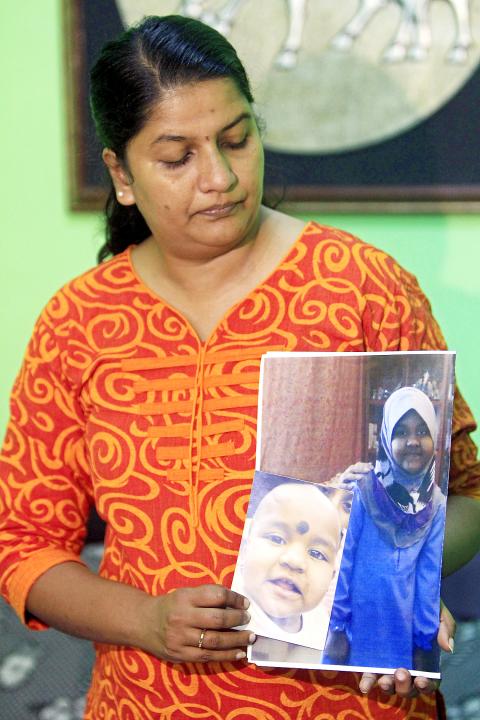
Kuala Lumpur (AsiaNews) – Malaysia’s High Court has dismissed a constitutional appeal against the rules allowing the conversion of minors to Islam with the consent of just one parent, leaving the provisions currently in force in six states and the Federal Territories. However, the decision does not address the substance of the dispute and leaves one of the most sensitive issues in relations between the country’s religious communities unresolved.
The ruling, delivered by Judge Datuk Aliza Sulaiman, established that the former appellant Indira Gandhi and the other thirteen signatories to the petition did not have sufficient legal standing to bring the case. For this reason, the court declared the appeal inadmissible without ruling on the constitutionality of the contested provisions.
The proceedings sought a declaration of unconstitutionality regarding provisions in the Islamic laws of the states of Perlis, Kedah, Malacca, Negeri Sembilan, Perak and Johor, as well as the Federal Territories of Kuala Lumpur, Putrajaya and Labuan. According to the appellants, these provisions allow for the religious conversion of children and adolescents under the age of 18 with the consent of just one parent, in contravention of the guarantees enshrined in the national Constitution.
Among the signatories was Indira Gandhi, a central figure in one of the most significant legal cases in Malaysia’s recent history. In 2009, her ex-husband had converted the couple’s three children to Islam without his wife’s consent. After years of legal battles, in 2018 the Federal Court had annulled the conversions, ruling that the term ‘parent’ contained in Article 12(4) of the Constitution should be interpreted, in that case, as referring to both parents.
According to the High Court, however, that decision is not sufficient to automatically invalidate the provisions still present in state legislation. The judge accepted the federal government’s arguments that the 2018 ruling concerned specific circumstances and cannot be automatically extended to all cases of child conversion.
The issue of unilateral conversions has been one of the most controversial topics in Malaysia’s legal landscape for decades. Disputes arise particularly in cases of separation or divorce between spouses of different faiths, when one of them converts to Islam and decides to register their minor children as Muslims as well.
Civil rights organisations and groups linked to non-Muslim communities argue that this practice creates legal uncertainty and may undermine the principle of equality between parents. On the other hand, Islamic religious authorities and several state governments defend the autonomy of Islamic institutions and the jurisdiction of individual states in religious matters.
The High Court’s decision therefore maintains the status quo. The contested provisions remain in force and their compatibility with the Federal Constitution remains an open question. The court itself has stated that the matter could be brought before the judges again in the future by appellants able to demonstrate a direct and concrete interest.
Whilst dismissing the appeal, the Court nevertheless recognised the public interest nature of the case and decided not to impose legal costs on the appellants. A decision that reflects the national significance of a debate likely to continue, whilst calls grow for legislative reform capable of definitively clarifying the relationship between parental rights, religious freedom and the protection of minors in a multi-ethnic and multi-religious society such as Malaysia’s.

.png)
12/02/2016 15:14










