








Lebanese protest high petrol prices, VAT hikes
Anger and discontent are widespread over the Cabinet’s decision. The prime minister and the finance minister are accused of populist measures. The VAT rose to 13 per cent, while 20 litres of petrol now cost almost US$ 3.50 more. The government calls these measures "essential”, while trade unions are announcing a fight.
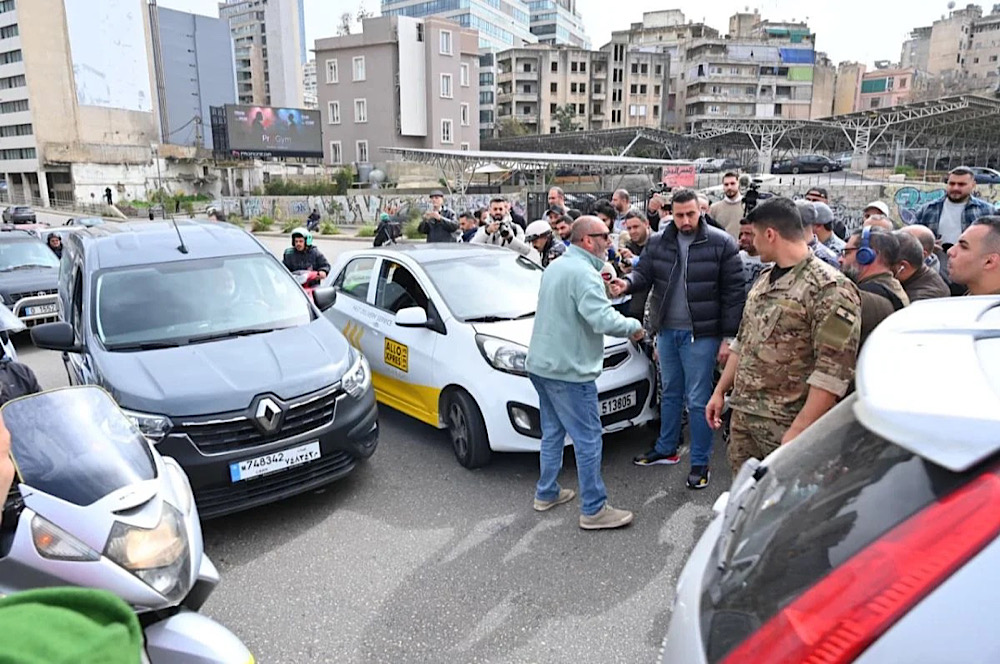
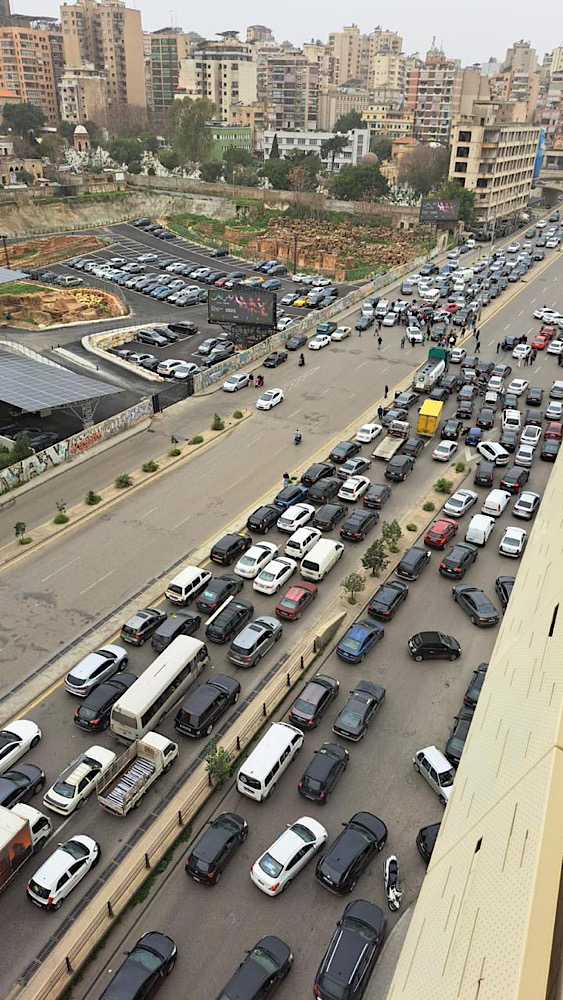
Beirut (AsiaNews) – Discontent was palpable in Lebanon both in political circles and among trade unions, as well as on the streets, in the wake of a cabinet meeting on Tuesday that decided to increase petrol prices and the VAT, steps seen as a “misstep”, a “patch up job”, and “inflationary measures”.
“I am appalled. I never would have believed that Nawaf Salam and Yassine Jaber would resort to such easy and populist measures. What they give us with one hand, they take back with the other,” exclaimed a retired officer who requested anonymity.
The VAT was increased by one percentage point, from 12 to 13 per cent, while 20 litres of petrol gasoline now cost 300,000 Lebanese pounds (approximately US$ 3.40) more than before.
The goal is to raise US$ 800 million to cover an additional pay increase equivalent to six times the base salary for all civil servants, whose pensions and salaries plummeted due to the 2019 economic crisis.
The number of public service employees affected is 330,000, a considerable figure that includes the members of the Armed Forces.
Closely monitored by the IMF, the Lebanese government opted for the easiest route, indirect taxes affecting the entire population, not daring to violate the international agency’s strict directive of no spending commitments without guarantees of equivalent revenue.
It is well known that the Lebanese currency has lost more than 90 per cent of its value since 2019, and that Lebanese banks have been in default since then.
An endless dispute is pitting bankers against the Central Bank, and the latter against the government, over who is responsible for this collapse in which tens of billions of dollars of private depositors' funds were swallowed up.
Transport unions were the first to protest against a price hike that will affect all goods requiring transport, including food. The price of 20 litres of premium petrol (98 octane) is now US$ 22.
The government had pledged to grant these increases under pressure, notably from retired military personnel, who had threatened to paralyse the country if their demands were not met. But no one had imagined that a government seen as almost a government of national salvation and reform, would resort to indirect taxes to extricate itself from this predicament.
Salam and Jaber defend themselves
Prime Minister Nawaf Salam and Finance Minister Yassin Jaber both defended the government's decision. Jaber deemed these increases "essential" and pointed out that basic food products are exempt from the VAT increase. Against all common sense, he believes that the VAT targets only the wealthy.
But the consumers’ association clearly pointed out in a press release that the VAT increase and the imposition of an excise tax on gasoline "place the burden of economic and social policies", like those that led the country to the inflationary catastrophe of 2019, on the poorest citizens.
Salam asserted that it was not an "easy decision," but that the government wanted to generate revenue "as soon as possible" and that it had, in return, scrapped an existing excise tax on heating oil. This argument does not hold up, since this tax of 174,000 Lebanese pounds (approximately US$ 2), imposed at the end of May 2025, had been halted by the Council of State in July of the same year.
An easy way out
The decision was strongly challenged, even within the Cabinet. Industry Minister Joe Issa el-Khoury stated that ministers from the Lebanese Forces (LF) criticised the government for choosing "the easy way out" instead of working to end customs and tax evasion and improve tax collection. They warned of "the repercussions of increased taxes on inflation and private sector productivity.”
The Kataeb Party echoed this sentiment, with its leader Samy Gemayel calling for "a genuine and comprehensive reform of the public sector, eliminating phantom jobs and restructuring based on competence and transparency.”
According to figures presented by MP Farid Boustany, out of 330,000 public employees, 30,000 are essentially freeloading, never reporting to work, while the salaries of 30,000 deceased civil servants continue to be paid to their families.
Emergency union meetings
Anger was also palpable among trade unions. The president of the General Confederation of Lebanese Workers (CGTL), Bechara Asmar, called for "an emergency meeting to examine the measures to be taken."
Angry demonstrations and road blockades in Beirut and at its northern and southern entry points were quickly ended by the military, but it is certain that the image of Nawaf Salam's government has been badly tarnished by these hasty measures.

.png)
04/01/2024 13:44
29/03/2018 09:44










