








Lebanon: The devastated south, Hezbollah's Karbala, and the clash over talks with Israel
Lebanon’s south is now a battlefield where a regular army equipped with tanks and planes and guerrillas armed with rockets and drones hunt each other with no regard for the suffering of the local population. Beirut's Sports City is now a vast dormitory for refugees. President Aoun is gambling his political fate on talks, while Hezbollah attacks him with a smear campaign.
“They live in another world. This is their Karbala.” This is what 80 per cent of Lebanese people think about the fighting waged by Shia militias in southern Lebanon. Karbala[*] is where Hussein ibn Ali and his companions fell in battle at the hands of Caliph Yazid I’s men, to whom he refused allegiance. For Shias, this event is foundational, the embodiment of the sacrifice for justice that is at the heart of their historical existence.
“It is perhaps in this spirit that Hezbollah is waging war in southern Lebanon,” explains lawmaker Pierre Abou Assi (Lebanese Forces), “but it is not waging it in the desert. It is waging it in a fertile and prosperous land to which its people are deeply attached.”
“This cherished land has witnessed the rise and fall of many empires throughout its 1,400-year history, but whose population is now being driven out because of Iran's military action against Israel.”
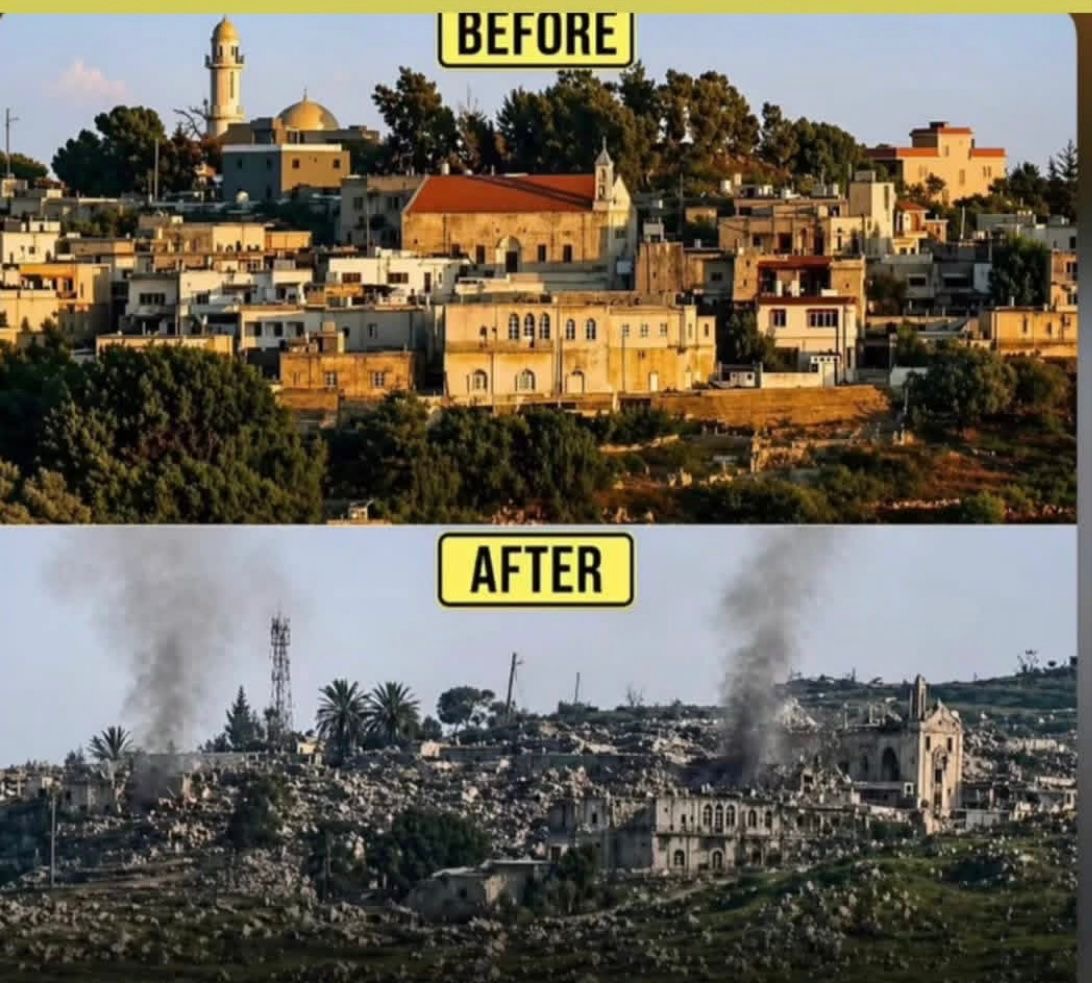
The lawmaker criticises the pro-Iranian party for its “political indifference,” abandoning to an enemy who after sending in its tanks is sending in private demolition companies, whose bulldozers are razing the villages its army seizes.
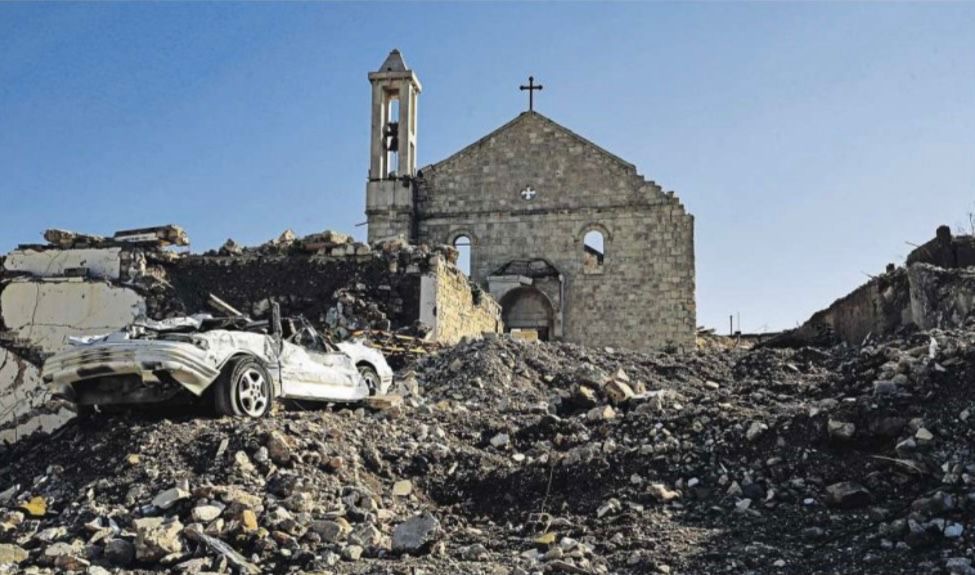
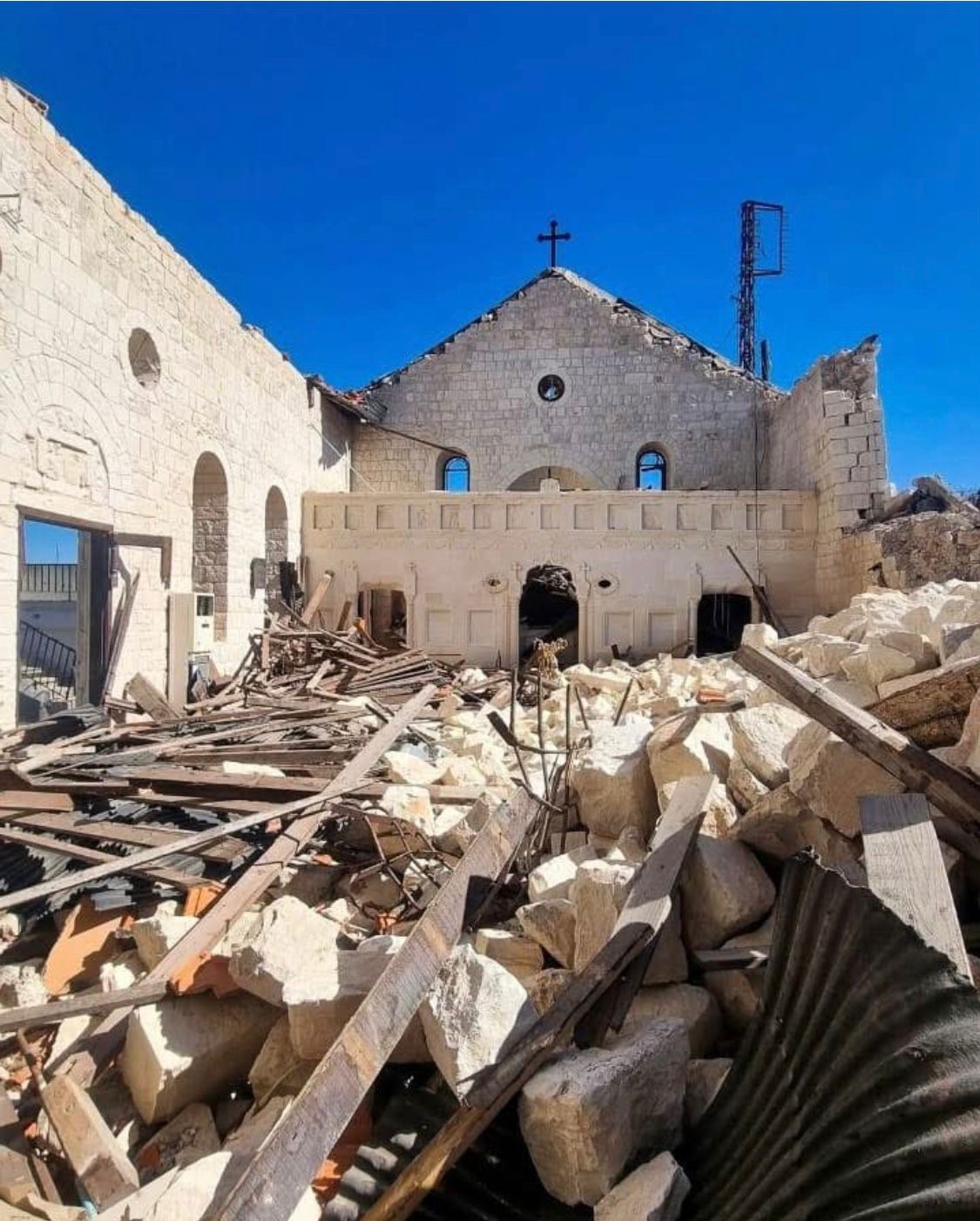
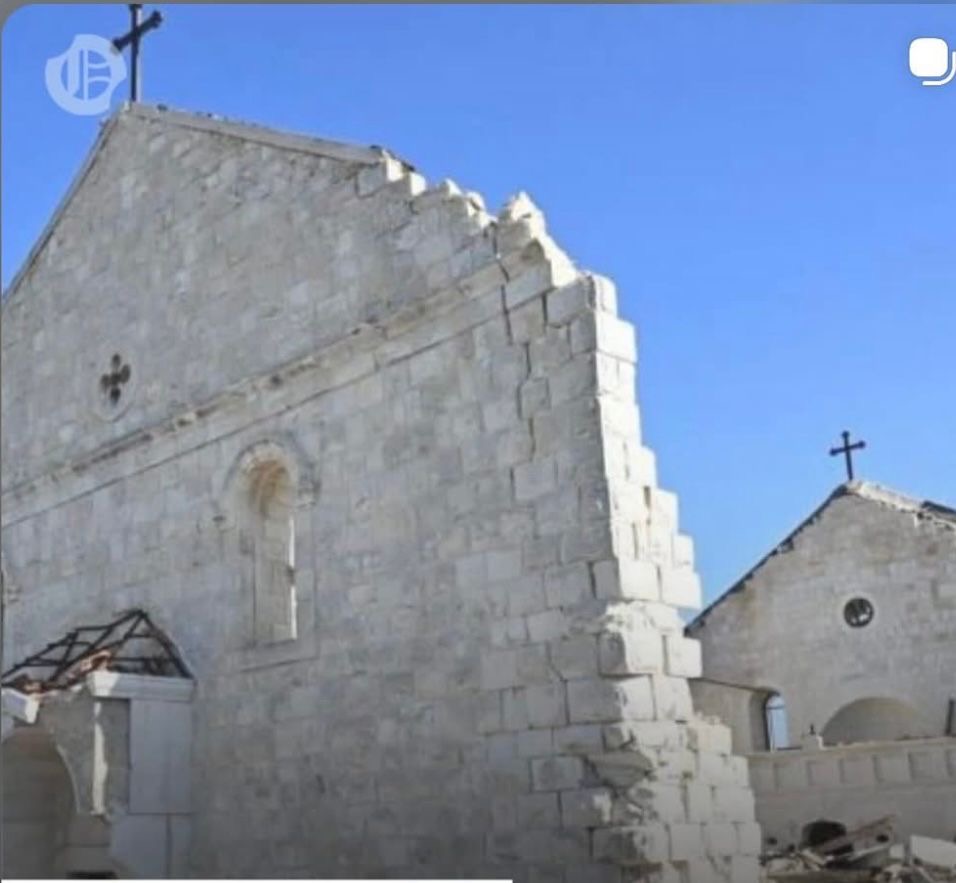
On Tuesday, it was the turn of the Salvatorian nuns' convent of the Greek Catholic Church in Yaroun, and its school, to fall under the blows of soulless bulldozers. “It feels like a village is disappearing every day, listening to the evacuation orders,” said Zeina Y, a resident of the capital.
Southern Lebanon is now a battlefield where two enemies are hunting each other. A regular army with tanks and planes, and guerrillas armed with rockets and drones who, whatever the human cost to their ranks, are tasked with inflicting as many casualties as possible on the enemy, who is particularly sensitive to this aspect of the fighting, having a public opinion to appease.
This battle has driven several hundred thousand residents from their homes (1.3 million according to some estimates), for whom temporary shelters are being set up, the most emblematic of which is undoubtedly Beirut’s Sports City. This complex, considered a jewel of the capital, has become a vast dormitory. Its central lawn has been covered with modular metal structures, with tents erected and portable latrines installed.
“The site is destined for many months of occupation,” believes Social Affairs Minister Hanine Sayyed, “at least as long as the war lasts, and until we know whether the Israelis will withdraw or use it as a buffer zone. Contradictory statements are coming from Israel on this subject, but the continued demolitions speak for themselves.”
Diplomatic Expedition or Political Suicide?
In the part of the country spared by the war, the political climate is becoming increasingly tense due to the president's decision to engage in direct talks with Israel. This diplomatic gamble is primarily motivated by the need to counter the military initiatives of Hezbollah and Tehran. However, it has been hijacked by President Trump, who has decided to use it to further his midterm agenda by asking the president to meet with the Israeli prime minister in Washington and shake his hand.
In exchange, according to the American ambassador to Beirut, Michel Issa, "all of Lebanon's demands will be met": Israeli withdrawal, military aid, border demarcation, the release of Lebanese prisoners, reconstruction, etc.
After making this case in Baabda, the diplomat presented it again in Bkerké, stating upon leaving that the Israeli prime minister "is not a monster”. This is repeated in pro-American circles in Beirut that President Trump would personally guarantee the implementation of the agreement.
Reservations and setbacks
However, within presidential circles, serious reservations are being expressed regarding the US offer. Some see it as a trap and fear a misstep by President Aoun, given that the precedent of Gaza and the subjugation of the Palestinian Authority speak for themselves regarding the way in which the State of Israel only arbitrarily respects its commitments. Moreover, the head of state will have to shake hands with the man who continues the systematic destruction of villages in southern Lebanon, as he did in Gaza.
“The meeting with Binyamin Netanyahu must follow, not precede, the agreement, especially since the latter will include the disarmament of Hezbollah, which should not be considered a resolved issue,” sources close to the president assert.
Prime Minister Nawaf Salam even took a step back from the president's position, stating that Washington's Lebanese-Israeli contacts at the ambassadorial level "are only preliminaries," and that "direct talks" have not yet begun.
Presidential circles are also sensitive to the tone of this offer, presented as irrevocable, as a "final offer" or "ultimatum." To buy time, a third meeting between the Lebanese and Israeli ambassadors in Washington is being considered.
For his part, even less well informed than his boss, US Secretary of State Marco Rubio believes that a peace agreement between Lebanon and Israel is "within reach”, while emphasising the need to strengthen the Lebanese army to confront Hezbollah.
According to former lawmaker Fares Souhaid, this delay should be used to consolidate Saudi Arabia's political safety net for direct talks and, with a bit of luck, secure an invitation from President Aoun to Riyadh, or even the convening of an Arab summit at the level of foreign ministers, dedicated to Lebanon.
The politician reiterated that Lebanon has always maintained it would be "the last Arab country to sign a peace treaty with Israel."
Hezbollah, for its part, was quick to portray Joseph Aoun as a new Anwar Sadat, a comparison immediately interpreted as a death threat, given that the Egyptian president was assassinated after the Camp David Accords.
As for the Speaker of Parliament, Nabih Berri, who fundamentally disagrees with Hezbollah on the merits of the war, he favours indirect talks and advocates a return to the 1949 armistice agreement between Israel and Lebanon.
Smear campaigns
The deteriorating domestic climate is exacerbated by a smear campaign against the president organised by Hezbollah, whose “electronic army” went so far as to produce and disseminate a photo montage depicting Nawaf Salam dressed as a rabbi, the head of state with a military boot on top, and the patriarch with a pig’s head. These attacks, condemned by all sides as “contrary to Lebanese customs”, have prompted numerous visits of support for the head of state and the head of the Maronite Church, Cardinal Beshara al-Rahi.
These excesses undoubtedly reflect the state of lawlessness into which Hezbollah’s military initiative has plunged the country and the economic devastation it has caused: declining tax revenues, a liquidity crisis, stalled banking reform, rising prices, postponed public sector salary adjustments, particularly for teachers, jeopardising the school year, and last but not least, a new threat of currency depreciation if the crisis continues and ruins the crucial summer tourist season.
While the unexpected expenses for assisting displaced persons are certainly alleviated by an influx of aid, they are compounded by the cost of the destruction, currently estimated at US$ 8 billion, a figure that increases daily, along with its toll of dead and wounded. The fighting has resulted in some 2,700 deaths and more than 8,000 injuries since 2 March.
In this highly tense climate, it seems impossible to use the army for anything other than maintaining civil peace, especially as the Israeli-occupied part of Lebanon expands daily, driven by evacuation orders from the Israeli army, while internal tensions are being contained at the last minute.
However, "civil peace" is a "red line" for the head of state, and despite Hezbollah's excesses, challenges, and inflammatory rhetoric, the Lebanese Forces party, through its leader Samir Geagea, has refused to succumb to the self-defence reflex that triggered the 1975 civil war, a reflex incited by certain extremists. Mr Geagea reiterated his commitment to state-building and his confidence in the Lebanese armed forces.
The rest of the population, still the majority, watches helplessly and stunned, in a climate of “neither war nor peace”, as the villages of southern Lebanon are destroyed. They continue to live a more or less “normal” life, trying to enjoy their savings and an ersatz of the good life for which the country was once known.
[*] In modern-day Iraq.

.png)










