








Maronites: the new headquarters of the Diocese of Tyre in a small town on the ravaged border
Whilst Hezbollah continues to drag the whole of Lebanon into its “final battle” with Israel, dividing politics and society, the Christian villages of the South are clinging to their land. Over 20% of the country’s total population is now displaced. Whilst direct clashes are reported between militiamen from the pro-Iranian party and the Israeli army in Khyam, “exploratory” talks continue for a diplomatic solution between the Land of the Cedars and the Jewish state.
Beirut (AsiaNews) - “Hezbollah’s final battle”. This was the title analyst Scarlett Haddad gave to her latest article in L’Orient-Le Jour yesterday. Co-signed by the newspaper’s editor-in-chief, Anthony Samrani, it reads: “The Shia militia had been preparing [for the resumption of fighting, ed] since November 2024. Everything else was just a smokescreen”. The general impression in Lebanon is that the war has resumed exactly where it left off on 27 November 2024, a year and a half ago, and that Hezbollah’s supposed cooperation with the army was nothing more than a grand deception, an act of Shiite “taqiyya” (dissimulation). With the difference that the Party of God’s isolation has deepened. Its unilateral decision to go to war against Israel has divided the country, socially and politically. The rift is total, and the battle is being fought in a climate that the most alarmist observers consider pre-insurrectionary.
With the sky buzzing with drones, all MPs and leaders of the pro-Iranian movement are living in hiding, fearing they will be eliminated, and extremist rhetoric from both sides is inflaming passions. The Hezbollah-affiliated television channel al-Manar has reported in the last few hours that the director of political programmes, Mohammad Cherri, and his wife were killed in Israeli attacks that targeted the Zokak el-Blat neighbourhood in central Beirut this morning.
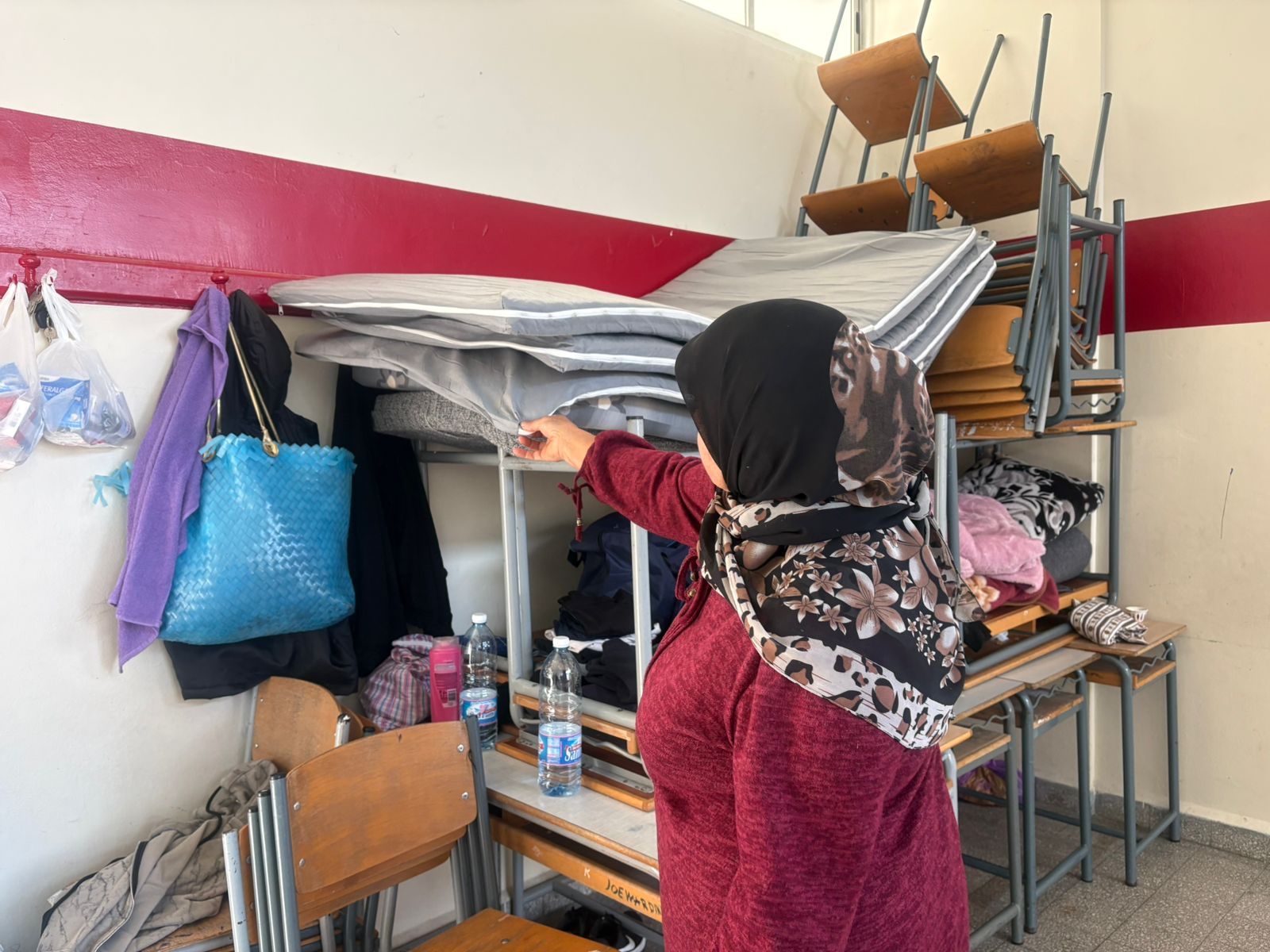
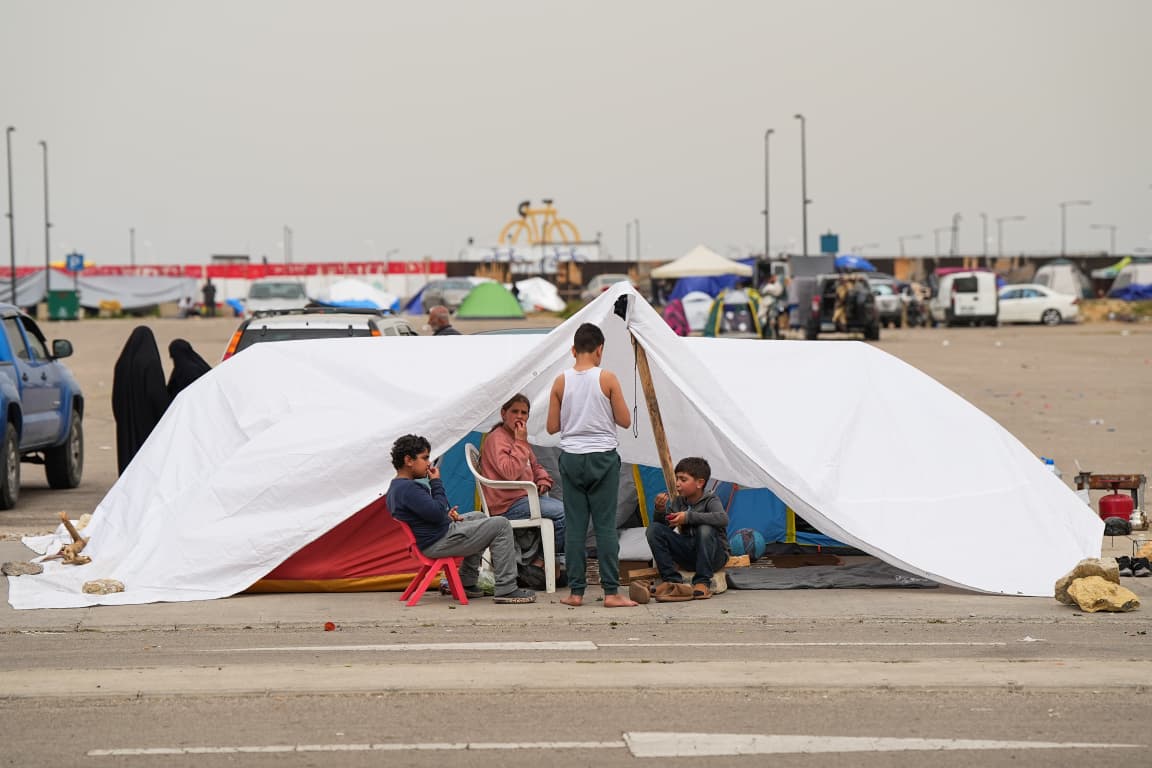
Some political factions are calling for the severing of diplomatic ties with Iran, whilst pro-Hezbollah media are waging hate campaigns. The management of the MTV television station claims to have received death threats. With evacuation orders coming in day and night, reception centres are on the verge of collapse. Nevertheless, they coexist with a country where life goes on more or less as normal, and with a stark, surreal disparity between the living conditions of one group and the other. The provisional toll of the new war stands at around 900 dead, twice as many wounded and approximately one million displaced, or 20% of the population.
Fears of annexation
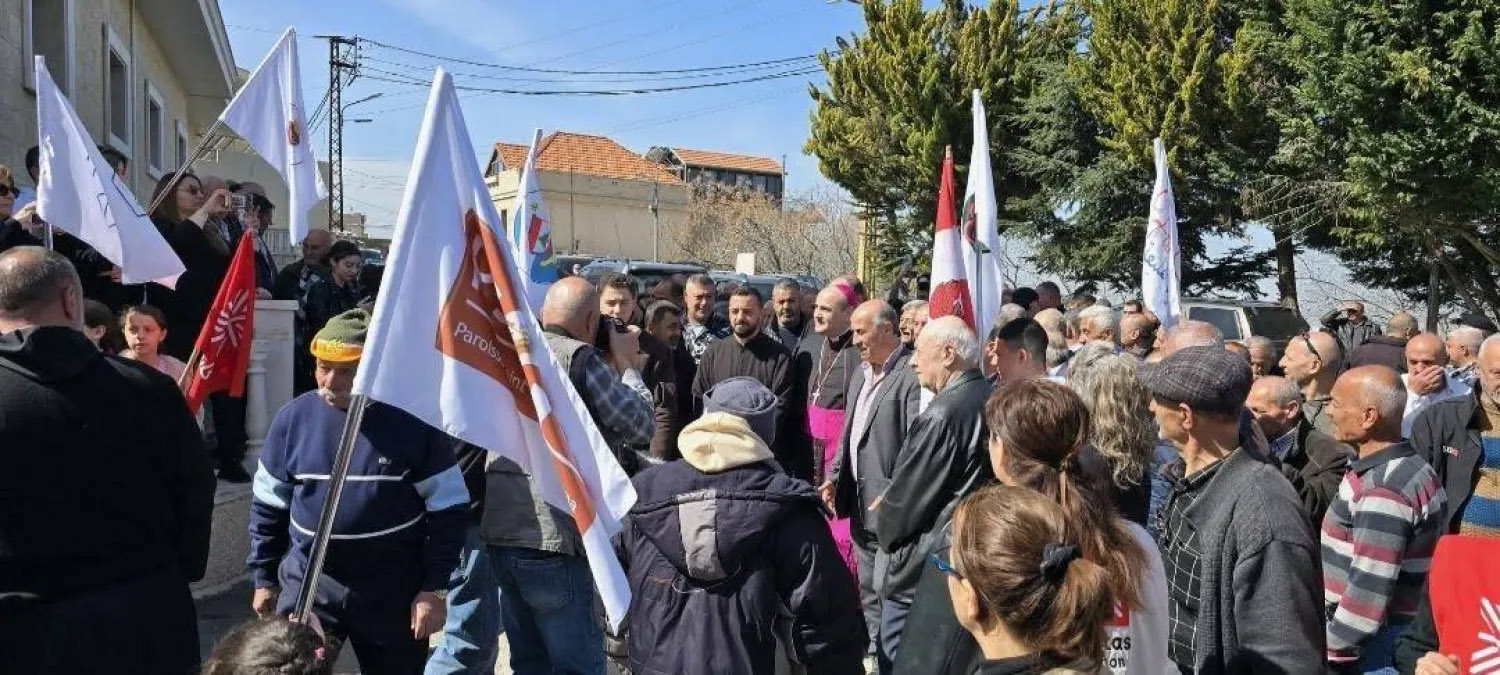
On the other hand, in the face of all this, the resumption of the war is marked by fears of the annexation of the parts of the territory conquered by the Israeli army and by the determination of the predominantly Christian villages to cling to their property and fields at all costs. It is against this backdrop that the repeated visits by the Apostolic Nuncio to Lebanon, Monsignor Paolo Borgia, to the various clusters of Christian villages along the border took place. These visits, coordinated with the United Nations mission (UNIFIL) and, through it, with the Vatican, ultimately had a catalytic effect on the Maronite Church. Thus, Patriarch Béchara Raï asked the Bishop of Tyre, Monsignor Charbel Abdallah, to move his residence to Rmeich, the Maronite village situated in the immediate vicinity of the Israeli border.
The “intruders” of Rmeich
Nevertheless, in order to remain in their homes, the inhabitants of Rmeich, for example, had to remove from this large village all the “intruders” who had arrived from surrounding villages seeking refuge. “Our Shiite neighbours brought their families to safety here with us,” comments a resident of Rmeich who asked to remain anonymous. “In this region, everyone knows everyone,” she continues, “and hospitality is sacred. But we had no choice. It was either this, or the bombings!” Despite reassurances, three men who were installing a satellite dish on the roof of their home were killed by an Israeli drone in Aïn Ebel. These deaths were added to the recent one of the parish priest of Kley’a, Fr Pierre el-Rahi, killed by a tank shell whilst rescuing the inhabitants of a bombed house in Kley’a.
However, the passive resistance of the Christian villages, stronger than the killings, has been contagious. Many Sunni and Druze residents of various border villages have not left their homes, insisting on preventing members of the Shiite party from taking refuge with them and calling for the Lebanese army to remain in their villages. “We have not withdrawn from southern Lebanon, as some claim, but we cannot be present in every village, even though it is clear that our presence reassures the inhabitants,” a source close to Yarzé told the press on condition of anonymity. “We are carrying out,” he added, “the redeployments necessitated by the Israeli escalation.”
The strategic hub of Khyam
From a military perspective, this escalation is manifesting itself through incursions into three or four strategic points along the border. A full-scale ground offensive has not yet taken place and, moreover, with its back against the wall, the resistance is putting up fierce opposition to any Israeli advance, particularly in Khyam. “If the blockade of Khyam were to fail, it would open the way to the Marjeyoun plain and the Litani,” say military experts, who see this point as a sort of mini-Stalingrad.
Aoun’s initiative
On the political and diplomatic front, President Joseph Aoun proposed yesterday, during a video conference with European Council President Antonio Costa, an initiative aimed at ending the conflict. Without waiting for an Israeli response, the government is working on forming a diplomatic delegation. However, the chances of this initiative succeeding are not yet high. This effort is hampered in particular by the refusal of the Speaker of Parliament, Nabih Berry, to appoint a Shia representative until a definitive ceasefire is concluded. In this context, despite the hasty statements, the discussions mentioned appear more like exploratory contacts than a genuine negotiation process.
Israel and territorial claims
On the Israeli side, according to today’s report in the newspaper Yedioth Ahronot, former Israeli minister Ron Dermer, recently appointed by Prime Minister Benjamin Netanyahu to handle the Lebanese issue, stated: “It is possible to move towards a peace agreement with Lebanon, as the issues are not really that complex.” “We have no territorial claims on Lebanon,” the senior official continued. “We do not wish to occupy Lebanon nor attack it, but we will not allow Hezbollah to operate directly on our northern border.”
A statement that contrasts with that of Defence Minister Israel Katz, who clearly warned Lebanon of “territorial losses” if it fails to act against Hezbollah. As for the ceasefire agreement signed in November 2024, the diplomat stated that he had been “in favour of ending the fighting despite the text’s unpopularity”. “We still had major battles ahead of us, in Gaza and with Iran. We still had the hostages,” he explained. “However, this time we will not return [to the situation prior to] 6 October 2023. For an agreement to be signed,” he concluded, “Hezbollah must be disarmed.”
In summary: Israel is putting the cart before the horse. And this can only foreshadow an increase in fighting, destruction and casualties.

.png)










