








Myanmar’s junta is recruiting students amid intensified military operations
Myanmar’s military has launched a new recruitment drive targeting high schools, with new military training centres for young people aged 16 to 19. According to analysts and human rights activists, this is yet another move to address the serious man power crisis in the armed forces, which are increasingly engaged on multiple fronts.
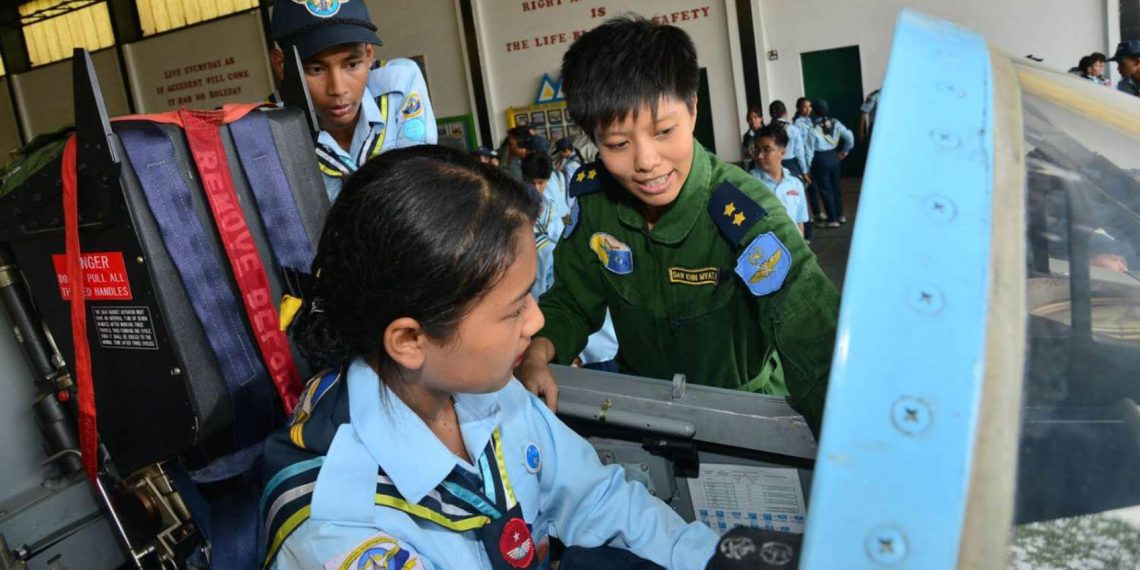
Yangon (AsiaNews) – Myanmar's military junta is trying to give a final push to end the civil war that has ravaged the country for more than five years by launching a new recruitment campaign targeting high school students and simultaneously intensifying military operations against resistance-controlled areas.
Nearly two months after General Ye Win Oo was appointed the new Commander-in-Chief of Myanmar’s Defence Services, replacing Min Aung Hlaing, who was elected president after a sham election, the regime announced the creation of new, military-run youth education training schools, set to open for the 2026-2027 academic year. Applications for admission have already begun in several regions of the country.
Two schools will be built in Naypyidaw, the capital, and Yemon, Hlegu Township, near Yangon, and will accommodate students aged 16 to 19.
The regime has announced that the new establishments will offer free education, room and board, and a preferential path to military academies. Many observers see this as a desperate attempt to rebuild the army, weakened by losses in the field and continued desertions.
“At 15 to 17, they will absorb anything. By 18, it becomes harder. The military wants to catch them young,” said a former official in the Education Ministry.
For Swe Taw, a major who defected, the goal is clear. “It’s about creating a source of manpower for the army,” he explained. “Now they are expanding the military education system to capture high school students,” he added.
This new recruitment campaign comes after the mandatory military service law, suspended in 2010, was reinstated in February 2024.
The junta has imposed military service on men between 18 and 35 and women between 18 and 27, with the possibility of enlisting professionals up to 45, with up to five years in prison for those who attempt to evade it.
The announcement caused panic, with thousands of young people applying for passports to flee abroad, fuelling an exodus to Thailand.
The collapse of the education system is one of the most serious and obvious consequences of the civil war. The number of students who took university exams dropped by almost 87 per cent compared to the same period before the 2021 coup.
For this reason, according to many analysts, the new military schools represent the junta's attempt to close another escape route for the younger generation, directly intervening among teenagers before they can leave the country or join the resistance.
The economic crisis also plays a role. The offer of free education and a monthly stipend could push many families to send their children to military schools out of necessity rather than ideological conviction.
Ye Win Oo, former head of military intelligence and a close ally of Min Aung Hlaing, recently praised the latest military offensives.
Since the president’s inauguration on 30 March, the junta has intensified air strikes and ground offensives in the Sagaing and Magwe regions as well as Chin and Kachin states, managing to recapture several towns and key strategic corridors.
On Tuesday, regime forces regained control of Mawdaung, a major trading hub on the border with Thailand in the Tanintharyi Region, after a 15-day offensive supported by artillery and air strikes.
The city was captured last November by Karen National Union (KNU) forces. According to resistance groups, at least 24 fighters were killed and over 4,000 civilians were forced to flee, along with the residents of nine surrounding villages.
Mawdaung is a key hub for the seafood trade to Thailand. After retaking the city, Ye Win Oo publicly celebrated the recapture of Falam and Tonzang in Chin State and of several crucial roads between Karen State, the central city of Mandalay, and Kachin State, claiming that the army is reopening Myanmar's strategic corridors.
The regime also continues to use the blockade of humanitarian aid and food supplies as a weapon of war.
In the Magwe Region, troops have blocked the transport of food and medicine out of the towns of Pakokku, Myaing, and Yesagyo, in an attempt to isolate rural areas controlled by armed groups opposed to the junta. Residents have reported that civilians are even prevented from transporting farm products.
In Kachin State, the local ethnic militia, the Kachin Independence Army (KIA), announced a shift to a defensive strategy following the arrival of significant military reinforcements sent by the regime to the city of Myitkyina.
According to local sources, a convoy of around 300 military vehicles, including mobile howitzers, arrived in the region after the junta regained control of the road between Mandalay and Myitkyina, a key route for military supplies.

.png)
19/09/2022 15:40
30/09/2024 13:50
10/07/2024 17:01










