








Panama and the rest: Beijing's bet on ports
Geopolitical tensions have put the spotlight on China's large investments in global maritime hubs. Chinese companies hold majority stakes in 17 ports, while they hold minority stakes in most others or have operational management agreements. The cases of Piraeus (Greece) and Ream (Cambodia) are noteworthy. The lack of transparency regarding their conditions is well known.
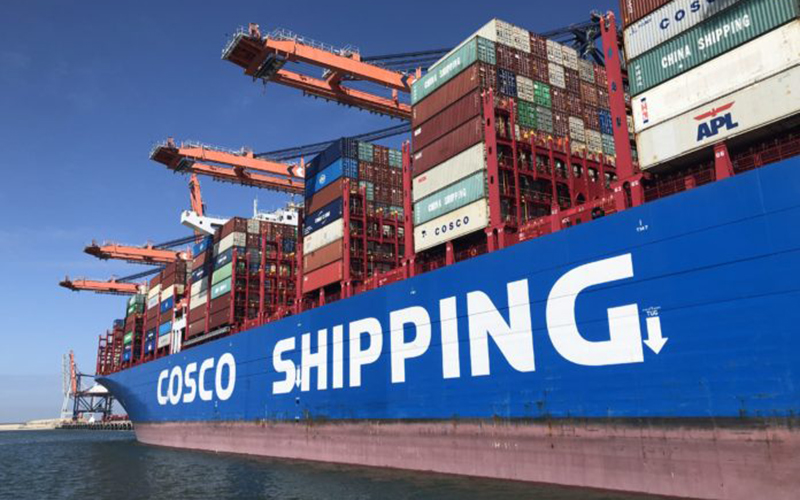
Milan (AsiaNews) – Over the past 20 years, China has built a large presence in ports around the world, acquiring stakes or management roles in more than a hundred ports in four continents.
The total investment exceeds US$ 60 billion and involves a constellation of Chinese state-owned companies operating from East Africa and the Mediterranean to Latin America and Southeast Asia.
The extent of this became apparent only when geopolitical tensions brought into the spotlight what for years had remained a nearly invisible process.
The nature of this presence varies considerably. In 17 ports, Chinese companies hold majority stakes, while in most others, they are minority stakes or have operational management agreements. Projects are often implemented in partnership with local governments or private investors from the host country.
China’s underlying rationale is explicitly stated, i.e. to protect trade routes vital to the Chinese economy and ensure access to strategic raw materials by reducing maritime transport times.
For example, China imports about two thirds of the copper it consumes, and almost all of its energy needs pass through vulnerable maritime hubs like the Strait of Malacca, the Suez Canal, and the Panama Canal.
In recent years, China's financing model has changed. Until the middle of the last decade, bilateral loans, often opaque, granted by development banks to governments in difficulty, prevailed.
Since 2016, amid mounting unsustainable debt and accusations of neocolonialism, Beijing has favoured public-private partnerships in which Chinese companies invest their own capital, manage the infrastructure, and recoup their investment through tolls or long-term concessions.
For host governments, this means avoiding new direct sovereign debt and achieving rapid construction, but at the cost of relinquishing operational control for decades.
This approach is supported by an integrated industrial supply chain unlike any other in the West. State-owned groups such as COSCO, China Road and Bridge Corporation, and China Civil Engineering Construction Corporation, along with numerous other state-controlled enterprises, cover the entire chain, from construction to operation, offering comprehensive packages that strengthen China’s competitive advantage.
Three ports, three models: Greece, Panama, Cambodia
The diversity of Chinese port investments is evident in the case of the Piraeus (Greece), often cited as an example of successful trade integration. In 2016, COSCO acquired a 67 per cent stake in the port authority for more than US$ 1.5 billion. Since then, freight traffic has more than doubled, and the port has become Europe's fifth largest in terms of container traffic.
However, economic results have not eliminated tensions. European competition rules have limited COSCO's expansion in the railway sector, and unions have repeatedly criticised working conditions, while a segment of the public remains wary.
The Greek government of Prime Minister Kyriakos Mitsotakis has upheld the agreement, while strengthening ties with NATO and the United States in an attempt to balance economic openness to China with a strategic Euro-Atlantic positioning.
The Panamanian case is entirely different. CK Hutchison, a Hong Kong-based conglomerate, has managed the ports of Balboa and Cristobal, located at either end of the Panama Canal, since 1997.
On 29 January, Panama's Supreme Court declared the contract unconstitutional, annulling the concessions after an audit revealed accounting irregularities and a loss of state revenue exceeding US$ 1 billion.
The decision followed months of explicit pressure from Washington, with President Trump threatening to regain control of the canal.
This story can be interpreted in different ways. The contractual irregularities are documented, but US pressure played a decisive role. Complicating the situation was CK Hutchison's failed attempt to sell its ports to a consortium led by BlackRock and Mediterranean Shipping Company.
Beijing requested COSCO's entry with a majority stake and veto power, a proposal that was rejected by the other partners. The agreement thus collapsed, leaving Panama at the centre of a power struggle.
The third case is that of the Ream Naval Base in Cambodia, overlooking the Gulf of Thailand. Although the Cambodian government categorically denies that it is a permanent military base, satellite imagery shows structures compatible with the docking of warships and advanced logistics installations.
Ream is part of what analysts call the “string of pearls”, a chain of naval bases and strategic ports that China is building from the Indian Ocean to the Western Pacific to control trade routes and reduce its dependence on the Strait of Malacca, through which approximately 30 per cent of global maritime trade passes.
Trade or military strategy? The question of dual use
Among the ongoing issues in Western countries, there is debate over whether ports operated by Chinese companies could evolve into military bases or intelligence tools. The only certain precedent is Djibouti, where a commercial terminal became China's first overseas naval base in 2017.
Aside from this case and the more ambiguous Ream case, there is no evidence of a systematic conversion, although according to the United States, many ports have technical characteristics compatible with military use.
Concerns also involve access to traffic and route data, a significant wealth of information but no different, in principle, from that collected by port operators in other countries.
A more concrete issue touches the potential use of port control as an economic lever in the event of escalation. In theory, a Chinese company could limit access to ships from certain countries or give priority to traffic deemed friendly.
In practice, however, China is among the main beneficiaries of the stability of global shipping routes, and a disruption in flows would primarily affect its exports, making such a choice plausible only in the event of open conflict.
The crucial distinction therefore remains between peacetime and wartime situations. In a military crisis, ports like Ream or Piraeus could assume a logistical or interdiction function to support the Chinese navy, but this presupposes an ongoing armed confrontation between China and Western powers.
Some issues remain unresolved. The management of ports entrusted to Chinese companies is often opaque, and host governments' assurances that they are not used for military purposes are valid so long as these governments retain genuine autonomy from Beijing.
In the long run, it will be crucial to understand whether China’s presence will remain confined to the commercial dimension or whether it will assume a more explicitly strategic profile.
Chinese port expansion remains a hybrid trend, in which economic interests and geopolitical ambitions intertwine in ways that vary from case to case. Western countries have denounced this presence but have not offered concrete alternatives in terms of infrastructure investments.
So long as China remains the only truly available option, as African and Latin American officials have admitted, its global port network will continue to expand.

.png)










