








Pelourinho Novo: Political misuse of history inflames Goa
The BJP-led state government has renamed a 16th-century pillar to make it a symbol of Hindu victims of the Inquisition. For scholar Frazer Andrade, the new name is misleading, lacking any verifiable historical evidence. Meanwhile, a local nationalist leader lashed out at Saint Francis Xavier in a debate, calling him "a terrorist”. The archdiocese expressed outrage, saying that the saint is “revered not only in Goa but by millions of people across the globe,” an example of “peace and unity”.
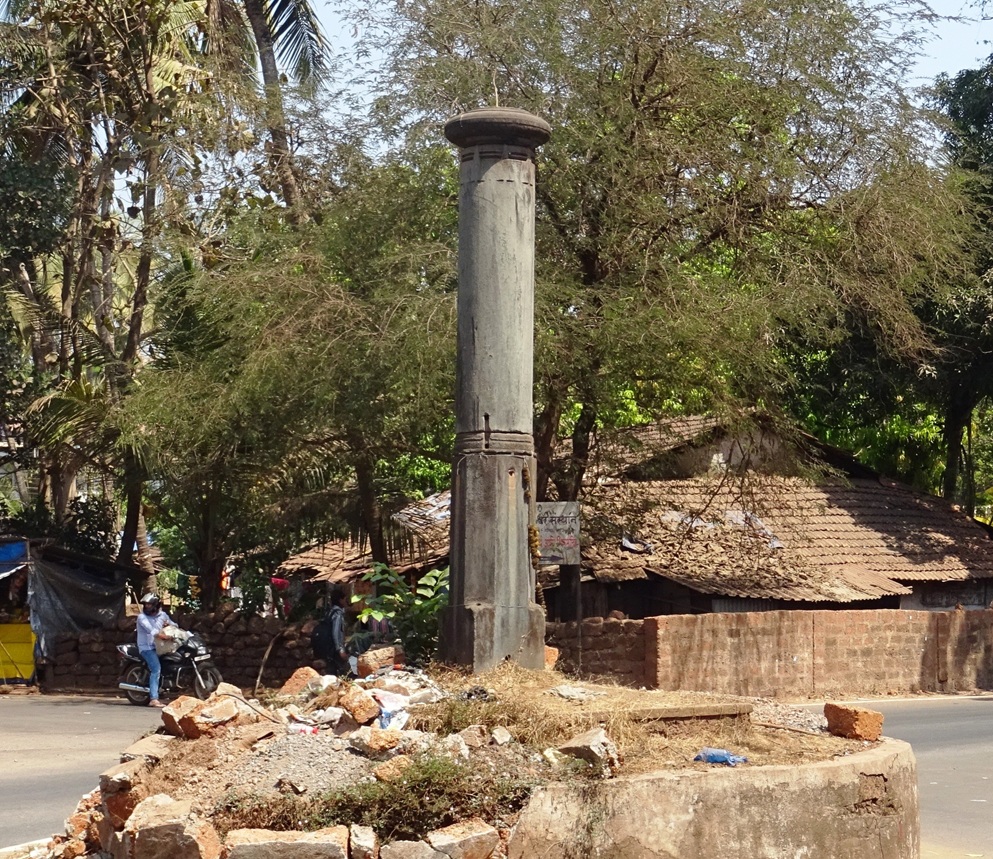
Goa (AsiaNews) – The political debate in Goa has been shaken recently by two parallel developments.
First, a controversy broke out after the state government, led by the Hindu nationalist Bharatiya Janata Party (BJP), decided to rename the Pelourinho Novo (New Pillory), an ancient black basalt pillar dating back to the 16th century, as Hath Katro Khamb (Hand-cutting Pillar).
The decision reignited a long-running debate on history, memory, and political interpretations of the state’s colonial past, dividing public opinion, activists, and scholars.
Some nationalist groups, including the Hindu Janajagruti Samiti, argue that the structure is not a simple colonial artefact, but a direct symbol of alleged atrocities by the Goan Inquisition.
They are therefore calling for it to be officially recognised as a Pillar of the Inquisition, renamed in keeping with this interpretation, and transformed into a memorial dedicated to the victims of religious persecution, particularly Hindus.
They also want public events and awareness campaigns to be held to push this historical interpretation. For these groups, the issue is not merely academic, but concerns the recognition of suffering and a form of historical justice.
Several researchers and scholars, including Frazer Andrade, disagree, challenging the new name, deeming it misleading and lacking documentary evidence.
According to Andrade, the phrase Hath Katro Khamb refers to the practice of mutilation, such as cutting off hands, that is not backed by verifiable historical evidence.
He warns against the risk of replacing historical research with folklore or ideological narratives, emphasising the importance of preserving the authenticity of cultural heritage, including by retaining its original name.
Historical reconstructions indicate that the Pelourinho was a typical structure of the Portuguese colonial administration, located in central public spaces and used for civic functions such as the administration of justice, public punishments, and the proclamation of decrees.
In the case of Goa, the pillar may have been composed of elements from a dismantled Hindu temple, repurposed as a symbol of colonial power and its religious and political authority.
Meanwhile, on Sunday evening, the Goa police registered a complaint against Gautam Khattar, a right-wing Hindu nationalist, for making alleged offensive remarks against Saint Francis Xavier, Goa’s patron saint, amid a political row.
The latter erupted after the release of a video in which Khattar, founder of the Sanatan Mahasangh, spoke at an event on Saturday attended by local religious figures and politicians, including State Transport Minister Mauvin Godinho and several BJP MLAs.
In the video, Khattar calls Saint Francis Xavier a "terrorist and a cruel ruler”, whose single goal was to convert Hindus to Christianity. He also uses highly offensive language regarding his body and the cult still associated with him at present.
A complaint was filed against him by local Indian National Congress (INC) leader Peter D'Souza at the Vasco police station. The saint's relics are kept at the Basilica of Bom Jesus, a destination for numerous pilgrims from India and abroad.
As the political storm intensified, several political leaders, including INC members, condemned Khattar’s statement.
A prominent Hindu organisation, the Sanatan Dharma Raksha Samiti, distanced itself from Khattar's remarks, apologising to the Christian community and emphasising the city's tradition of harmonious coexistence.
For its part, the Archdiocese of Goa and Daman issued an official statement expressing deep sorrow and outrage over these “hateful and malicious remarks”.
It reiterated that Saint Francis Xavier is a revered figure not only in Goa but also around the world and called on the authorities to intervene decisively in accordance with the law.
At the same time, it urged Goans to “stay calm and exercise restraint”, citing the spirit of “peace and unity” that characterises Goan society, expressing hope that dialogue and reconciliation will prevail.
Photo: Flickr / Joegoauk Goa

.png)
17/03/2024 13:01
03/12/2024 18:23
27/11/2024 17:29
21/11/2024 17:19










