








Philippine bishops: ‘As Christians, we do not celebrate war’
In a pastoral statement on peace, signed by Archbishop Garcera, the bishops’ conference calls for “mutual respect” and “dialogue” between cultures and religions, amid conflicts in the Middle East and elsewhere. The prelates encourage Catholic communities to hope and show solidarity towards vulnerable people. The statement mentions overseas Philippine workers and the environmental damage caused by war, stressing that “every human life is sacred.”
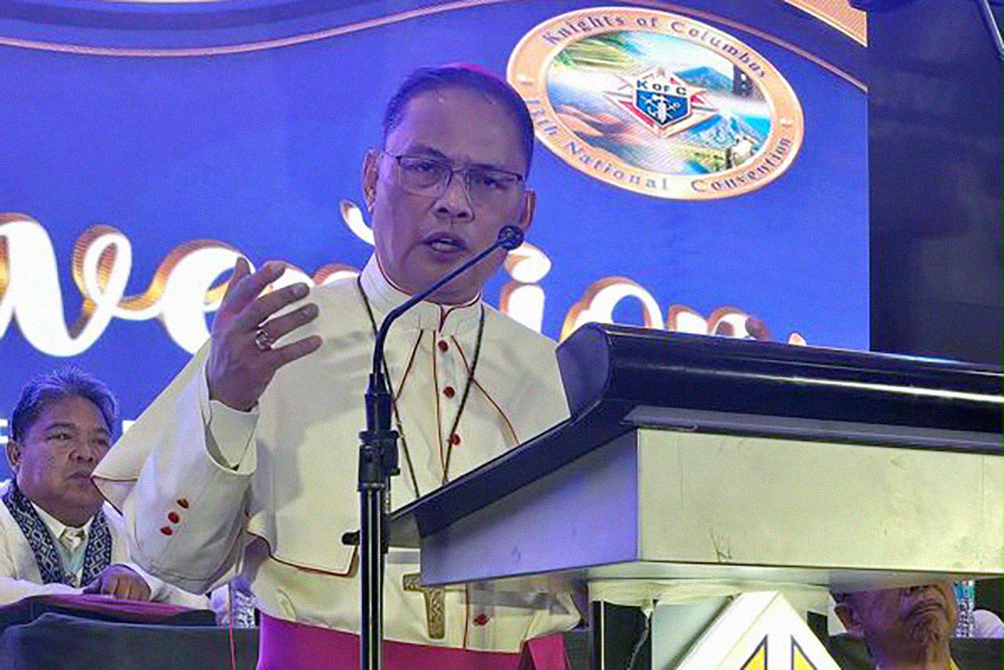
Manila (AsiaNews) – Yesterday, the Catholic Bishops’ Conference of the Philippines (CBCP) issued a Pastoral Statement on Peace in a Wounded World. In it, the prelates state that every Christian must embody God's mercy by promoting dialogue, peace, and healing in the world.
To this end, they urge the faithful to “Encourage mutual respect among neighboring religions, cultures, and peoples,” and “Build bridges of dialogue, hope, and solidarity within our communities, so that peace may take root first in our own hearts and homes, and from there spread to the wider world.”
Signed by CBCP President Archbishop Gilbert Armea Garcera of Lipa, the statement calls on “every parish [to] become a sanctuary of prayer and reconciliation. Let every family become a cradle of peace, compassion, and hope. And let every Christian be a living witness to mercy, dialogue, and the healing love of Christ in a wounded world.”
“With hearts burdened by sorrow and concern, we, the bishops of the Catholic Bishops’ Conference of the Philippines (CBCP), join the Holy Father and the universal Church in praying for peace amid the ongoing crisis and war in the Middle East and elsewhere,” reads the statement.
“As violence escalates and tensions deepen, we once again hear the Risen Lord’s words to His disciples: ‘Peace I leave with you; my peace I give to you’ (Jn 14:27). [. . .] In a world wounded by hatred, fear, vengeance, and greed, followers of Christ are called to be instruments and channels of peace,” it goes on to say.
The pastoral statement emphasises that behind every military calculation, human lives are hidden everywhere: children deprived of safety, mothers grieving for their sons and daughters, families forced to abandon their homes, the wounded left untreated, the elderly abandoned, and communities reduced to rubble.
The bishops, expressing deep concern over the current war between the United States and Iran in West Asia, and its consequences, “affirm that we do not forget the many other hotspots in the Philippines, across Asia, and throughout the world that continue to inflict suffering on peoples and nations. We therefore affirm clearly: every human life is sacred.”
What is more, “We reject the normalization of violence, the targeting of civilians, acts of terror, collective punishment, and all actions that deepen hatred and division among peoples. Violence breeds only more violence. War leaves wounds that endure for generations.”
The statement by Philippine bishops also mentions the environmental damage caused by wars.
“The explosion of bombs, missiles, and heavy artillery pollutes the air, darkens the skies with toxic smoke, poisons the soil and water, and destroys forests and farmland.”
All this “leaves long-term damage to the atmosphere and the environment. In this way, war becomes not only a cry of humanity but also a cry of the earth. Future generations inherit the scars of irreversible destruction they did not create.”
Turning to the latest Mideast war, the statement signed by Archbishop Garcera, notes its significant impact on the Philippine people, especially at home, compromising their safety, livelihoods, and emotional well-being.
“Although distant from our shores, the Middle East crisis is not remote from Filipino lives. Many of our brothers and sisters work in the region as Overseas Filipino Workers. Their safety, livelihoods, and futures now weigh heavily on their families at home.”
Rising fuel costs are impacting every sector of the country, leading to higher prices, like transportation, and a greater financial burden for poor families already facing economic hardships.
The first to suffer are the most vulnerable: day labourers, farmers, fishermen, transportation workers, senior citizens, and families with little savings. Ultimately, what happens abroad impacts Philippine homes, tables, and hearts.
Calling for moral discernment, the bishops “urge the faithful to resist simplistic narratives, misinformation, hatred, prejudice, and ideological partisanship. The Christian conscience must be formed not by propaganda or social media anger but by the Gospel of Jesus Christ.”
In fact, “As Christians, we do not celebrate war. We do not glorify revenge. We do not demonize entire peoples or religions. Instead, we are called to truth, compassion, justice, and the patient work of reconciliation.”
The statement stresses that hope must be stronger than war or surrender to despair.
Addressing the leaders of countries and peoples, the prelates invite them to choose dialogue over domination, diplomacy over destruction, moderation over retaliation, and moral courage over pride and aggression.
“True greatness,” the statement reads, “is measured not by the capacity to destroy, but by the wisdom to seek peace, protect human life, and uphold the dignity of nations and peoples. Humanity longs not for more powerful weapons, but for more compassionate hearts, enlightened consciences, and leaders committed to justice, reconciliation, and the common good.”
Praising the role of educators, the bishops say they are "formators of conscience and builders of the future.”
“In a world increasingly wounded by propaganda, extremism, polarization, and misinformation, Catholic education carries the sacred responsibility of forming minds and hearts according to the truth, compassion, and wisdom of Christ, rather than according to passing ideologies, prejudice, or rigid worldviews.”
Last but not least, the Church’s pastoral response invites all dioceses, parishes, religious communities, schools, and lay organisations to pray for peace, convinced that every form of religious and spiritual activity will bring hope and solidarity to the poorest and most vulnerable groups in society, that is those who suffer most from the economic hardship caused by this global conflict, especially the families whose loved ones live or work in areas affected by conflict and instability.
The bishops encourage the strengthening of parish food programmes, community pantries, emergency relief efforts, and charitable initiatives to help individuals and families burdened by inflation, economic uncertainty, and hardship, following the spirit of compassion and generosity demonstrated during the pandemic.

.png)










