








Relations uncertain between Moscow and Delhi
Just as Modi discusses tariffs and oil purchases with Trump, the Valdai Club conference between Russia and India was held in the Indian capital to take stock of relations. Putin's men are focusing on long-standing relations with Delhi, calling for alliances with BRICS countries to be prioritised today.
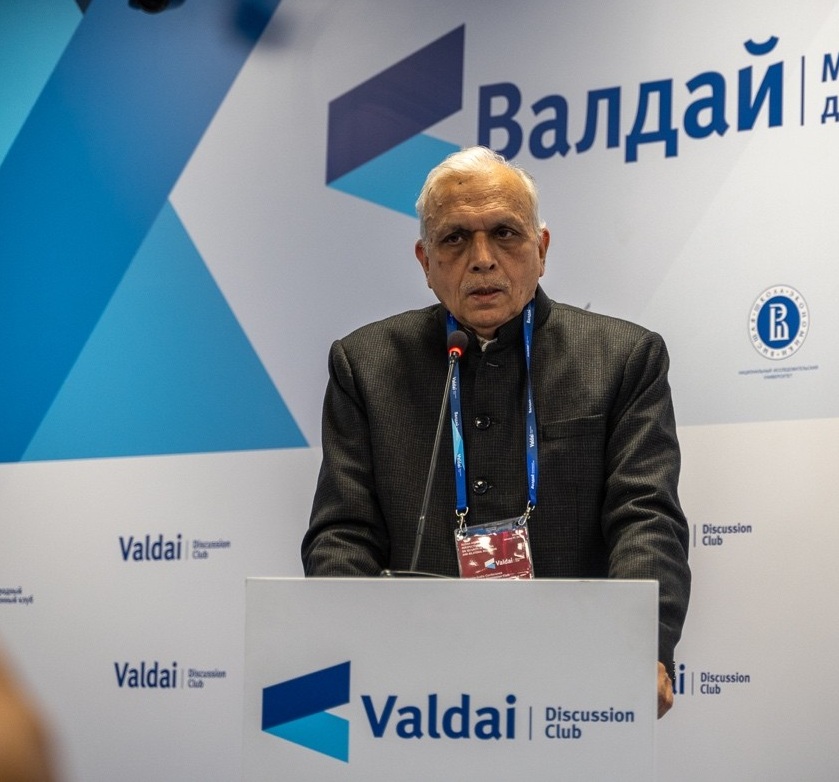
Moscow (AsiaNews) - Just as the issue of Russian oil purchases is at the centre of discussions around the tariff agreement between Trump and Modi, the third Valdai Club conference between Russia and India was held in New Delhi to assess the current situation of ‘global uncertainty’ in relations between the two countries against the backdrop of ongoing international geopolitical upheavals.
As the club's president, Andrei Bystritsky, recalls, ‘for 80 years of our history, relations between Moscow and Delhi have remained largely autonomous from external influences’, as both are major players in world politics, making it difficult to prevent autonomous developments.
This was the case during the Cold War, when the USSR made a major contribution to strengthening the Indian state, and it was also the case after the end of the Soviet period, notes Ivan Timofeev, programme director at Valdai, ‘in very difficult years for Russia’, when cooperation with India helped to overcome the economic crisis that dragged on at the end of the Yeltsin decade.
The most delicate moment in relations began in 2022, with the Russian war in Ukraine and the collapse of Moscow's relations with the “global West”, and with the gratitude of the Russians, “the collapse of Russian-Indian trade due to secondary sanctions did not happen”; on the contrary, India's role in Russia's external market has grown significantly.
The statements made in recent years by the two leaders, Vladimir Putin and Narendra Modi, have focused on concrete economic tasks, leaving aside political assessments, even though the two states cannot remain completely unaffected by the great upheavals in world politics, especially given the pressure from America, which has now abandoned its role as mediator and enforcer of international law.
As the two Valdai leaders observe, the US has “replaced the principle of the free market with that of trade war”, involving both its allies and those on the opposite side.
Until recently, the Americans led the globalised world and supported the game of coalitions, while today they are aggressive even towards their NATO allies and, according to Bystritsky, “have placed force and profit above all other values”.
It is therefore American policy that is causing not only many risks but, above all, a general state of uncertainty, which Russia and India are trying to address together, taking advantage of the harmony that developed over many years of the last century, when the Soviet Union turned to India to circumvent tensions with China on the Asian continent.
The two states are trying to build independent financial approaches, with the digitisation of all spheres of social life based on their own technological platform programmes, and also modernising their defence forces. Russia and India remain very different from each other in terms of social structure and economic size, but they have sought to ‘coordinate in the growing global chaos to remain independent, effective and responsible,’ Timofeev assures us.
The major changes in American policy over the past year concern the possibilities for resolving the Ukrainian crisis, in which, according to Putin's propagandists in the Valdai Club, Russia is defending its interests as India did 30 years ago when it sought to proceed with its nuclear programmes, which were accepted as a fait accompli despite the sanctions against it.
If the negotiations lead to peace in Ukraine, Russian-Indian relations could develop in a much more positive framework, even if sanctions against Russia remain in place for a long time to come, considering also the possible overthrow of the current American administration, which in many respects currently favours Russia.
Moscow and Delhi “must rely only on themselves”, say the Valdai leaders, thanks to friendly relations “that have proven solid over time”, looking to the broader alliances of the BRICS countries and the Shanghai Cooperation Organisation.
Russia and India are key to security issues throughout the Eurasian space and even beyond these borders, if they can demonstrate “strategic patience” according to the Russians, who intend to urge their historical allies not to forget the past, in order to build the future together.

.png)
12/02/2016 15:14










