Jakarta (AsiaNews) – In Indonesia, the historic collapse of the rupiah, which has reached a record low of 8,209 to the US dollar, the lowest ever, is fuelling social protests and raising concerns about the country's financial stability.
In recent days, the "Sell Indonesia" narrative has spread across global financial markets, causing volatility in the country's domestic markets but also, as a reaction, a strong feeling of economic nationalism on social media.
Several international media have highlighted investors' growing concerns over the country's economic outlook.
Some fund managers have doubts about the economic policies of President Prabowo Subianto's government, perceived as increasingly interventionist, pushing for a greater state role in the economy.
According to these observers, this approach is creating greater risks for the country's fiscal stability, hence the wave of selling of Indonesian securities with consequences quickly -
a weaker rupiah, with the benchmark index on the Indonesia Stock Exchange (IDX) recording a sharp drop.
As many foreign investors reduced their exposure to Indonesian stocks and government bonds, significant capital outflows followed with increased financial instability.
The discussion quickly spread from the business sphere to social media.
In response to negative views, a movement began around the hashtag #BuyIndonesia, with people, financial influencers, and public figures urging Indonesians to maintain confidence in the country's economic fundamentals and view the market decline as a long-term investment opportunity.
At the same time, the hashtag #SellSingapore also went viral, used symbolically by those who believed the negative narratives were coming from the city-state's regional financial centres.
Economists, however, have urged caution, noting that financial markets are influenced by multiple factors, including the global economic situation, international interest rates, geopolitical tensions, and investors’ perceptions of risk.
For its part, the Indonesian government has been trying to reassure markets by maintaining that economic growth, the banking system, and public finances remain solid.
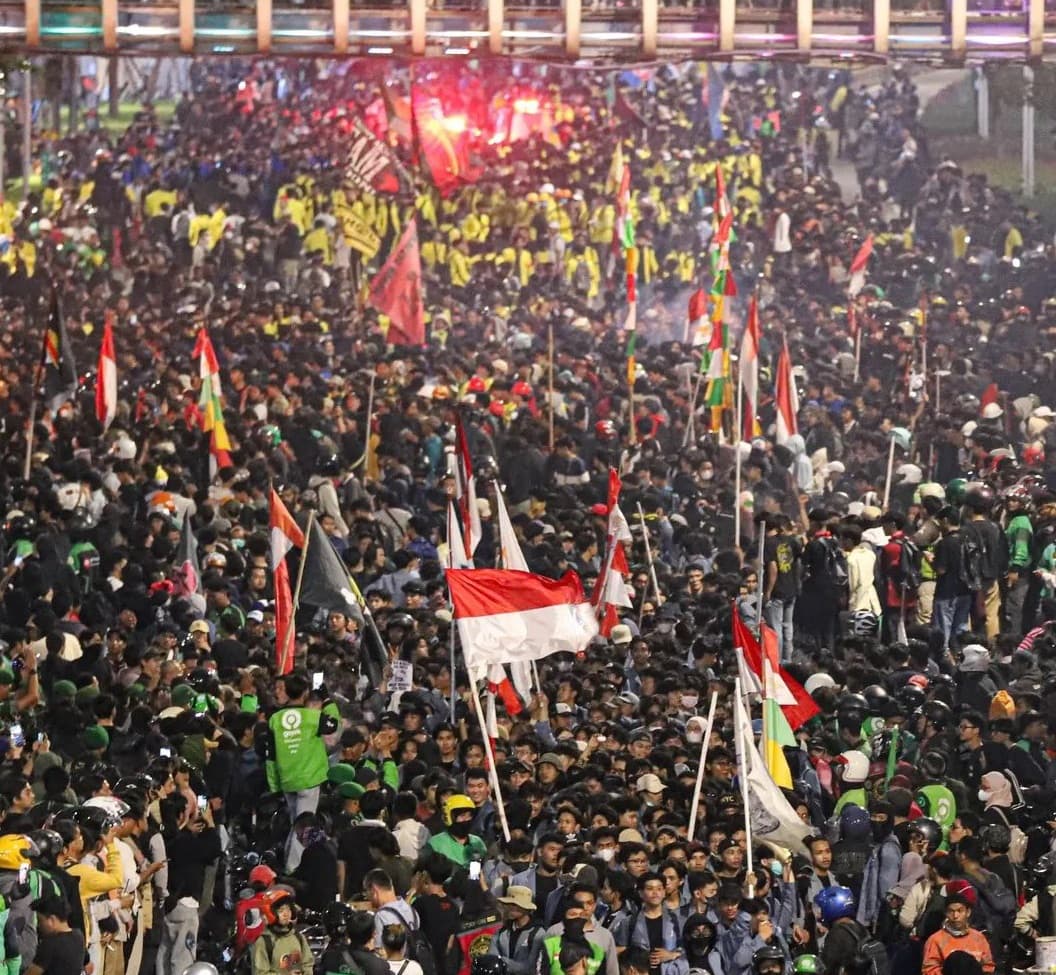
Despite this, thousands of Indonesian students took to the streets in Jakarta today to protest the spending priorities of President Prabowo Subianto's government, as well as the recent rise in petrol prices.
Titled “Heading to Bankrupt Indonesia”, the protest headed toward the city's popular Bundaran HI intersection. According to organisers, police and soldiers blocked some of the protesters from reaching the authorised protest site.
For months, the government had kept fuel prices unchanged despite rising oil prices on international markets, exacerbated by the conflict between Iran and other regional players.
However, mounting pressure on the state budget, already burdened by the Prabowo administration's spending programmes, has led to a significant jump in petrol prices this week.
Students held signs with slogans such as "Cancel the fuel hike" and "Wall of shame," aimed at the government.
Student leader Yatalathof Ma'shum Imawan of the University of Indonesia said the protesters had five main demands: ending the government's free meal and village cooperative programmes, reducing the prices of fuel and essential food items, and cutting spending deemed unnecessary.
According to the students, the costly free meal scheme has contributed to the country's worsening fiscal situation, forcing the government to reduce or eliminate other subsidies.
The protests have also targeted the military's expanding role in civilian affairs, a move that activists and students say could lead Indonesia back to authoritarian practices associated with the era of former President Suharto.