








Salloum: War is an ‘existential threat’ for Iraq. Christians also affected
The chapel and ecclesiastical buildings of the archbishopric in Erbil hit by missiles and drones. Chaldean woman in Baghdad arrested for celebrating Khamenei's killing, faces four years in prison. Iraqi scholar tells AsiaNews: the country risks becoming an arena for external powers to “settle scores”. Institutional crisis fuels fears, emergency government needed.
Milan (AsiaNews) - A chapel and church buildings in the Ankara district of Erbil were hit, and a Chaldean woman was arrested in Baghdad for rejoicing at the death of Supreme Leader Ali Khamenei, who was killed on February 28, the first day of attacks. The war between Israel and the United States against Iran, which has been inflaming the Middle East for days, from the Arab Gulf nations to Turkey (and Cyprus, in Europe), also affects Iraqi Christians who fear further progression into a “critical and delicate phase,” as sources from the patriarchate affirm. The situation is critical and there is a strong fear of large-scale involvement: “Iraq sees the escalation as an existential threat to the fragile stability it has spent years trying to build,” analyst and scholar Saad Salloum told AsiaNews.
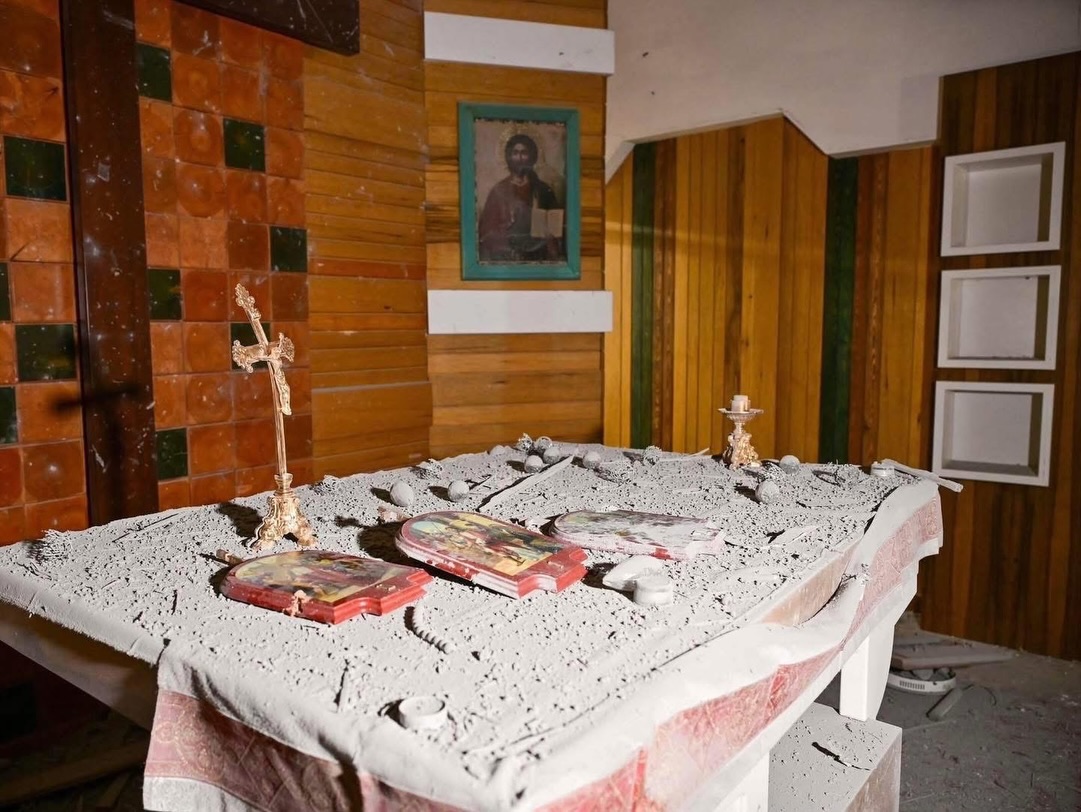
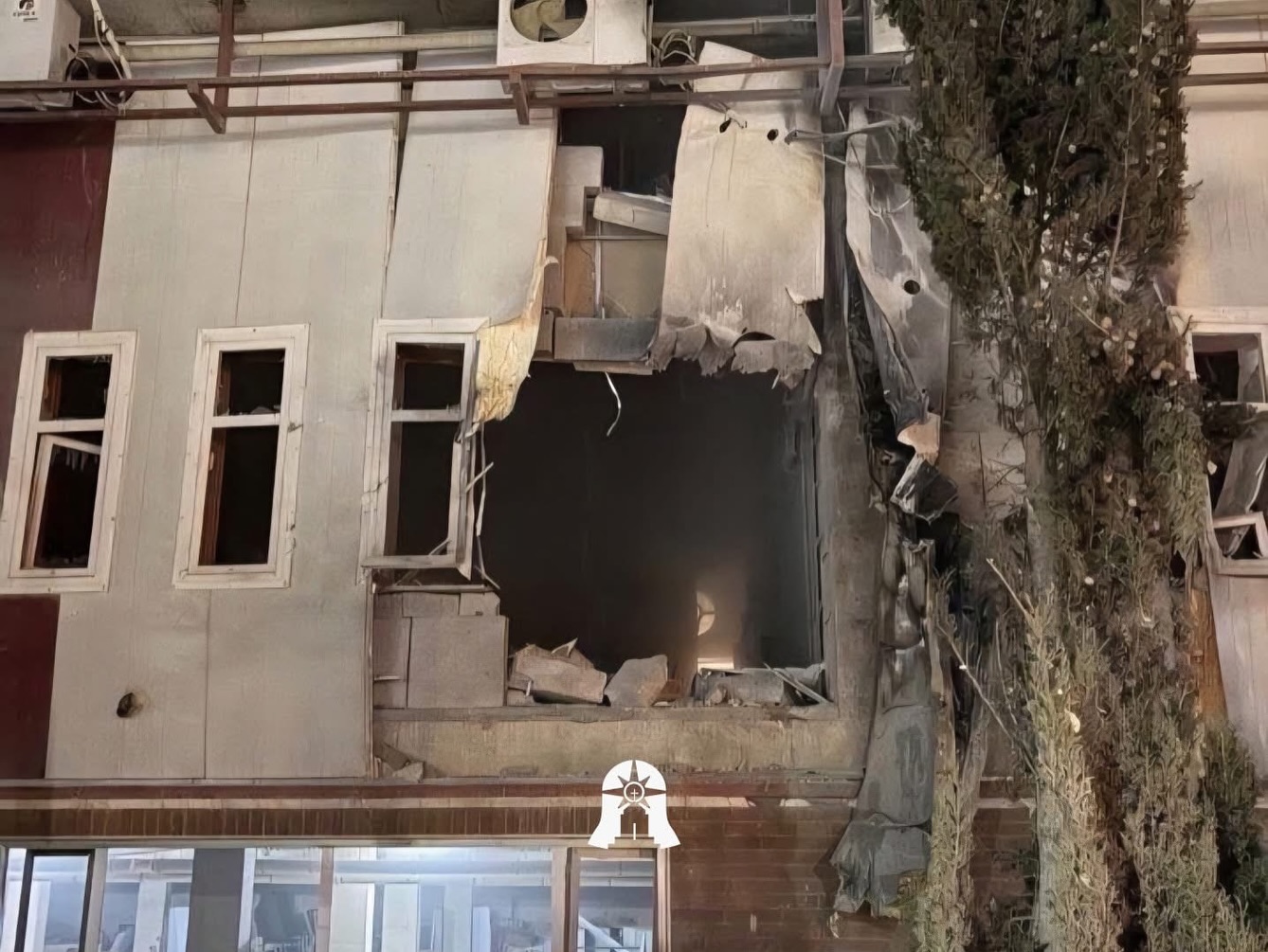
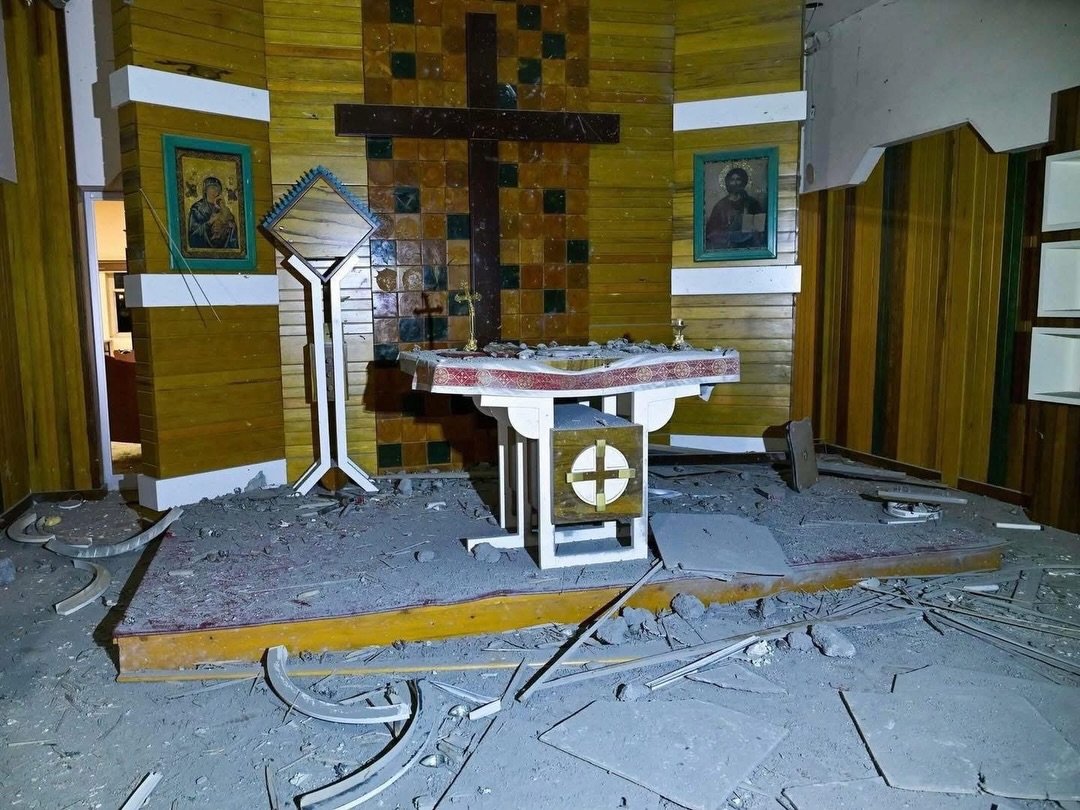
Yesterday evening, the war directly affected the Iraqi Chaldean community for the first time: missiles and drones launched from Iran hit the chapel of the Chaldean complex of the Magevney residence in Ankawa, a Christian suburb of Erbil not far from the airport, seriously damaging it (photos 1, 2, 3). The buildings belong to the Chaldean Archdiocese and the Dominican Sisters of the Congregation of the Sacred Heart of Jesus; inside there are also numerous apartments, which have long been inhabited by several poor Christian families from the city.
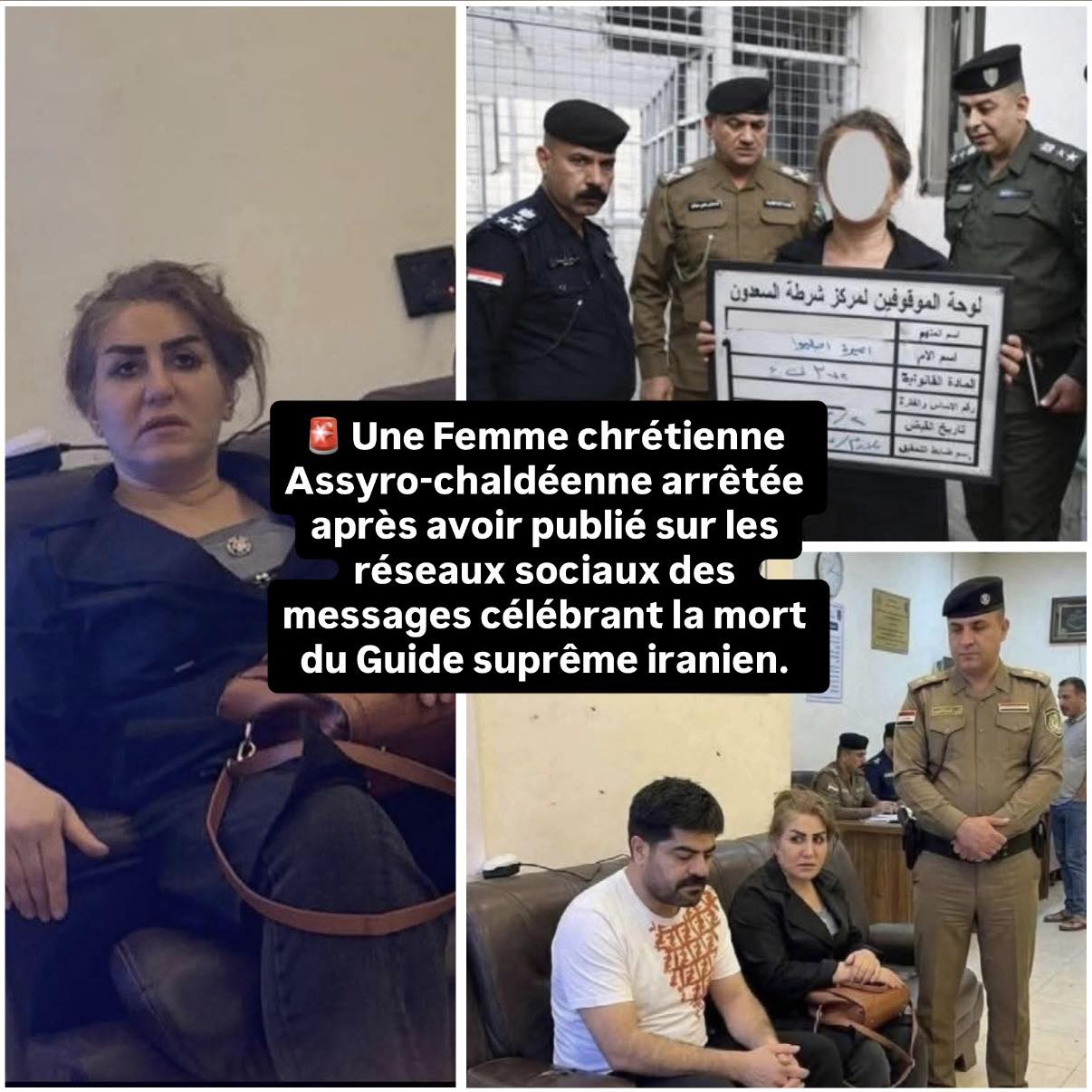
Previously, on March 3, Iraqi police arrested Runa Korkis (photo 4), an Assyrian-Chaldean Christian woman, who was identified and placed in preventive detention for posting messages on social media celebrating the killing of Ali Khamenei, Iran's supreme leader. A resident of Baghdad, according to initial reports, she now faces charges of “insulting religious symbols” and risks up to four years in prison. Eyewitnesses, speaking on condition of anonymity, claim that she was subjected to verbal and physical abuse during her detention. This incident fuels the concerns of Chaldean Christians, who fear further restrictions on freedom of speech and expression, with possible ethnic and religious discrimination before the law.
We spoke with Saad Salloum, journalist and associate professor of political science at al-Mustanṣiriyya University in Baghdad, one of the most prestigious universities in the capital, about the repercussions of the Israeli-American war on Iran, the regional escalation, and the repercussions for Iraq. He is also president of the Masarat Foundation, at the forefront of the fight for dialogue, freedom, and rights, and he does not hide his fears from AsiaNews that Iraq will be “transformed into an arena where international powers can ‘settle outstanding scores’.”
Below is the interview with the Iraqi Muslim academic:
Professor Salloum, what consequences could this new conflict have for Iraq?
Iraq views the current escalation between Israel and the United States on one side, and Iran on the other, as an existential threat to the fragile stability it has spent years trying to build. This Iraqi perspective is rooted in a collective memory burdened by the horrors of wars that Iraqis have endured for over four decades; they understand all too well that any full-scale regional explosion will not be contained within geographic borders. There are genuine fears of Iraq being transformed into a "settlement of accounts" arena for international powers, especially as the country now sits at a perilous "crossroads" of this conflict. Parts of Iraqi territory have already been subjected to repeated strikes—targeting both bases housing U.S. advisors and sites belonging to Iraqi factions—placing national sovereignty at stake and forcing the state into a grueling struggle to balance its international obligations with a complex regional reality.
Could this also trigger deeply critical scenarios on a humanitarian level?
On the humanitarian and economic fronts, Iraqis fear a recurrence of mass displacement scenarios. If the Syrian crisis triggered massive waves of refugees that strained the entire region, an all-out conflict involving a country of Iran’s demographic weight and geography would inevitably lead to a cross-border humanitarian catastrophe that defies containment. This anxiety extends to potential economic paralysis; Iraq relies heavily on regional trade and energy corridors, and a total war would stall its emerging development efforts, plunging the nation into a dark tunnel of inflation and resource depletion. Ultimately, the Iraqi position is that this conflict is a "no-winner war." The shift of this confrontation toward a full regional dimension places Iraq in the eye of the storm.
Another element of concern is that within the Muslim world, between Sunnis and Shiites. What do you think?
This conflict is poised to ignite unprecedented levels of polarization within the Muslim world, transcending traditional political disagreements to trigger acute structural conflicts with sectarian and nationalistic dimensions. The Muslim world has been grappling with a profound division that began to take shape with the 1991 invasion of Kuwait and the subsequent coalition war, a rift that widened drastically following the 2003 invasion of Iraq, which fundamentally reshaped regional power dynamics. Today, as direct and indirect strikes reach bases and facilities in Arab and Gulf states—including Kuwait, Bahrain, the UAE, Saudi Arabia, Oman, and Jordan—alongside the repeated shelling of the Iraqi Kurdistan region, we face a scenario that revives long-standing fears of "regional expansionism” whose long-term repercussions remain unpredictable.
There is currently talk of a possible ground invasion of the Kurds. What role can they play?
The Kurdish component, in particular, finds itself in the "eye of the storm," as its border areas have turned into an open arena for settling scores under the pretext of targeting opposition headquarters or foreign bases, thereby threatening the national and political stability across the border triangle of Iraq, Iran, and Turkey. Furthermore, the convergence of the war in Gaza with this regional struggle has made today’s division deeper than ever before. It creates a friction point between a public sentiment deeply in solidarity with the Palestinian cause and an official and popular wariness regarding agendas of regional hegemony and the exportation of crises. Ultimately, this leads to the fragmentation of traditional Islamic solidarity, replacing it with security-driven alliances built on mutual fear and narrow interests.
Iraq is facing a regional war in a context of institutional deadlock: for months, it has been waiting for the election of a new president, the appointment of a prime minister and the formation of a new government...
The Iraqi political landscape is undergoing a major strategic reset where constitutional crises intersect with the drums of regional war. The recent article by the President of the Supreme Judicial Council, Judge Faiq Zidan, in Asharq Al-Awsat—which labeled previous constitutional interpretations as an "interpretive sin"—serves as a preemptive "alarm bell" to dismantle the deadlock hindering the election of a president and the formation of a government. This judicial shift clearly aims to soften constitutional pathways and bypass the "two-thirds majority" hurdle. Amidst the current escalation, the regional war is no longer a mere external event; it has become a "mandatory catalyst" forcing major political leaders toward a national obligation that admits no further delay. There is a growing realization that leaving Iraq without a fully empowered government—while its territories face strikes and global powers clash with neighboring Iran—is "political suicide" and a dangerous sovereign vacuum. The pressure of the current state of emergency, coupled with the judicial initiative to correct interpretive paths, compels rival forces—the Coordination Framework, Kurdish, and Sunni parties—toward a swift compromise to produce an "emergency government" capable of shielding the economy from maritime and oil volatility and blocking foreign interventions that exploit political voids to turn Iraq into an open battlefield.
From oil to trade, what consequences could the conflict have on the country's stability?
The political stalemate and the long wait for institutional appointments place Iraq in the weakest position in its history. What makes this weakness particularly dangerous is the intersection between the constitutional crisis and the looming threat of economic catastrophe. With approximately 94% of its budget dependent on oil exports through the Gulf, Iran's threat to close the Strait of Hormuz is a real nightmare. A blockade of exports would mean the state would immediately be unable to pay the salaries of millions of civil servants and pensioners, leading to the collapse of civil peace and social unrest. The current interim government does not have the power to make important strategic decisions, such as securing alternative export routes or managing a suffocating financial crisis in the event of a cash flow disruption. Iraq is on the brink of collapse: political leaders must heed this signal sent by the judiciary to speed up institutional appointments, otherwise the nation will face a structural collapse from which it may be impossible to recover the very concept of a “state.”
Analysts and experts are outlining scenarios of “chaos” in Iran, as happened in the past in Iraq. This is a real fear, but what are the biggest risks?
The warnings of Iran sliding into a "chaos scenario" are not merely pessimistic analyses; they are realistic nightmares that Iraqis, having been the primary laboratory for the consequences of institutional collapse, understand more deeply than anyone else. However, the "Iraqization" of Iran would not be a carbon copy of the 2003 events; it would be a regional explosion with multiplied effects. While the U.S. invasion of Iraq led to a total state collapse, any fracture in the Iranian regime’s structure under the pressure of war could lead to factional strife or "armed chaos" crossing borders due to the ideological nature of its institutions. Iraq would be the "first respondent" to this shock through the overlapping security arenas with Tehran-aligned factions, as well as the risk of mass displacement across a shared border exceeding 1,400 km—a threat that could trigger a demographic and economic collapse beyond the Iraqi state's capacity. Iraq lacks the luxury of time to await the outcomes of chaos in its larger neighbor while lacking a fully empowered government; a legitimate head of state and a Commander-in-Chief within a robust government are the only guarantees to prevent the "contagion of chaos" from spreading and to secure borders and sovereign financial files. Otherwise, developments could head toward the "Balkanization" of the region, a scenario that would make the 2003 Iraq crisis appear as a minor event compared to what the Middle East might witness.
Professor Salloum, in conclusion, what are the factors of greatest concern?
Beyond the institutional deadlock, there are three critical dimensions that define the Iraqi situation today:
First, the Fragmentation of Sovereignty; the presence of non-state actors with independent decision-making powers complicates Baghdad’s efforts to maintain neutrality, making the state vulnerable to retaliatory strikes.
Second, the Social Tipping Point; any economic shock resulting from the closure of the Strait of Hormuz will not just be a financial crisis, but a catalyst for mass social unrest that could dismantle the political system from within.
Finally, Iraq’s potential as a Diplomatic Bridge; there is a persistent Iraqi ambition to act as a mediator between Iran and the West. However, this 'bridge' cannot be built without a stable, fully empowered government in Baghdad. Without immediate political resolution, Iraq risks being the primary victim of a war it did not choose."

.png)










