








Singapore growth beyond forecasts: government focuses on workers and AI
Last year, the economy expanded by 5 per cent, far more than official government forecasts. In the budget, Prime Minister Wong calls for cooperation to ensure greater benefits and rights. Growth forecast this year is 2 to 4 per cent. Artificial intelligence is seen as a booster for employment and well-being.
Singapore (AsiaNews) – Singapore is not slowing down, with a 5 per cent increase in GDP last year, far better than the cautious official forecasts (of 2 per cent) that took into account a possible, albeit moderate, growth slump, partly due to US tariffs.
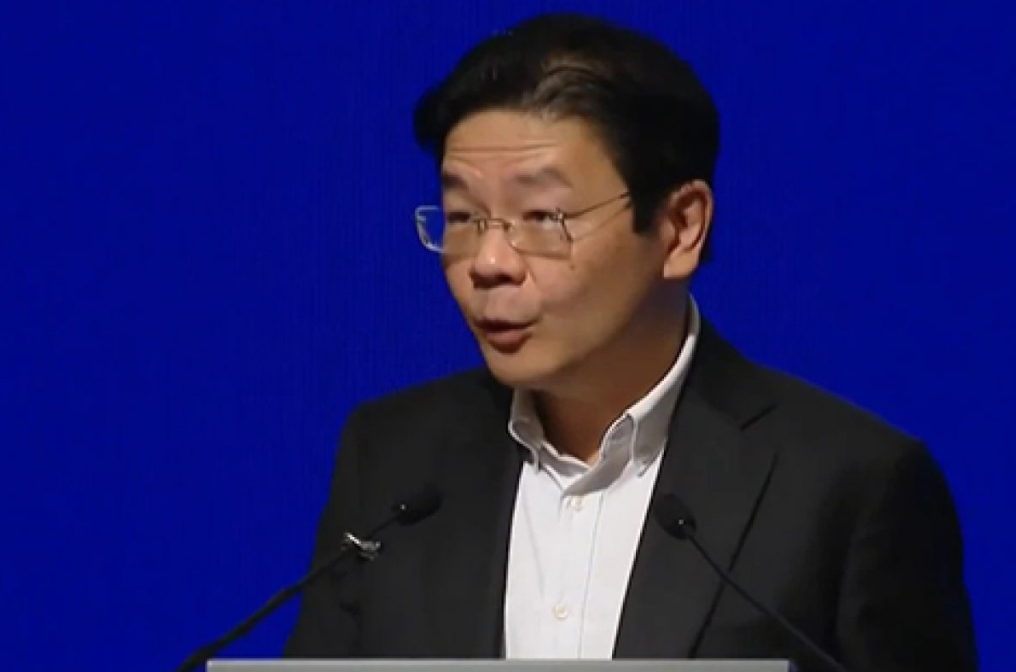
The new budget, however, presented on Thursday by Prime Minister Lawrence Wong, aims above all to ensure stability, calling on all parties to cooperate to guarantee benefits and greater rights for workers, who are the driving force behind the “Singapore model”.
The local situation offers a delicate balance of possibilities, potential, diversity, and needs to be met, which the government is called upon to consider and include in its programmes, from trade and development to housing and employment.
The economy of the city-state on the Strait of Malacca largely depends on a regional and global context that is more uncertain than ever. It is no coincidence that projections for growth this year range from 2 to 4 per cent.
An additional challenge is the use of artificial intelligence (AI) to support employment and well-being.
On the plus side, Singapore scrupulously manages its infrastructure and potential, enjoys relatively low social tensions, is strategically located, and, in some respects, benefits from mainland China’s total takeover of Hong Kong, once its main rival.
Added to this is the search, especially in the financial and insurance sectors, for a more favourable, cosmopolitan, and less restrictive environment.
This is evinced by the volume of investments and the flow of capital to the region, but also by one of the highest costs of living in the world.
For many (despite an average per capita income of nearly US$ 100,000 a year), this cost is becoming increasingly unsustainable, even more so for a portion of the significant immigrant workforce (1.6 million, or about 40 per cent of the total).
This is why Prime Minister Wong, who is also finance minister, is committed to supporting workers who, in turn, have clearly expressed concerns about keeping up and maintaining adequate income levels amid rapid technological change and in a situation of uncertainty.
For this reason, he reiterated the government's role in supporting the transition of the labour market, ensuring adequate tools to maintain competitiveness and guarantee adequate jobs and higher wages.
Three main lines of action are outlined in the new budget.
The first one is embracing technological development fuelled by AI’s economic and employment potential.
The second is targeting support for small and medium-sized businesses (with a 40 per cent tax cut up to a maximum of S$ 30,000, around US$ 23,750), seniors, skilled workers, immigration, and housing (which is increasingly gaining traction as a major source of hardship).
The third is the reduction of incentives (for example, for vehicle fleet renewal) and lower-impact benefits.

.png)
10/11/2024 12:29
17/07/2023 16:46










