Tashkent (AsiaNews) - Amid the tensions in the Gulf, and also between Pakistan and Afghanistan, a new logistics route is emerging between Pakistan and Central Asia, which heads through Iranian territory in an attempt to avoid the escalation of conflicts. According to experts, this is one of the few real alternatives for the landlocked Central Asian region, which faces enormous costs and various other difficulties.
Last month, many refrigerated lorries loaded with beef travelled from Pakistan to Uzbekistan, setting off from the port of Karachi on the shores of the Arabian Sea to reach Tashkent by land. The vehicles passed through the Gabt-Rimdan border terminal to enter Iranian territory, crossed Turkmenistan and reached their destination. This route allows Pakistan to enter the Central Asian market, home to nearly 80 million people.
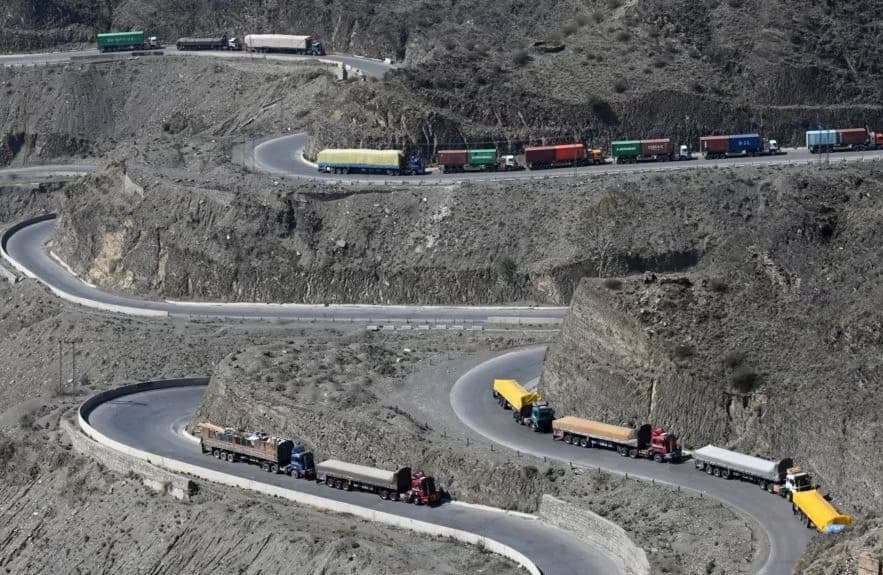
For Uzbekistan, which has seen massive increases in meat prices in recent months due to domestic production constraints, Pakistani beef offers a significant opportunity for diversification, whilst for all Central Asian nations, it opens up access to seaports. It is certainly not the shortest route compared to the one through Afghanistan, but the situation of border tensions between Islamabad and Kabul does not allow for taking many risks, as the crossings between Torkham and Chaman have been disrupted several times due to armed clashes in recent months, blocking thousands of vehicles and causing deliveries to be cancelled.
Kazakhstan and Uzbekistan’s plans to link their railways to Pakistani ports remain merely on paper for the time being, again due to the region’s instability. In February 2026, Kazakh President Kasym-Jomart Tokayev and Uzbek President Shavkat Mirziyoyev travelled to Islamabad to discuss transport corridors, and supporting agreements were concluded, but it is unclear when the tracks will actually be laid. Under these circumstances, the only option is the road route, as an alternative to the closed roads of Afghanistan. The route through Pakistan “is longer and more expensive, but at least it is an alternative”, notes analyst Alisher Ilkhamov, director of Central Asia Due Diligence in London.
The route through Afghanistan takes a maximum of 5–6 days, using over 500 litres of fuel, whilst the Pakistani route covers over 1,500 kilometres, involving long stretches to be traversed both from Uzbekistan, which borders Afghanistan, and from Kazakhstan and Kyrgyzstan, which must cross longer and more arduous territories. Following the outbreak of the conflict between the US and Iran on 28 February and the blockade of the Strait of Hormuz, all routes were disrupted, with Iranian ports closed, particularly the more ‘global’ port of Bandar Abbas, which was the target of the first Israeli and American bombings.
All the Central Asian countries have therefore flocked to the ‘green-light’ route via Gabt-Rimdan and Taftan-Miržav, where systems are in place for lorries to cross between Pakistan and Iran, although everything is being done with the utmost caution, to prevent Central Asian countries from being accused of collaborating with Tehran and becoming targets of Israeli-American attacks themselves. In this regard, the visit to the United States by the daughter of the President of Uzbekistan, Saida Mirziyoyeva, and the signing of trade cooperation agreements, have taken on particular strategic significance in the current context.
The development of the rail network between Central Asia and seaports was discussed on 20 April in Washington, at the presentation of the new Silk Seven Plus strategy, drawn up by the New Lines institute for the integration of the entire region, with experts noting that “Afghanistan cannot be excluded”, whilst seeking to expand routes in all directions without isolating anyone. This is a complex and long-term process, but one of vital importance not only for local residents but for the entire global trade network.