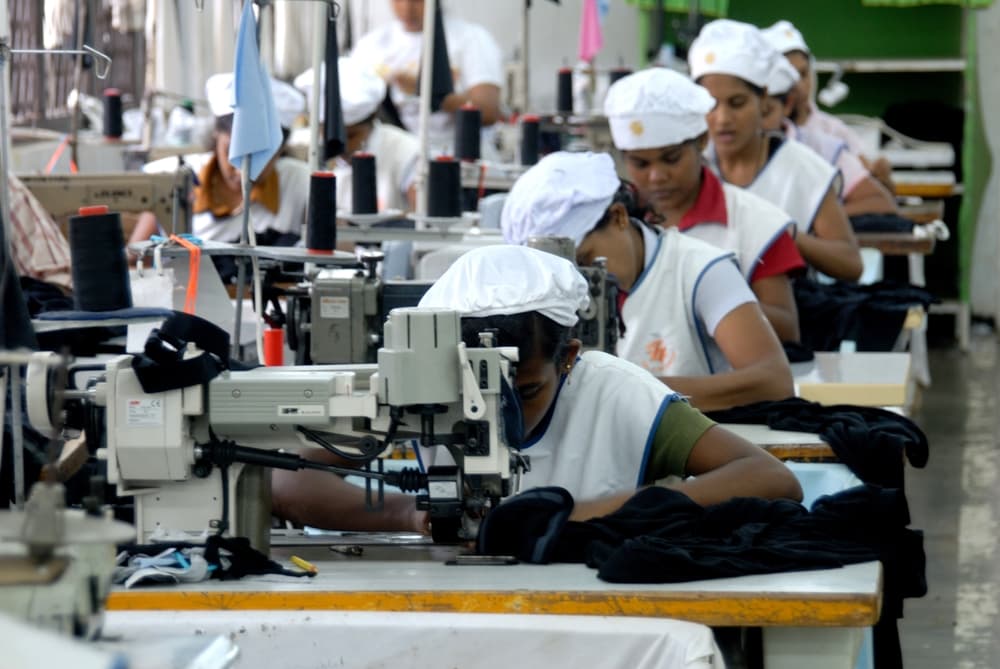
Colombo (AsiaNews) - With less than three months to go before the new EU packaging regulations come into force, most exporters may not be ready to cope with the changes required to access the European Union market, which is Sri Lanka’s largest market, particularly for clothing.
The European Regulation on packaging and packaging waste – adopted in December 2024 and entering into force on 11 February 2025 – replaces the old directive. Economic analysts believe that the new EU rules on packaging waste and eco-labelling, due to come into force in September 2026, will pose a significant obstacle for Sri Lankan traders.
Companies placing goods on the EU market will have to comply with rules on packaging, labelling, reuse and the use of certain materials. Currently, Sri Lanka exports a wide range of goods to the European Union: in addition to clothing, these include tea, spices, rubber products and seafood.
According to Dilhan C. Fernando, Chairman and CEO of the Dilmah Tea Company and an expert in sustainable business practices, “the new regulations set out sustainability and labelling requirements covering everything from production to waste management”. Clearly, complying with them will lead to increased costs. “Exporters will have to invest in updating labels, potentially incorporating QR codes and information on recycling, to meet the new EU standards,” he continues.
Economic analysts Thushari Galappathi and Shirantha Hewapathirana told AsiaNews that “the new requirements include recyclability, minimum recycled content, labelling, minimisation of packaging, including reuse obligations”. Furthermore, there is also a ban on food packaging containing PFAS above the established concentration limits. And companies are required to consider the entire life cycle of their packaging.
The analysts explain that, although the European Commission announced in June 2025 its intention to withdraw the proposed directive on environmental claims (GCD), companies operating in the European market will not be exempt from sustainability obligations. Negotiations on the directive have indeed been suspended, but the Empowering Consumers for the Green Transition directive remains fully in force, introducing new rules against greenwashing.
From September 2026, generic environmental claims – such as ‘green’, ‘eco-friendly’ and ‘sustainable’ – will be banned across the European Union unless backed by verifiable evidence or recognised certification schemes. The new provisions also affect claims relating to ESG (environmental, social and governance) performance and climate neutrality claims based solely on offsetting emissions through carbon credits. In practice, companies will no longer be able to present a product or activity as “carbon neutral” without demonstrating a real reduction in emissions.
According to senior officials at the Export Development Board (EDB), the clothing sector must invest in advanced solutions to monitor its carbon footprint and meet the EU’s stringent transparency requirements, “whilst tea and food producers must ensure that food-contact materials are free from prohibited substances such as PFAS and that packaging materials are minimised and recyclable. Meanwhile, major producers and smallholder supply chains in the rubber industry face growing pressure to comply with regulations on packaging and deforestation”.
On packaging, it is necessary to work with European buyers to review current specifications and “avoid using generic ‘eco-friendly’ claims on packaging until verifiable certifications are obtained”, they add. “To monitor supply chain procedures, it is necessary to prepare for transparency requirements by mapping supply chains and obtaining sustainability certifications.”