








The Gulf War accelerates Turkey’s plans for 'peaceful nuclear’ power
The Turkish government is ready to invest up to US$ 100 billion to build eight new reactors over the next 10 years. Projects are being considered with several global partners, from Russia and China to Canada and South Korea. The country has been barely touched by the war so far, but the upcoming July NATO summit could provide an opportunity to rethink its place in the Alliance. Meanwhile, the conflict has had consequences for travel and tourism.
Istanbul (AsiaNews) – In the global crisis triggered by the United States and Israel's war against Iran, with Tehran’s closure of the Strait of Hormuz to "enemy" ships, the energy emergency linked to the shortage of crude oil and natural gas is fuelling new investments in nuclear power.
Among the countries decisively pursuing nuclear power is Turkey, which is set to invest up to US$ 100 billion over the next 10 years as part of a plan that includes building eight new reactors, leveraging the cooperation of global partners.
From Russia and Canada to South Korea and China, Turkey is opening its doors to investors, boosting its existing plans to build “peaceful nuclear” power. The ambitious project, experts warn, could radically change the country's energy sector.
The urgency of this trend reversal is reinforced by the structural vulnerability of domestic energy production, which goes beyond the emergency triggered by the Gulf conflict: Turkey imports more than 80 per cent of its energy, making it highly susceptible to price shocks linked to geopolitical crises.
Against the backdrop of rising energy prices and regional instability, Turkey, which straddles Europe and Asia, is effectively launching a long-term economic transformation. Its Plan B envisions a mix of renewable and nuclear energy to increase its energy sovereignty.
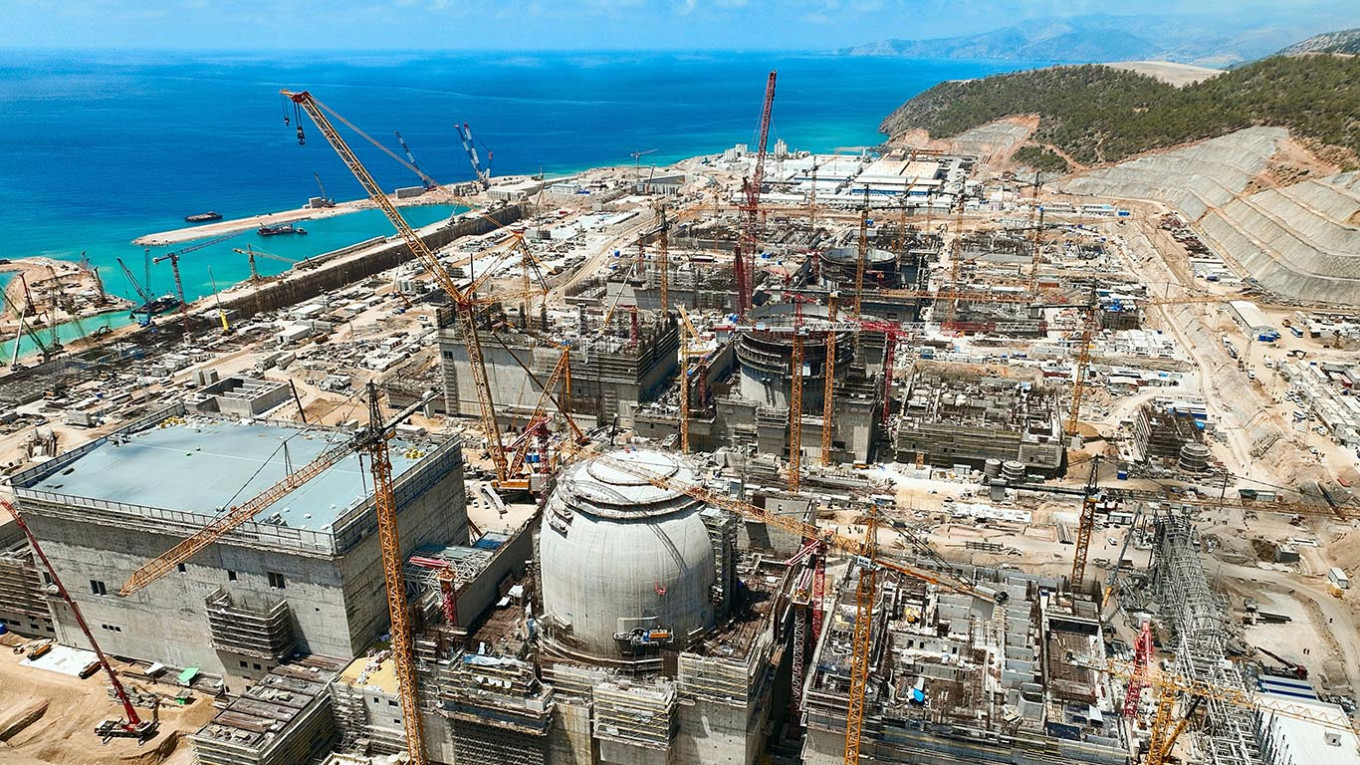
The flagship of the nuclear development programme remains the Akkuyu NPP (Nuclear Power Plant) under construction by Russia's Rosatom.
The estimated cost is already at around US$ 25 billion, making it one of the nation's largest infrastructure projects. Total investment, considering cost escalation, could exceed US$ 30 billion, Eurasia Review noted.
The project is being implemented according to the Build-Own-Operate model, where the investor not only builds the plant but also owns it, recovering its investment through the sale of electricity.
After the launch of all four units with a capacity of 4.8 GW, the plant will be able to cover up to 10 per cent of Turkey's electricity needs.
Ongoing negotiations with South Korea, China, and Canada show that the Akkuyu NPP is only the first phase. Ankara plans to build up to 20 GW of nuclear generation in the coming decades, including new plants in Sinop and Thrace.
Given that the cost of a large nuclear power plant is comparable to the Akkuyu NPP, the total investment could reach 0 billion.
Turkish Energy Minister Alparslan Bayraktar outlined the strategic goal of peaceful nuclear development, which is to “Reduce dependence on imports and ensure sustainable energy.”
If successful, the country will thus be able to solve several key challenges for the future, such as reducing dependence on critical energy imports, stabilising inflation by controlling energy costs, and strengthening its position as a regional energy hub. However, two key issues remain: financing and geopolitics.
Turkey has invested more than US$ 100 billion over the past three years to rebuild southern cities and provinces devastated by the 2023 earthquake, and it will be hard to secure the necessary funds to cover new costs without aid.
Conversely, the example of the Akkuyu NPP shows that there are different models of cooperation that, if implemented, would allow Turkey to become one of the few countries capable of financing tens of billions of dollars' worth of energy transformation without straining its budget.
Meanwhile, Turkey, like other players in the region, is closely monitoring the war that broke out on 28 February following the launch of the Israeli-American military operation against Iran, which has set the Gulf region ablaze while barely touched the country, at least so far.
On a couple of occasions, Turkey’s defence system intercepted missiles launched by Iran or its allies in Iraq and Lebanon, without causing damage or injuries.
However, several factors are at play, which Ankara is carefully monitoring, which go beyond the mere energy issue and end up affecting a multitude of sectors and interests.
These include the Kurdish question, the flow of migrants (including from Iran), renewed tensions with Greece over Cyprus, international air traffic, and not all of them unfavourable.
The first phase of the war has highlighted the two main risks facing Turkey, as indicated in a lengthy report by Rice University's Baker Institute for Public Policy, namely territorial integrity and the Kurdish threat to Turkish security, which are closely intertwined.
Then there is the question of the future of the Atlantic Alliance (NATO), which is in a phase of profound crisis due to different interests and power relations, starting with Washington's hegemonic position.
The fact that NATO has served as the main line of defence in a war that could spread throughout the Middle East has raised questions that have led to a reconsideration of Turkey’s relationship with Western allies.
Turkey will host the NATO summit in July, and the war in Iran is likely to shape its agenda, amplifying Ankara's influence, particularly on issues ranging from mutual security responsibilities to the terms of collective defence in disputed gray areas.
Experts believe President Recep Tayyip Erdoğan’s goal is to use diplomatic channels to pressure the United States to limit its engagement with Kurdish forces in exchange for his country’s continued cooperation with NATO.
The success of Erdoğan’s strategy to translate the current conflict into a lasting defence realignment with the West “hinges both on his ability to act swiftly and on [US President Donald] Trump’s ability to fulfill the reported agreement on Türkiye’s military equipment.”
Finally, the war has already had an impact on tourism, causing a sudden shift in travellers' plans. In recent days, many tourists have in fact cancelled planned trips to Turkey and Cyprus for the Easter break. Further cancellations could occur for the summer in favour of destinations currently considered safer.
Beyond security, there is also a huge question mark hanging over travel, with the cancellation of thousands of flights and the closure of major regional hubs such as Dubai and Doha, transit points to the Indian Ocean and Asia in general.
In this case, Turkey has advantages, precisely because of its strategic position between Europe and Asia. With a reliable national carrier (Turkish Airlines), it can supplant the role of the United Arab Emirates and Qatar as a global air traffic hub.

.png)










