





-as-seen-from-other-Asian-countries-64943.html&is_video=&description=The+war+in+Iran+%28and+the+Gulf%29+as+seen+from+other+Asian+countries)


The war in Iran (and the Gulf) as seen from other Asian countries
The attacks launched by Israel and the United States on the eve of Purim and Iran's retaliation against US bases in the region have already claimed the life of one Asian immigrant, a Pakistani national working in Abu Dhabi. In India, the opposition has criticised Modi, who has just returned from Israel. Indonesia’s Prabowo (who promised soldiers for Gaza) offers to mediate. China ponders the repercussions.
Milan (AsiaNews) – The feared large-scale attack by Israel and the United States on Iran has finally arrived, coming on a particularly symbolic date for Jews worldwide, on the eve of Purim, a holy day that this year begins on 2 March commemorating the survival of the Jewish people from a plot hatched by the court of the king of Persia, according to the story told in the Book of Esther, in the Bible.
Since this morning, Tehran and other Iranian cities have been hit by airstrikes, with the goal of regime change, a goal explicitly expressed by both US President Donald Trump and Israeli Prime Minister Benyamin Netanyahu.
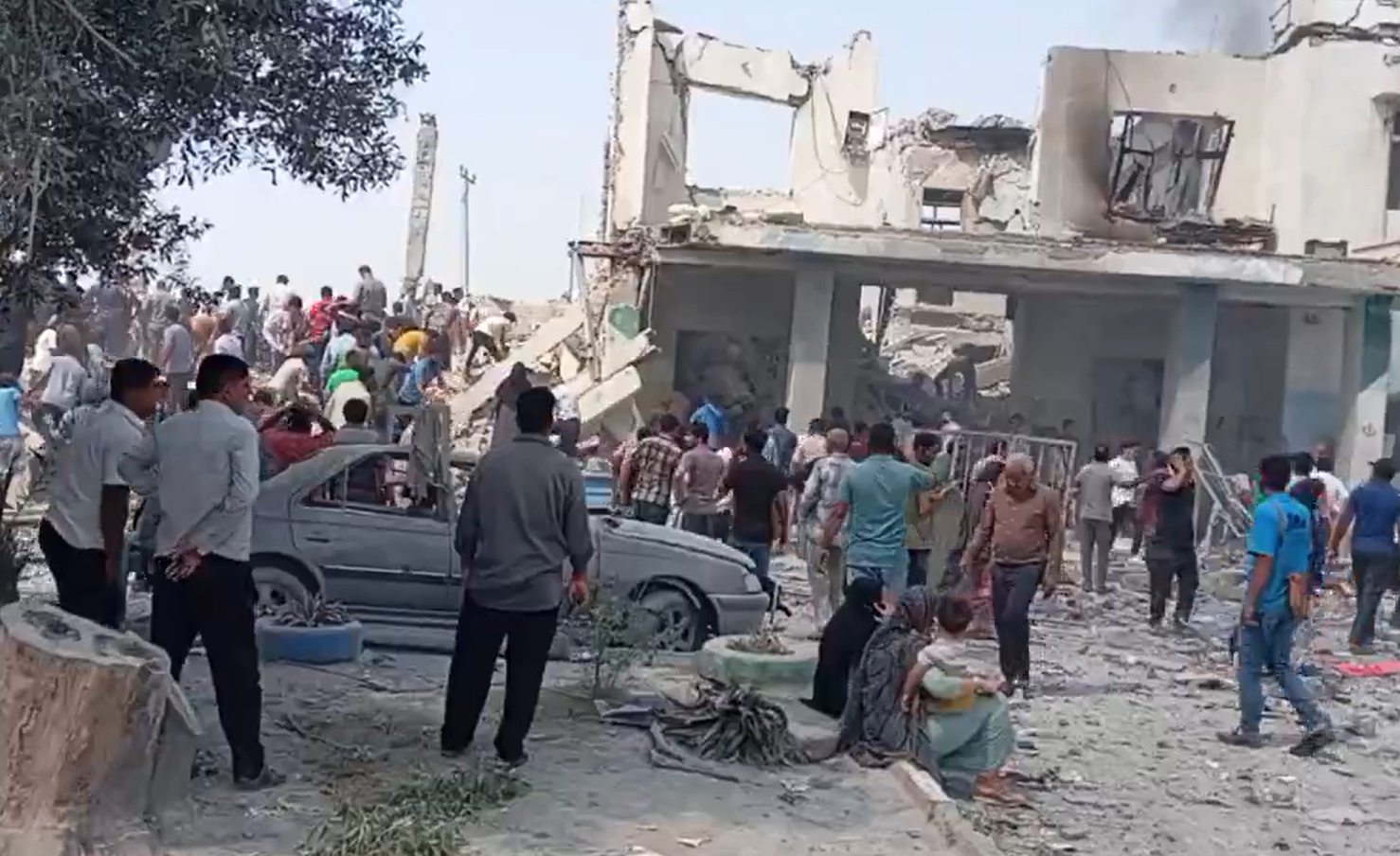
Bombings and massive rocket launches are hitting symbolic sites and strategic targets, claiming civilian victims.
Iranian television specifically showed a girls' elementary school that was hit in the southern Iranian city of Minab, with around fifty people reportedly buried under the rubble.
Iran immediately initiated a "strong and decisive" response, with rockets and drones fired at Israel, most of which have been intercepted. Gulf countries that host US military bases are also among the targets of the retaliation in the all-out conflict.
Iran attacked Qatar, Bahrain, Kuwait, the United Arab Emirates, and Jordan. Explosions were reported in Dubai and Abu Dhabi, likely caused by missiles and debris intercepted in the air by anti-aircraft guns.
In Abu Dhabi, one death was reported, a Pakistani national, in a city where, it is important to note, hundreds of thousands of Asian workers live.
In fact, Philippine President Ferdinand Marcos Jr expressed concern over the more than two million Filipinos living in the region, where all flights have been cancelled.
In recent days, Arab countries repeatedly called for negotiations, as evinced by Oman's offer to mediate. It is no secret that regime change in Tehran is not a priority for Gulf countries, especially at a time when the Iranian regime is weak.
Along with the expected support for the right to self-defence by the countries hit by Iranian missiles targeting US bases, Saudi Crown Prince Mohammed bin Salman and Qatari Emir al-Thani jointly expressed their hope for an "immediate halt" to the escalation and a "return to the dialogue table”.
This is the opposite path taken by Trump, following Netanyahu.
Saudi Crown Prince Mohammed bin Salman spoke to Mohamed bin Sayyid, president of the United Arab Emirates, following renewed tensions between the two countries in recent months. Riyadh condemned Iranian attacks and asserted its full solidarity with the UAE.
Regarding reactions in the rest of Asia, the attack on Iran is causing problems for Indian Prime Minister Narendra Modi, who has been criticised by the opposition for his recent visit to Israel.
So far, India’s External Affairs Ministry has refrained from issuing official statements, limiting itself to urging caution among the millions of Indian immigrants living in the region.
Pakistan, currently engaged in attacks against the Taliban in Afghanistan, has instead condemned the attack on Iran. In a personal telephone call with his Iranian counterpart, Abbas Araghchi, Foreign Minister Ishaq Dar slammed the "unwarranted attacks" by the United States and Israel in violation of international law. The Pakistani Foreign Ministry also issued a statement declaring that “Iran has the legitimate right to defend itself under the UN Charter.”
Indonesia, another country whose President Prabowo Subianto has sought to gain credibility in the Middle East in recent weeks, has also taken a stand. "Indonesia calls on all parties to exercise restraint and prioritize dialogue and diplomacy," the Foreign Ministry wrote on X, adding that, if the parties agree, Prabowo is available to travel to Tehran for mediation.
China is silent for now, awaiting developments, watching a BRICS member, as well as a country crucial to its oil supplies, directly attacked. For the People's Republic of China, an unstable Gulf region is the worst nightmare, since it is key to its trade.
Just two days ago, at the daily press conference of the Foreign Ministry, the Iranian state TV correspondent asked spokeswoman Mao Ning whether, in the event of a US attack, the People's Republic of China would stand with Iran "against any US aggression".
“China advocates the resolution of issues through political and diplomatic channels,” Mao said when asked whether China would join Russia in backing Iran.
Stressing the traditional friendship between the peoples of Iran and China, she noted that, “China supports the Iranian government and people in safeguarding (their) legitimate rights, interests, and national stability”, adding that, “We hope all sides … exercise restraint and solve disputes through dialogue”.

.png)










