

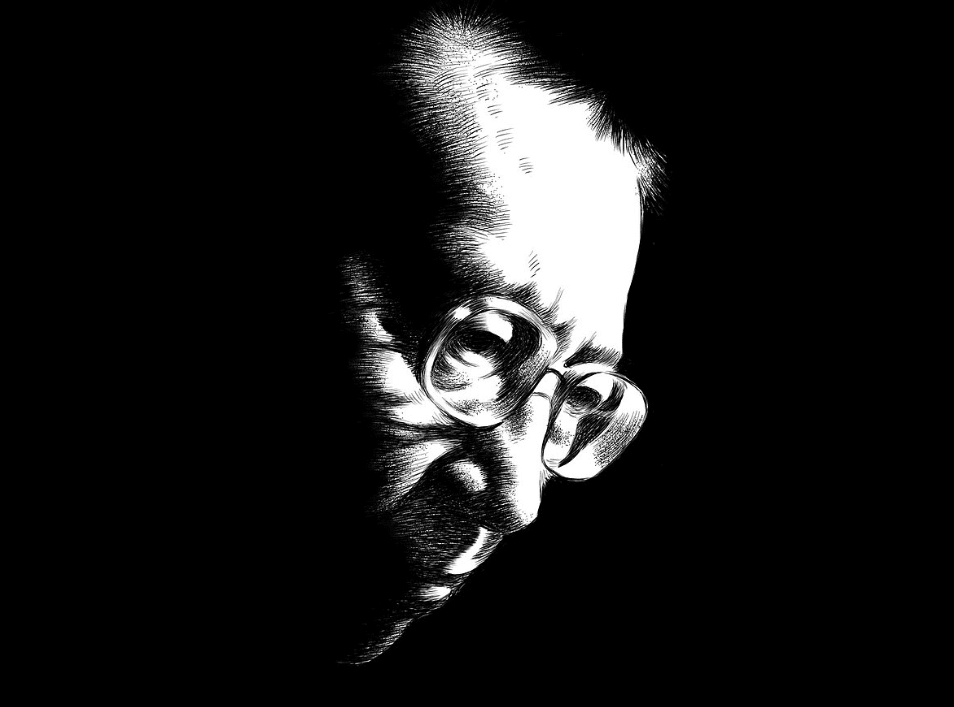
Milan (AsiaNews/Agencies) – A Chinese court has sentenced two activists in Zhejiang Province to long prison terms for daring to publicly remember Liu Xiaobo, the Nobel Peace Prize winner who died from a serious illness while in custody for his work in favour of human rights.
On its website, the Chinese Human Rights Defenders (CHRD) network reported that on 13 February, a court in Hangzhou sentenced Zou Wei to three and a half years in prison and Zan Aizong to three years for “picking quarrels and creating disturbances”.
On 13 July 2024, the seventh anniversary of Liu's death, a group of people, including Zou and Zan, gathered to remember him at the Qiantang River estuary in the city of Haining. The group posted pictures of the commemoration online. The next day, Hangzhou police arrested six of them, later releasing four and keeping Zou Wei and Zan Aizong.
A week later, the two men were placed in criminal detention. In August 2024, Gongshu District police formally charged both for “picking quarrels”. Their trial opened on 19 September 2025, but the verdict was not announced until last week's hearing.
Zou Wei is a member of the Zhejiang Democracy Party, an informal group of pro-democracy activists, while Zan Aizong is an independent writer, former journalist, and member of the Independent Chinese PEN Centre.
Both are currently held at the Gongshu District Detention Centre in Hangzhou.
The CHRD has long documented how Chinese authorities frequently use the charge of “picking quarrels and provoking trouble” to silence people who exercise or defend human rights.
In September 2025, the United Nations High Commissioner for Human Rights, Volker Türk, also publicly called the charge overly broad and vague, calling for its repeal.
A well-known intellectual and writer, Liu Xiaobo (1955–2017) was a globally recognised figure for his commitment to human rights in China.
During the 1989 Tiananmen Square protests, he supported the students and attempted to mediate with the authorities for a peaceful evacuation of the square to avoid further bloodshed. For this, he was imprisoned for the first time.
In 2008, he was among the main authors of Charter 08. Inspired by Charter 77, a manifesto issued in 1977 by Czechoslovak dissidents, the authors of the Chinese version called for key political reforms, including multiparty rule and freedom of expression in the country.
Sentenced in 2009 to 11 years in prison for "inciting subversion of state power" due to his involvement in Charter 08, Liu was awarded the 2010 Nobel Peace Prize while in detention “for his long and non-violent struggle for fundamental human rights in China.”
The award was symbolically presented to an empty chair. Liu died on 13 July 2017, from terminal liver cancer, while still in state custody at a hospital in Shenyang.
He was the first Nobel laureate to die in detention since Carl von Ossietzky in Nazi Germany.
The sentencing of the two Zhejiang activists shows how his memory, while still a taboo for the authorities, remains alive and well in China.













