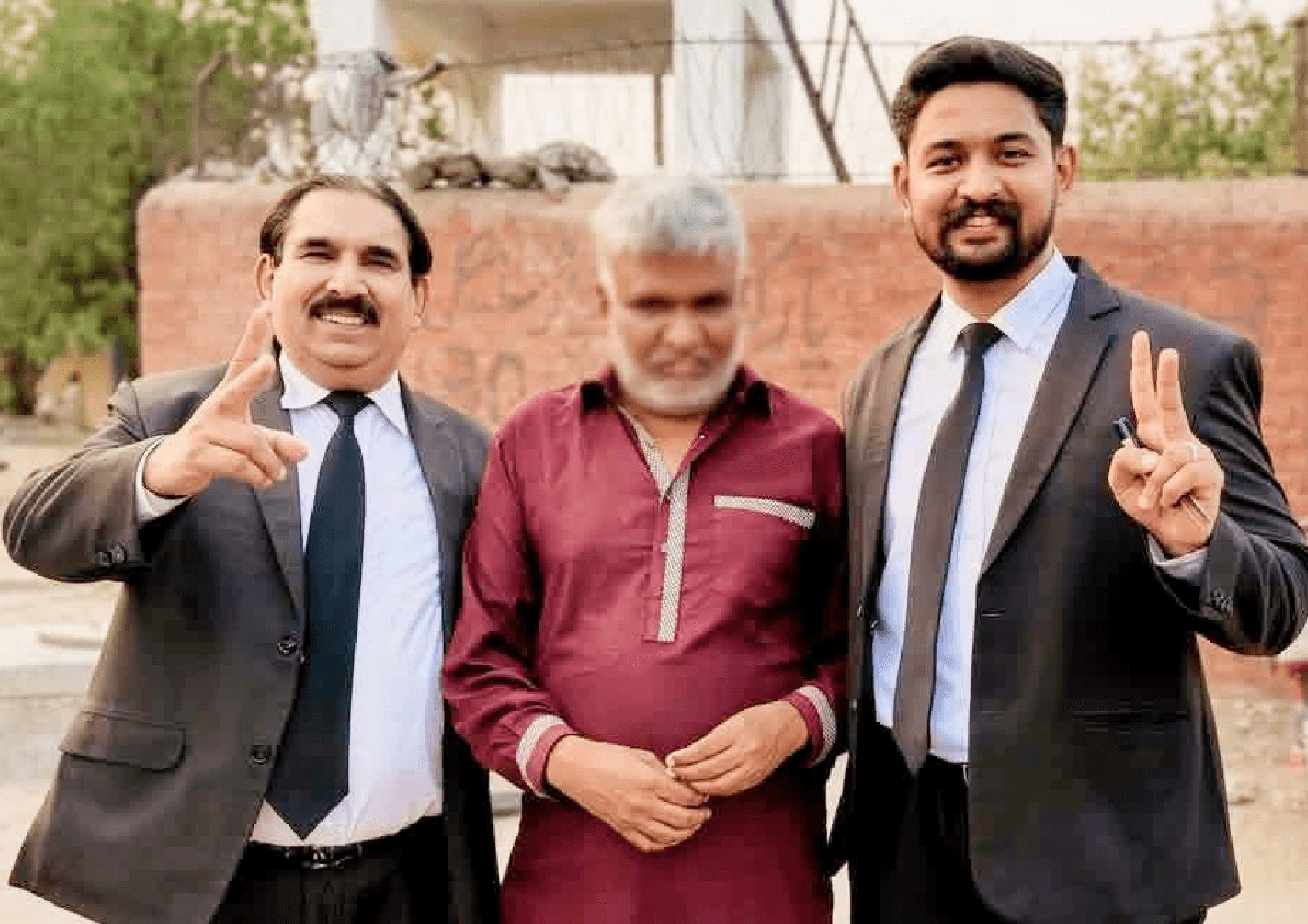
Lahore (AsiaNews) – This week, a Lahore court acquitted 51-year-old blind Catholic Christian Nadeem Masih of blasphemy charges and ordered his immediate release, bringing relief to his family after months of legal proceedings under Pakistan's controversial blasphemy laws.
The Additional Sessions Judge Court in Lahore ruled that the allegations against Masih were not proven and directed the authorities to release him from custody.
Masih had been charged under Section 295-C of the Pakistan Penal Code, one of the country's most sensitive and controversial legal provisions, which pertains to allegations of insulting the Prophet Muhammad and carries severe penalties, including the possibility of a death sentence.
For Masih and his family, the verdict marked the end of a painful chapter that began with his arrest in August 2025. Congenitally blind, Masih has spent his life overcoming significant challenges.
Originally from Okara District, he moved to Lahore in search of work and a better livelihood for his widowed mother and family. Despite his disability, he earned a modest income by operating a weighing scale in Lahore's Model Town Park, where visitors would pay a small fee to check their weight.
According to his 80-year-old mother, Martha Yousaf, her son became the target of repeated harassment by individuals working in the park.
She alleges that Waqas Mazhar, a parking contractor, and several associates routinely mistreated her son, sometimes extorting money from him, throwing water on him, and verbally abusing him.
In her view, the harassment stemmed partly from resentment over the sympathy and financial assistance Masih occasionally received from visitors due to his disability.
“People would sometimes help my son because he was blind and struggling to earn an honest living," she explained. However, "Some workers in the park were jealous and would take money from him or refuse to treat him fairly."
She further claims that several individuals had borrowed money from Masih but refused to repay him despite repeated requests.
Tensions escalated on 21 August 2025. Martha Yousaf alleges that Mazhar and others prevented her son from setting up his weighing scale business in the park.
When Masih protested against the harassment, the men allegedly forced him onto a motorcycle and took him to the Model Town Police Station, where they accused him of committing blasphemy.
Police subsequently registered a case against the Christian man under Section 295-C and placed him under arrest. The accusation shocked Masih's family and supporters, who maintained his innocence from the beginning.
“When I met my son in jail for the first time, he cried bitterly," Martha noted. “He told me that he had been beaten and pressured to confess to something he had never done. As a mother, it was heartbreaking to see him suffer in that way.”
She described the court's decision as an answer to her prayers. "For months, I prayed for justice," she said. "Today, God has heard those prayers. My son is innocent and will finally come home."
Defence lawyer Lazar Allah Rakha argued throughout the trial that the case was fabricated and motivated by personal disputes rather than genuine religious concerns.
According to Rakha, the complainants had sought to force Masih out of his livelihood and eventually resorted to filing false allegations when their efforts failed. He welcomes the court's verdict and emphasised the need for thorough investigations in blasphemy-related cases
"These cases are extremely sensitive and have life-altering consequences," he said. “It is essential that investigations are conducted carefully by experienced officers and that all available evidence is examined before charges are filed.”
He also noted that higher courts in Pakistan have previously stressed the importance of proper investigation procedures in blasphemy cases to prevent misuse of the law and to protect innocent individuals from false accusations.
The case drew support from lawyers, human rights advocates, and Christian community leaders who closely followed the proceedings.
Father Shahzad Arshad, director of the Catholic Commission for Justice and Peace of the Archdiocese of Karachi, welcomed the acquittal and commended the legal team for its efforts.
"This decision has brought relief to a family that has endured tremendous suffering," Father Arshad said. “We appreciate the commitment shown by those who worked diligently to defend an innocent man and uphold justice.”
For Nadeem Masih and his family, the court’s ruling represents more than a legal victory. After months of uncertainty and fear, it offers the prospect of returning to a normal life and rebuilding what was lost during his imprisonment.
As Nadeem prepares to reunite with his family, his supporters hope the case will encourage greater safeguards against false accusations and reinforce the principle that justice must be guided by evidence, fairness, and respect for human dignity.