








Witchcraft in Tajikistan
Despite a ban under Islamic law and doctrine, amulets and exorcism performed by mullahs or shaman are widespread in Tajikistan. According to a well-known legend, 40 inseparable spirits rule the world, believed to be able to ward off all human misfortunes.
Dushanbe (AsiaNews) – In Tajikistan, superstitious rituals and practices, including witchcraft and divination, are banned under existing administrative and penal laws. Islam too prohibits such practices, yet people continue to turn to fortune tellers and sorcerers to solve their problems, as indicated in a recent Asia Plus report.
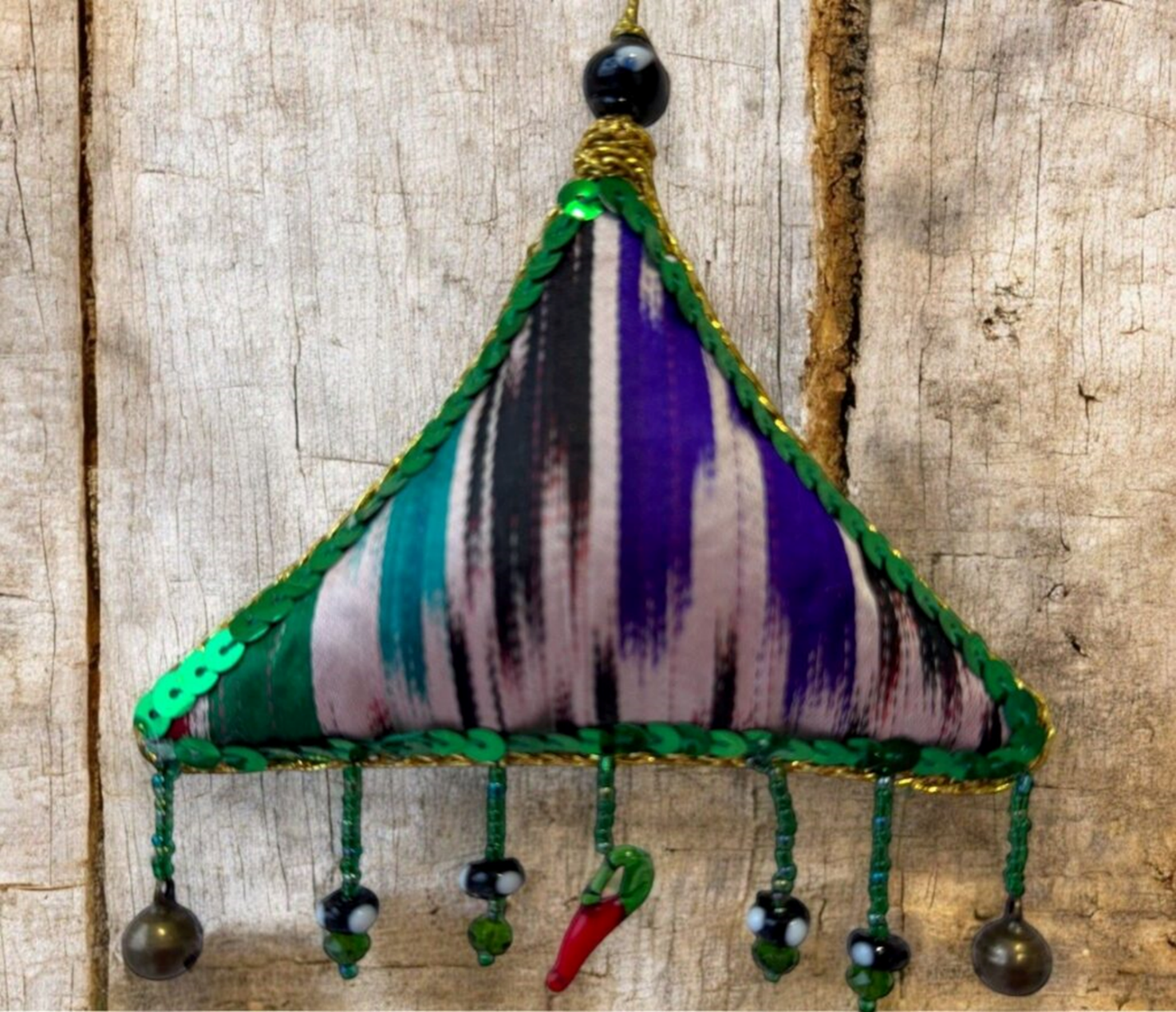
In the Central Asian country, wearing amulets is commonplace. There are no government or Sharia prohibitions on wearing an amulet, which usually is inscribed with a verse from the Qur’an, or contains a supplication written by a mullah on a piece of paper in Arabic characters.
Sewn into a triangular leather or fabric pouch, it is carried inside a person’s clothing, sometimes hung around the neck, to cure various illnesses, “protect from evil spirits and shaitans (demons)”, promote success in business and career, or ward off the evil eye.
Recently, secretly worn anti-COVID amulets have become increasingly popular. So-called bozband[*] are highly sought after because they "open the doors to business success, and close the doors to various misfortunes”, including extortion, arson, and theft.
Exorcism is a very common practice. When a person begins to suffer from a strange illness, begins to visibly waste away, and doctors cannot determine the cause, they are often taken to a mullah or a bakhshi, a shaman.
An important element in rituals is the kamchi, a leather whip or rod used by the Ishan[†] and mullahs to treat people suffering from various phobias. Treatment can last several days, after which the abrasions on the patient's body are washed with enchanted water.
During healing treatment, Bakhshi shamans use rods made from tree branches, 41 rods tied together, and visit a patient's home where they select a room for the ritual. The patient's family, friends, and neighbours are then invited to participate in the ceremony.
A special category of charlatans practises witchcraft, and people turn to them for various purposes, both good and bad.
Curses are often blamed for children’s illnesses or poor business outcomes, while people who feel ignored by someone they are attracted to turn to love spells.
Every sorcerer has their own ways: some blow on knots, others on salt, tea, rice, and other foods, after which, under the influence of witchcraft, the person supposedly becomes "obedient" and will do whatever the spellcaster demands.
Folbin,[‡] seers and fortune tellers constitute a special category within the world of the occult. They use various objects for divination, from a cup of water to a mirror.
Some mullahs use the Qur‘an for divination purposes, and in exchange for a fee, they reveal the cause of a problem and find solutions; for example, young women seek their help to know whom and when they will marry, or find a lost object in the house.
In rural areas, people are often invited to perform khudoi, a form of almsgiving. Guests are offered pilaf, and afterward, they recite a prayer that all the host's plans come true. Some commemorate deceased relatives, others bid farewell to loved ones departing for distant lands, and ask for a prayer to be offered on their behalf.
Celebrations, pir (feasts), in honour of the patron saints of professions are particularly important. Drivers and tractor drivers, mechanics, and technicians regularly organise parties in their homes in honour of the Prophet David, a skilled blacksmith, considered the patron saint of all professions related to metal and technology.
The number 40 has a sacred character. A well-known legend relates the story of 40 inseparable spirits who possessed supernatural powers of foresight and hid their existence from the uninitiated.
According to the most widely held belief, in this ancient story, some 40 powerful saints or Chiltans rule the world and are believed to be able to avert all human misfortunes. In their honour, 40 candles are lit, while sweets are prepared and distributed to neighbours and villagers.
Of Tajik-Persian origin, the myth has spread to other places, including Turkic and Urdu-speaking areas. In another version held by some Uzbek and Tajik groups, 40 maidens (Childukhtaron) walk and dance together during the blooming season.
[*] Tajik, literally bandages under the arm.
[†] Spiritual masters.
[‡] Traditional healers.

.png)
11/09/2021 12:42
12/06/2021 14:56
09/09/2025 14:00










