








Beijing's new passion for science fiction
Once classified by the Communist Party as “spiritual pollution”, this genre now generates billions of yuan in revenue and has become part of the state's cultural promotion strategy, within a clear geopolitical vision. "The Wandering Earth" and "The Three-Body Problem" are the most striking examples of Netflix phenomena. But in the background, tensions have also emerged between artistic forms and the new computing power deployed by propaganda.
Milan (AsiaNews) – In the space of a few decades, Chinese science fiction has undergone a transformation that reflects the broader balance of culture and power in the People's Republic.
Until the late 1980s, the Chinese Communist Party classified it as “spiritual pollution”, like other cultural forms deemed incompatible with ideological orthodoxy, and it was therefore banned from both screens and bookstores.
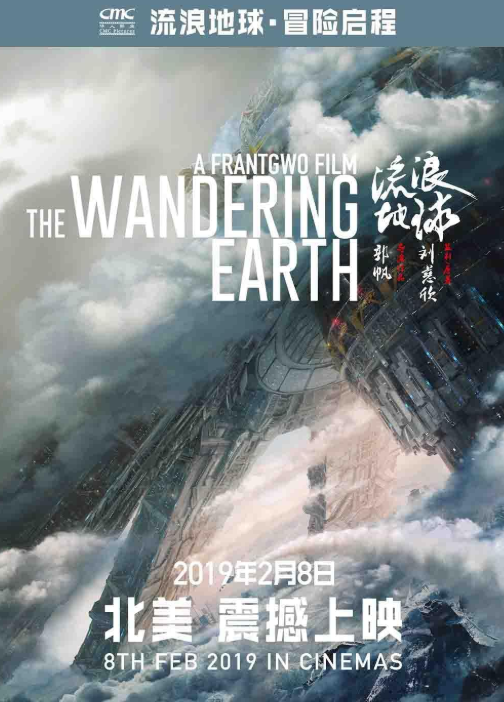
In the following decade, a shift allowed science fiction to develop as a literary genre and, eventually, extend to film, a transition completed three decades later, with the first Chinese science fiction film, The Wandering Earth, by Frant Gwo, released in cinemas in 2019.
Since then, the rush has been dizzying, and by 2025, China's science fiction industry generated revenues totalling 126 billion yuan (about US$ 18 billion), up nearly 16 per cent over the previous year.
A genre rehabilitated for reasons of state
The growth of science fiction in China is not solely the result of market dynamics. The success of The Wandering Earth, which became the fifth most profitable film in the history of Chinese cinema, prompted the authorities to integrate science fiction into the state's cultural promotion strategy.
In 2020, the China Academy of Space Technology (CAST) launched formal cooperation with the National Film Administration (CFA) to guide and support science fiction film production, inviting scientists and engineers to provide technical advice to directors to ensure their scripts are credible as well as spectacular.
The model is clearly borrowed from the relationship between NASA and Hollywood, but adapted to the context of a system in which film production is largely state-controlled.
It is within this framework of growing state intervention in film production that the China Film Group Corporation, the country's leading production company, plays a key role. The state-owned enterprise was created in 1999 from the merger of various entities, some dating back to 1951.
Unlike Hollywood companies, it operates under the direct supervision of the Communist Party, with a mandate that goes beyond commercial profit.
In 2007, the 17th Party Congress formally adopted a strategy to boost China's global appeal through its national culture, and in this context, science fiction takes on increasing importance as a tool for competing with genres previously dominated by Western production.
Technological triumphalism and geopolitical screens
The aforementioned 2019 film National Film Administration and its 2023 sequel, The Wandering Earth II, represent the most accomplished examples of this convergence between the culture industry and state objectives.
Set in an apocalyptic future in which humanity, under the leadership of China, builds thousands of gigantic engines to move the Earth to another star to save it from an expanding Sun, the two films construct a narrative strongly centred on technological supremacy fuelled by explicit references to real space programmes.
The second chapter explicitly mentions the Chinese Space Station Telescope (CSST), an observatory set to be launched with capabilities comparable to those of the American Hubble Space Telescope.
The Ark space station, an orbital structure at the centre of the plot, refers to China's actual achievements in the sector, from the Tiangong modular space station to the China Space Station completed between 2021 and 2022. The film even features a space elevator, a solution that the Chinese Academy of Sciences is actually studying.
The geopolitical intentions are equally explicit. In the films, the United States is systematically downplayed, particularly as it is portrayed as reluctant to engage in international cooperation, while China assumes the role of leader of a coalition of emerging countries.
This narrative structure mirrors the actual configuration of China's space alliances, with Russia and South Africa joining the International Lunar Research Station (ILRS) programme in response to the US Artemis initiative.
The presence of actor Wu Jing – a star of the nationalist saga of the Wolf Warriors films, whose title has come to define Beijing's more assertive diplomacy since 2020 – further strengthens the link between mass entertainment and political message.
The distribution of The Wandering Earth on Netflix, accessible in 190 countries, has transformed a domestic hit into a product intended for a global audience.
The industry's real weight
Beyond film, data on the Chinese science fiction industry outlines a complex ecosystem.
Video games dominate the sector, with nearly 78 billion yuan in revenues, more than 60 per cent of the total, with Chinese titles increasingly present on international markets. Genre film and television generated just over eight billion yuan, a record growth of more than 20 per cent.
Science fiction literature reached some five billion, while science fiction tourism, including theme parks and immersive experiences, approached 28 billion. More recent is the segment of technological devices inspired by science fiction, which debuted with nearly 25 billion in revenues, according to official statistics.
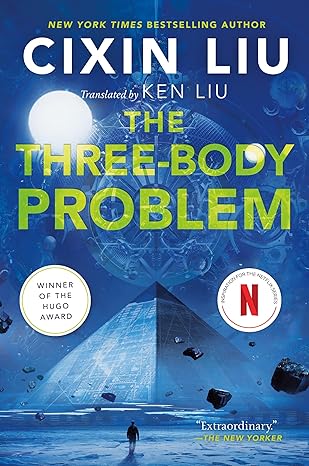
The international success of Chinese science fiction has been largely driven by Liu Cixin's The Three-Body Problem trilogy, which, after selling millions of copies, was adapted into a high-budget television series distributed by Netflix.
Alongside Liu, a new generation of Chinese-American authors such as Ken Liu and Rebecca F. Kuang have helped redefine the relationship between science fiction and Chinese identity in the Anglophone cultural space, integrating elements of Chinese history and culture into narratives aimed at a global audience and increasingly distant from the militant dimension that had characterised the previous generation of émigré writers.
Cracks in the system
Behind the expansion of Chinese science fiction and its growing government support, however, significant tensions have emerged.
Liu Cixin, the genre's most representative figure and a state-backed author, has become the target of criticism from neo-Maoist circles on the Chinese Internet, accusing him of spreading a "reactionary bourgeois" ideology.
The critique, couched in the language of Maoist-era political campaigns, targets the way The Three-Body Problem uses the Cultural Revolution as a narrative starting point, presenting it as an experience capable of shattering all faith in humanity.
In the neo-Maoist reading, Liu Cixin appears as an elitist intellectual in the service of the ruling class, and his works are described as "poisonous weeds" for the popular consciousness.
Although coming from small groups, this criticism clearly highlights the contradictions that accompany the state's attempt to use science fiction as a tool for national projection.
This is indicative of how the state's attempt to incorporate science fiction into its national projection strategy inevitably produces internal tensions, because the genre, by its very nature, tends to interrogate the present and imagine alternative futures, thus remaining difficult to control.
Liu Cixin’s very parable, celebrated by government institutions yet attacked by voices that hark back to revolutionary orthodoxy, highlights the difficulty of reconciling cultural promotion and ideological control.
A lesser-known work by Liu, the short story The Cloud of Poems, offers a reflection that seems to anticipate these tensions. An alien civilisation, attempting to surpass the mastery of the poet Li Bai, uses up the energy of an entire solar system by generating every possible combination of Chinese characters.
In this endless cloud of verses, some poems are certainly superior to those of Li Bai, but the alien civilisation ends up admitting defeat, because, while it is capable of producing everything, it is incapable of identifying what is truly great within the totality thus generated.
Technology can produce every conceivable art form, but the ability to discern remains a faculty that eludes computing power.
This parable, in its own way, also highlights the structural limit of the relationship between the Chinese state and the culture it seeks to rule: the more the capacity to produce and control grows, the more the room for interpretation and dissent expands.
RED LANTERNS IS THE ASIANEWS NEWSLETTER DEDICATED TO CHINA. WOULD YOU LIKE TO RECEIVE IT EVERY THURSDAY? TO SUBSCRIBE, CLICK HERE.

.png)
03/05/2016 17:32
14/10/2024 17:03










