








Cardinal Zenari: My 17 years as nuncio in Syria amid war and a thirst for unity
The cardinal who recently left his post in Damascus reflects with AsiaNews on his long service in the country amid the suffering of children and the faces of friends who have disappeared. A nation ‘destroyed and humiliated’ that must find the basis for rebuilding its future in the ‘ecumenism of suffering’. The few remaining Christians have the task of ‘being the glue’. Advice for the next generation of Vatican diplomats: ‘Live with the people, learn to adapt to reality’.
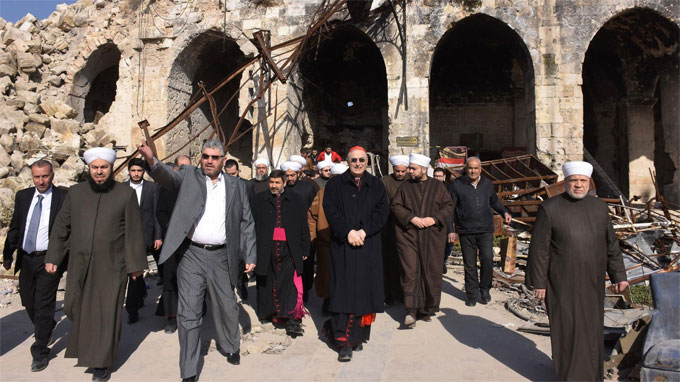
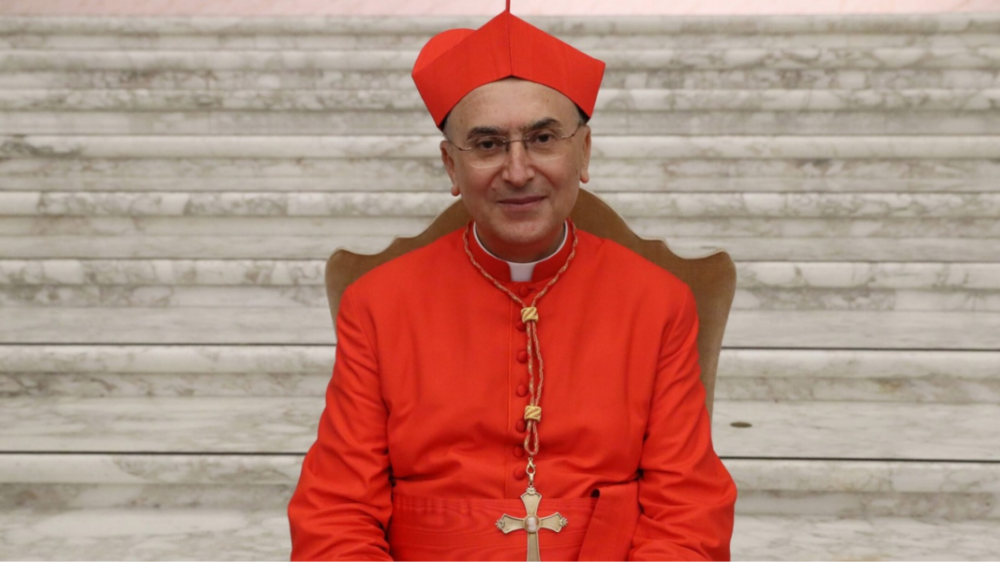
Milan (AsiaNews) - ‘The suffering of children’ to which he ‘dedicated his cardinal's hat’ and ‘the faces of those who have disappeared’ even within the Christian community, ‘such as the two metropolitans of Aleppo and our Italian Jesuit Fr Paolo Dall'Oglio’. This are the memories that Cardinal Mario Zenari takes with him of his 17 years of diplomatic mission in Syria, a mandate extended beyond its terms by Pope Francis and concluded in early February with his resignation, shortly after turning 80. Wars and violence, the cardinal recounts in this long interview with AsiaNews, have left behind ‘a destroyed and humiliated Syria’ , a land that was once ‘an exemplary country for coexistence, a mosaic that is now beginning to crack’. That is why the ‘foundations’ on which ‘to rebuild the future of the nation’ will be ‘an ecumenism of suffering’ and ‘citizenship of blood’, while Christians [80% of whom are expatriates] have the task of ‘being a glue’ and ‘becoming guarantors and promoters of this unity, acting as a bridge’.
The cardinal was among the oldest cardinals present at the Conclave that elected Leo XIV, where he brought ‘the dear and tormented’ Syria evoked by Francis during his pontificate. He was born on 5 January 1946 in the province of Verona, in northern Italy, and entered the Scaligero diocesan seminary where he attended middle and high school. After completing his studies in philosophy and theology, he was ordained a priest on 5 July 1970. He moved to Rome in 1976 for diplomatic training at the Pontifical Ecclesiastical Academy and a degree in canon law at the Gregorian University. In 1980, he entered the diplomatic service of the Holy See, serving in Germany (where he witnessed the fall of the Berlin Wall), at the International Atomic Energy Agency (IAEA) and at the Organisation for Economic Co-operation and Development (OECD). On 12 July 1999, John Paul II appointed him Apostolic Nuncio to Ivory Coast and Niger, and in 2004 to Sri Lanka. and on 30 December 2008, Benedict XVI transferred him to Syria. His successor elevated him to the rank of cardinal in the Consistory of 19 November 2016 and appointed him a member of the Dicastery for Eastern Churches.
Below is the full interview with Cardinal Zenari:
Your Eminence, let's start at the beginning: what do you remember about your appointment as nuncio to Syria?
After 17 years, the emotional baggage is greater than the physical baggage, but I still remember those first moments. When the Secretary of State [Cardinal Tarcisio Bertone] asked me to go to Syria, I immediately said yes. I left the office and immediately asked for paper and an envelope to write that I would gladly accept the proposal of Pope Benedict XVI. It was the eve of the Pauline Year, and I was looking forward to this experience in Damascus with great interest.
And your first impression of the country?
The official announcement came on 30 December 2008 with the publication of the decree, but I arrived in Syria in early 2009 when the celebrations for the 2,000th anniversary of St Paul's birth had already begun. In Damascus, the saint's city, it was immediately a wonderful experience, and there could not have been a better time and place to experience the commemoration.
It was a vibrant reality, even for Christians. Then came the tragedy of war, Assad's flight and the new leadership...
Looking back, the Syria I left last week is no longer the same as the one I saw when I arrived 17 years ago. As nuncio, I experienced three distinct periods: the two years before the war, then the 14 years of bloody conflict, and finally the last one with the new course [after the fall of Bashar al-Assad and the rise of the HTS militias led by Ahmed al-Sharaa]. These are three very intense periods, which have also profoundly changed me; Today, I am no longer the same person, having lived through such an intense experience from a human perspective.
Cardinal Zenari, what has struck you most about all these years?
The suffering of the people, an enormous, enormous, enormous suffering. We are talking about what has been called the most serious humanitarian catastrophe since the end of the Second World War, and the numbers confirm this: half a million victims, including 29,000 children. And then there are 13 million refugees, more than half the population, and seven million internally displaced persons. Even today, it is the country with the most internally displaced persons in the world. Furthermore, there are six million refugees in neighbouring countries and over 100,000 missing persons, among whom are people I have known. I went through this experience that Providence gave me, which was very intense and which now [having completed my assignment as nuncio] I am gradually trying to digest.
War, the “poverty bomb”, the divisions. What remains of this spiral of violence and suffering?
A Syria destroyed and humiliated by these years of war. Destroyed above all in terms of social cohesion. It was a model country for coexistence, a mosaic that is now beginning to crumble. Social cohesion has been undermined, infrastructure destroyed: think of hospitals, schools, factories. Just to give one example: until a year ago, there was only one hour of electricity per day.
What has survived? What have war and poverty failed to destroy?
The great resilience of the Syrian people. Many wonder how people have survived, despite this terrible ordeal and enormous poverty, with over 90% of the population reduced to living below the poverty line.
Everyone, including myself, has been impressed by this resilience, this ability to resist, to endure, to carry on.
Your Eminence, how important and relevant is the role of nuncios today, especially in areas of conflict? What advice would you give to a young Vatican diplomat at the beginning of his career?
The training we receive at the Pontifical Ecclesiastical Academy is important; we learn certain rules and norms that are always valid. Then you also need a great ability to empathise with history, because it is not always possible to have clear, up-to-date, precise guidelines. You have to be ready to compromise, to live in reality, to look at the person you are talking to. When I entered the seminary and was ordained a priest in Verona in 1970, my dream was to be a parish priest, preferably in the countryside. Perhaps this is why I have been called a “field nuncio”, a war nuncio. I never imagined I would find myself in this situation, on this mission, but we must be open to what history and circumstances present us with. Live with the people, I would say to the nuncios: the ability to empathise with the situations in which you find yourself, beyond the precise and detailed rules that can be learned. Be open, adapt to reality, with God's help, of course.
A nuncio who is also a cardinal, with Pope Francis' surprise appointment...
In my first interview [after the appointment], I spoke of the cardinal's scarlet colour as the sign of blood, dedicating it to the many innocent victims, to the Syrian children, I offered it to them. As soon as I arrived in Syria, I immediately realised that I was in the presence of a nation of martyrs. Think of the great St Ignatius of Antioch, then Saints Cosmas and Damian. At the time of the Romans, it was a nation of martyrs and has remained so over time: from the martyrs of Damascus in 1860, some of whom were proclaimed saints two years ago, to the martyrs of 22 June last year, who were killed in the terrible terrorist attack during the celebration of the Eucharist in the Greek Orthodox Church of Mar Elias in Damascus.
Has this ecumenism of blood strengthened the bonds between Christian communities?
Ecumenical relations are very good. Each of the Churches - Eastern, Catholic, Orthodox - has had its own martyrs, some of whom I have even known personally, which is why we can speak of ecumenism of blood [among Christians]. However, there is an ecumenism, a citizenship of blood that unites everyone. Christians themselves are fighting for the concept of citizenship, a citizenship of blood that comes even before the ecumenism of blood.
Is this what unites all Syrians?
Of course, this is the common denominator that unites all Syrians: citizenship of blood. And the new Syria should be founded on this basis. Everyone has suffered, even in recent times, as shown by the terrible images from last March on the Mediterranean coast [the massacre of the Alawites, which did not spare Christians], or the barbaric killings last July in the Suwayda area, with the vast majority of victims belonging to the Druze community, or the recent clashes with the Kurds. If blood and suffering are the common denominator, let us try to live as brothers and sisters, as Syrian citizens, on this blood. And if, today, there are successes at the international level with President [interim Ahmed al-Sharaa] welcomed to the White House by Donald Trump or invited to speak at the UN, internally there remain major problems between the groups.
Cardinal Zenari, what role does the Christian community have in this still critical situation?
Christians have a very important mission, even if the numbers are frightening because we know from credible sources that we have lost 80% of Christians of all denominations, including Catholics, Orthodox and Protestants, who have left the country. However, for those who have remained, there is a mission to be a glue, guarantors and promoters of this internal unity, to act as a bridge. This is a mission that cannot be improvised; it takes years of work. I continue to see a future for Christians in Syria: even if they are only a small group, their role as a bridge will be essential!
Of these 17 years, is there a face, an image, or a particularly significant event that you remember and still carry with you now that your mission as nuncio in Syria has ended?
Two images: the suffering of children and the faces of missing persons, some of whom have been missing for 13 years and whom I knew personally, including Christians such as the two metropolitans of Aleppo [Yohanna Ibrahim, Syriac Orthodox, and Boulos Yaziji, Greek Orthodox] and then the Italian Jesuit Fr Paolo Dall'Oglio, whom I still carry in my heart. There are over 100,000 missing persons, an enormous suffering, and I am still in contact with some families. Here too we have an ecumenism of suffering which, combined with citizenship of blood, lays the foundations for building a new Syria.
Your Eminence, what does your future hold?
I am trying to rest, because I arrived from Syria really tired, also because of my age [he turned 80 on 5 January]. At least for the next few months, I plan to settle in Santa Marta, a residence where Pope Francis also stayed, which today welcomes 70 priests who work in the Vatican and some nuncios. Then I would like to do some pastoral work as an assistant and, why not, as a country parish priest. After all, I still have this dream.

.png)
04/05/2021 09:34
24/11/2017 10:06










