Colombo (AsiaNews) - There is alarm in Sri Lanka over prison overcrowding, an emergency caused mainly by a lack of adequate facilities. Added to this is the fact that many defendants spend a considerable amount of time in pre-trial detention before being formally charged or before their cases are heard in court.
As revealed by the former spokesperson for the Prison Department, Jagath Chandana Weerasinghe, at a seminar, prisons across the island are severely congested: according to the figures, at least 40,000 prisoners are held in facilities with a capacity of only 10,500 places.
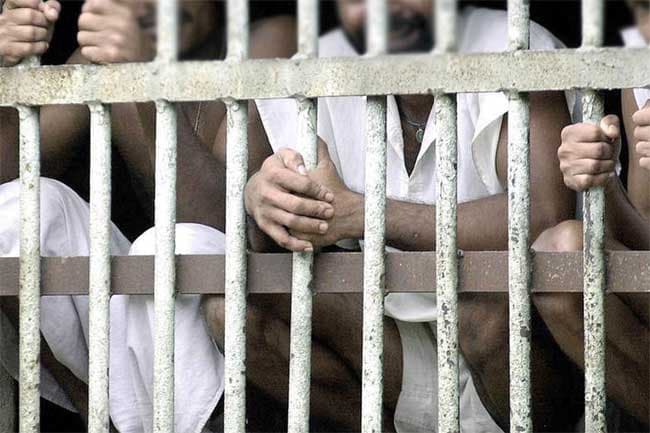
Most of them ended up in prison because they were involved in illegal drug trafficking or drug dealing. In this regard, Sri Lanka holds the sad record of being one of the countries with the highest rates of pre-trial detention in the world. Overcrowding, which in some facilities exceeds 300%, has led to disastrous conditions, including health risks, violence and inadequate living space. In some prisons, inmates are often forced to sleep in shifts.
According to the World Prison Brief, the total number of prisoners that Sri Lankan prisons could accommodate was 13,241 in 2025. However, the prisons housed 32,747 people in inhumane conditions. Two-thirds of these prisoners had not been convicted but were being held awaiting trial or in pre-trial detention. In addition, among those locked up in cells are at least 66 children and 806 death row inmates, including 18 women on death row.
About 2,000 women suspected of involvement in murder, robbery and drug-related crimes are also in pre-trial detention. Most prisoners are uneducated and illiterate, as well as being young. During detention, children are at risk of falling prey to antisocial activities at the instigation of organised gangs.
Lawyers Manohari Senanayaka and Rajitha Tennakoon tell AsiaNews that ‘the Standard Minimum Rules for the Treatment of Prisoners (1955) constitute the universally recognised minimum standards for the management of prison facilities’. This regulatory framework also covers ‘the treatment of prisoners, with enormous value and influence in the development of prison laws, policies and practices globally’.
Furthermore, human rights must be taken into account during detention, as ‘no one can be deprived of their liberty’ without compliance with ‘international human rights standards and obligations’. It is necessary, the lawyers warn, to treat prisoners humanely, as every person accused of a criminal offence has the right to be presumed innocent until proven guilty by law.
The number of prisoners (40,000) is almost four times higher than the intended capacity (10,500), while many prisons are operating at 300% of their capacity. The increase is mainly due to ‘Yukthiya Meheyuma’ (Operation Justice), the anti-drug campaign that has led to mass arrests of drug addicts rather than major traffickers. ‘Most prisoners,’ the two lawyers conclude, ‘are unable to hire lawyers to represent them. As a result, they are held for months, sometimes for many years.’
Lawyers Jagath Atukorla and Sandesha Dissanayaka said that according to a 2020 study by the Sri Lankan Human Rights Commission, “food, sanitation and security are inadequate, and many prisoners sleep in toilets because they do not have enough space to lie down. Drug use and violence are widespread, endangering prisoners”.
‘Prisons,’ the experts continued, ‘are unbearably hot and infested with large numbers of rats, pigeons and bedbugs. As a result, many high-profile individuals are transferred to the prison hospital. This may contribute to allegations of corruption associated’ with hospital admissions for some more protected prisoners. ‘Measures need to be taken,’ they stress, ‘to end the excessive detention of people awaiting trial, in order to relieve the pressure on the system that gives rise to corruption.’
"A significant proportion of prisoners in pre-trial detention (awaiting trial), according to data reported at the beginning of 2026, indicates that out of 37,761, over 27,000 were in pre-trial detention. The slowness of the judicial process also causes congestion in prisons, as many suspects remain in cells for long periods, contributing to long-term congestion," conclude Jagath Atukorla and Sandesha Dissanayaka.