





-in-Europe-65674.html&is_video=&description=Faith+acts+as+a+bulwark+against+extremism+amongst+Syrian+Muslims+%28and+Christians%29+in+Europe)


Faith acts as a bulwark against extremism amongst Syrian Muslims (and Christians) in Europe
This is the finding of a study by an Austrian university, which refutes the equation between faith and terrorism within the diaspora. Faith and culture are closely intertwined amongst refugees. Anti-Islamic sentiments also affect Christians. Polak: radicalisation increases outside communities, amongst those who are alone and encounter religion on social media.
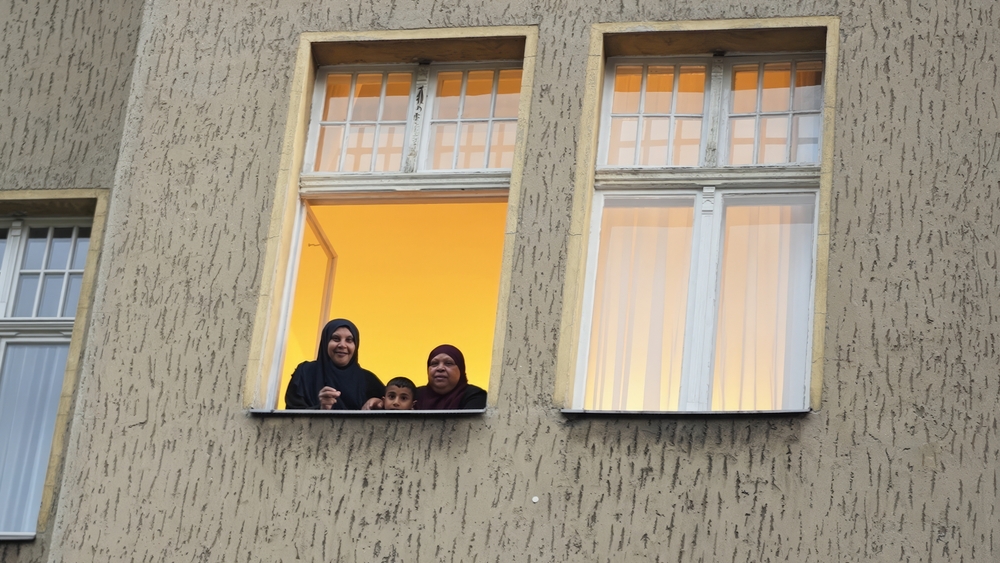
Milan (AsiaNews) – Faith, when nurtured in daily life and safeguarded, becomes an essential bulwark against fundamentalism and the spread of extreme ideologies amongst migrant communities (including) in various host countries.
This is the finding of a recent study by an Austrian university conducted amongst the Syrian diaspora, which confirms that religious sensibility and ties to the church – or the mosque – act as a brake on the spread of jihad, the holy war waged in the name of religion.
The conflict that erupted in 2011 as an uprising against Bashar al-Assad’s regime has forced millions of people, both Christians and Muslims, to flee; an international project led by the University of Vienna has examined the effects of migration on religious observance, and the results – surprising in some respects – contradict the prevailing stereotypes in politics and society.
These points were previously highlighted for AsiaNews by the Egyptian-born Jesuit Islamologist Fr Samir Khalil Samir, who argued that Syrian refugees in Europe were seeking “heart and rights”, partly to overcome “politicised religious conflicts” in their country of origin. He suggested to the governments and leaders of the Old Continent that they should offer not only “bread and shelter”, but also, and above all, “the best of our culture, bearing witness to the Christian ideal of brotherhood”.
The war in Syria – as the Austrian magazine scilog explains in a lengthy article – has “destroyed a country where different religious communities lived side by side”. The main group were Sunni Muslims, alongside Shia, Alawite and Christian minorities.
The displacement has affected members of all faiths, some of whom have ended up in European nations where the practice of religion – including Christianity – is “different” from pre-war Syria in cultural terms. And in many European host countries, the political perception of refugees is marked by ‘anti-Muslim rhetoric’. ‘It is, in particular, populist political parties,’ he continues, ‘that present themselves as defenders of Western Christianity and portray Muslims as a threat to security’.
The issue of how the surrounding environment might influence the faith of Syrian refugees has rarely been addressed in the past in sociological and religious research. Funded by the Austrian Science Fund (FWF), the transnational project “Between Intensification and Relativisation” took this theme as its starting point, developing the research through the work of a team led by Regina Polak and Christoph Novak of the Institute of Practical Theology at the University of Vienna. In their research, they were also able to draw on the collaboration of researchers from the University of Göttingen (Germany) and Lucerne
(Switzerland). The project not only centres on these three countries with their diverse social and political contexts, but also examines and explores the contrasts between Muslim and Christian displaced persons. Furthermore, its aim is not to fill gaps in the data, but rather to seek to understand whether, how and why religiosity evolves as a result of displacement.
“Our qualitative research is designed to identify patterns and mechanisms that show us whether religion is gaining or losing importance,” emphasises Novak. In this context, it is already clear that the theoretical approach needs to be refined: “Believers are multifaceted and often appear inconsistent. The binary notion of people becoming more or less religious does not really work very well,” adds Novak. The methodology involved consultations with experts and interviews with Christian and Muslim displaced persons from Syria. “We asked,” he notes, “about religious life in Syria and then in the host country, and what had changed during the transition.” In some cases, the interviews were also conducted in Arabic by researchers with the necessary language skills.
During the interviews, the researchers realised just how closely intertwined religion and culture are amongst Syrian refugees, both Christian and Muslim. Religious rituals and festivals are deeply rooted in daily life and form an ‘essential’ part of social life. This is also illustrated by the refugees’ photographic documentation: the images show many religious symbols in their homes, highlight the significance of the Bible and the Qur’an, and offer insights into Christmas traditions that are observed more fervently than is typically the case in indigenous communities in Europe.
Even identifying as a Muslim is linked more to a practical dimension and cannot be equated with religious commitment or a profession of faith. “This distinction often became apparent in the interviews,” says Polak. “One participant in Germany intrigued me in this context: he presented a general image of himself as a Muslim that suggested a deep religious faith. When asked specifically what religion meant to him, he said he was a non-believer.” Refugees sometimes experience a religious environment that they perceive as contradictory. “Migrants see a Christian Europe with its many religious festivals and churches, only to discover that they all remain empty. Muslims,” he explains, “want to exercise their freedom of religion, but feel that praying in the park or during working hours is not accepted.”
Researchers are currently analysing the data collected in detail. “Our initial impression is that the national context – that is, whether refugees have ended up in Germany, Austria or Switzerland – has relatively little influence on their religious life,” the researcher continues. And subsequent life paths are individual and subjective: “If, for example, religious practice in Syria was driven more by social life than by personal faith, the loss of that social context will mean that religious practice too” will cease in the countries of the diaspora. The prevailing anti-Islamic climate in Austria has a particularly strong impact on Muslim women. “The debate over the headscarf,” adds Polak, “has consequences: women who wish to wear the headscarf emphasise that it is difficult to practise their religion in public.”
Anti-Muslim sentiment also affects Christian refugees. “Even dark-skinned Christians experience racism. Sometimes,” she continues, “the desire to protect oneself leads to an indirect distancing. Those affected then make sure others know they are not Muslim.” Finally, within the diaspora, faith often becomes a source of strength in times of crisis. Radicalisation, which is often a concern raised in social debates, is rarely the result of a religious life that is deeply practised and lived. “Research on radicalisation,” he emphasises, “shows that people who are integrated into their community’s religious life and free to express their faith in daily life show no tendency towards fundamentalism.” “The danger of radicalisation does, however, exist amongst those who distance themselves from religious communities, who are isolated and may encounter religion,” concludes Polak, “through social media.”

.png)










