








Punjab to provide textbooks for religious minority students
Activists call this a "long-awaited step" that ends a process that began three years ago. The goal was to ensure that non-Muslim children could also study their own religious tradition in school. However, issues related to the practical application of the policy remain. Teacher recruitment, training, and budget allocations are among the "significant challenges”.
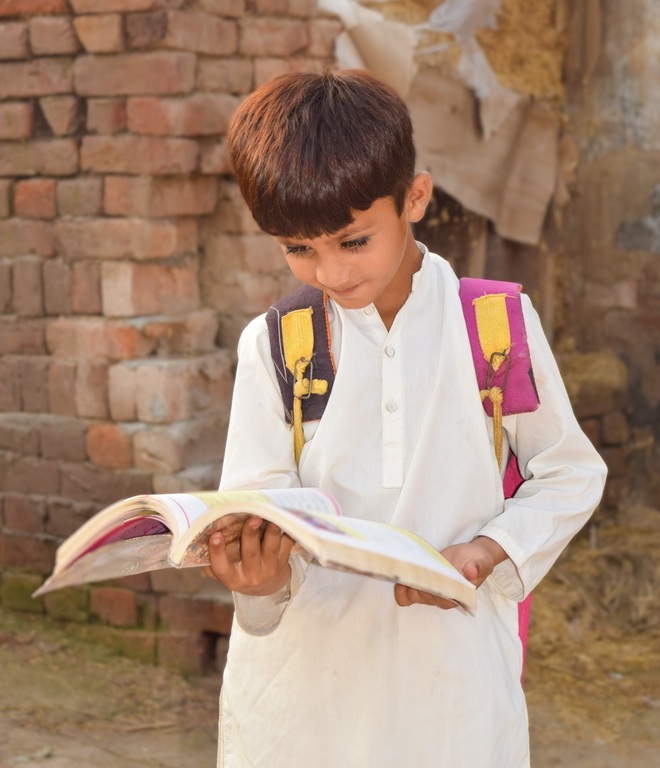
Lahore (AsiaNews) – Pakistani activists welcome this “long-awaited step" in a process that began three years ago to ensure that minority children could "study their own religions”, part of a "positive and necessary reform” aimed at promoting inclusiveness in the education system.
On 6 March 2023, the National Curriculum Council approved the publication of textbooks for students from seven minority religious groups attending public and private schools in the country.
Following the federal directive, the government of Punjab, the province with the largest Christian population in the South Asian nation, chose textbooks for six minority communities and began the process of printing them.
Started by federal authorities in 2021, the initiative had already seen progress in two provinces before Punjab, reigniting the debate over the federal government's role in education, a field under provincial jurisdiction since the 18th Amendment to the Constitution of Pakistan.
Despite provincial autonomy, federal authorities have continued to influence curriculum decisions, including textbook development through institutions such as the National Book Foundation.
Although the policy has been praised, experts and members of civil society groups have raised several concerns about its practical implementation.
A concerned citizen, Danny Waqas, questions how the government intends to ensure effective teaching of minority religions in schools that already face severe resource shortages.
“In many public schools, there is a one-teacher, one-classroom system where a single teacher handles all subjects. How will they manage to teach different religious subjects without trained teachers?” he told AsiaNews.
The activist also highlighted infrastructural difficulties, noting the lack of adequate classrooms in many schools. “If minority students are to study their own religions, will the government establish separate classrooms for each group? Without proper space and facilities, the policy may remain symbolic,” he explained.
Beyond logistical concerns, experts and academics have raised more objections regarding the curriculum. They argue that while the introduction of textbooks on minority religions is a positive step, it fails to address a long-standing issue within the broader curriculum.
They continue to call for the removal of religious content from subjects such as languages, social sciences, and other non-religious textbooks, where such material is often included despite being irrelevant to the subject matter.
They argue that the inclusion of such content not only undermines academic integrity but also puts undue pressure on minority students.
They contend that this practice violates Article 22 (1) of the Pakistani constitution, which clearly states that “No person attending any educational institution shall be required to receive religious instruction, or take part in any religious ceremony, or attend religious worship, if such instruction, ceremony or worship relates to a religion other than his own.”
“Unless these elements are removed from mainstream textbooks, minority students will continue to face indirect coercion and exclusion within classrooms,” one academic expert noted.
Addressing such concerns, Danish George, head of the Christian Religious Studies section at the Punjab Education, Curriculum, Training, and Assessment Authority, explains that the provincial government has collected data on minority students and teachers.
In addition, the authorities are preparing measures to recruit teachers from various religious backgrounds to support the implementation of the curriculum.
Despite official assurances, education experts counter that "significant challenges" remain, including teacher recruitment, training, and budget allocation. They warn that without addressing these systemic and structural gaps, the initiative may struggle to achieve its intended goal.
The introduction of minority religion textbooks marks a notable policy shift in Pakistan's educational landscape, but its success will ultimately depend on how effectively provincial authorities translate policy commitments into meaningful changes in classrooms across the country.

.png)
17/11/2016 18:36










