








Road 45 to increase the number of Israeli settlers in the West Bank
In the shadows cast by war in the Palestinian territories, construction work is progressing on projects designed to “normalise” life in Jewish settlements. Work began at the end of February on a new road connecting settlements north and south of Ramallah with Israel proper. The US$ 215-million investment will benefit places inhabited by just a few tens of thousands of settlers. But the goal is to “bring one million residents to Judea and Samaria.”
Milan (AsiaNews) – While the war with Iran and other Middle Eastern conflicts are attracting international attention, and the humanitarian tragedy caused by the conflict between Israel and Hamas in the Gaza Strip has been relegated to the margins of mainstream media coverage, transformations in the West Bank continue, with the annexation of the Occupied Territories proceeding unabated.
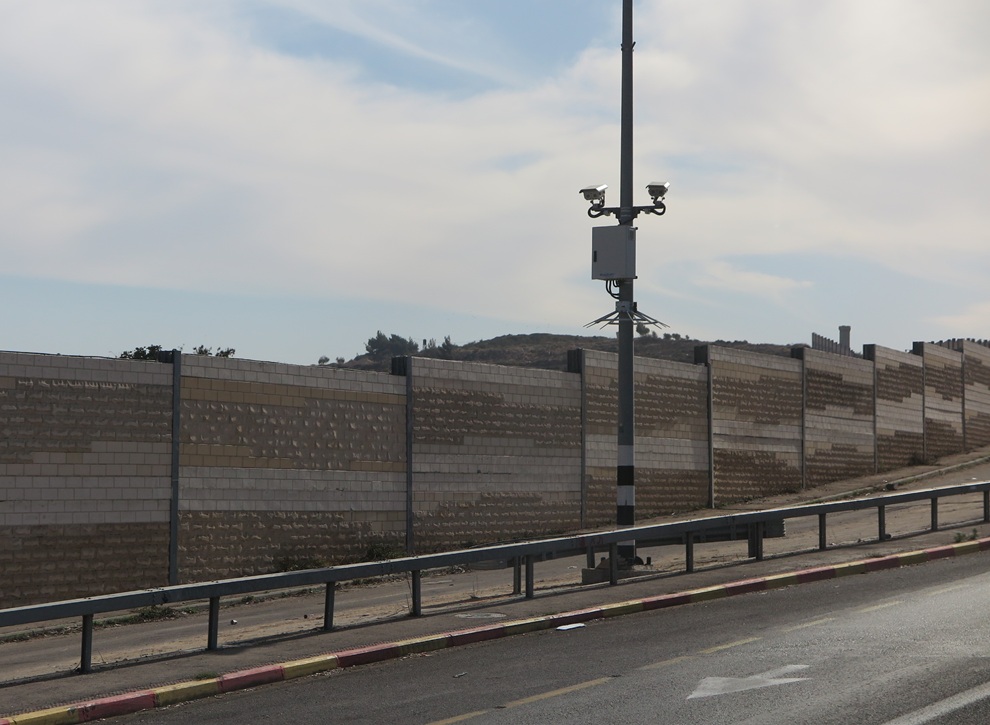
At the end of February, the Israeli government celebrated the groundbreaking ceremony for the construction of Road 45, also known as Quarries Road, a major highway that will directly connect the Israeli settlement bloc east and north of Ramallah with the road network leading into Israel.
The new infrastructure (promoted by Finance Minister Bezalel Smotrich, a right-wing nationalist leader, and Ministry of Transport, National Infrastructure and Road Safety Miri Regev) is not a simple road project: It is part of a broader strategy to increasingly integrate Jewish settlements in the occupied West Bank into the life of the country by bypassing Palestinian population centres and reducing the need for settlers to pass through Israeli military checkpoints.
According to promoters, the road will allow those living in communities such as Kokhav Ya'akov, Beit El, Ofra, Psagot, and Ma'aleh Levona to reach Israel in just a few minutes, without going through the usual traffic hubs near Jerusalem or checkpoints like Hizma.
For various peace organisations and critics of Israeli government policy, this project is not simply an infrastructure improvement; instead, it is a concrete step toward the de facto annexation of the West Bank, a normalisation of the presence of Israeli settlers on the ground that undermines the possibility of a negotiated political solution.
The Israeli Peace Now movement, which for decades has monitored settlement expansion and the construction of bypass roads intended to isolate or bypass Palestinian communities, has slammed the project as a prime example of this policy.
“While roads inside Israel are collapsing and unable to cope with the traffic load, the government is pouring enormous budgets into a small minority of settlers in grandiose projects that Israel will ultimately be forced to evacuate,” the group said in a statement.
For the latter, bypassing Palestinian communities with dedicated roads neither solves nor alleviates political problems, but rather perpetuates and consolidates the reality of occupation and geographical fragmentation.
Peace Now’s reaction follows more criticism from peace groups and international observers, who had already noted that road infrastructure built without interconnections with Palestinian communities serves only to consolidate settlement policy and change West Bank geography (and demographics).
It should be noted that Israeli settlements in the West Bank are considered illegal under international humanitarian law, specifically Article 49 of the Fourth Geneva Convention, which prohibits the transfer of civilian populations by the occupying power into occupied territory.
This view has been confirmed by the International Court of Justice and various United Nations resolutions.
The Road 45 project is by no means isolated. It is linked to other government projects, namely the expansion and modernisation of strategic roads such as the Qalandiya underpass, Road 60 between Sha'ar Binyamin and the British Police Junction (a major intersection located along the road between Jerusalem and Ma'ale Adumim), and the widening of Road 437 between Hizma and Sha'ar Binyamin.
These road projects, which together cost NIS 680 million (approximately US$ 215 million), are designed to serve only a few tens of thousands of settlers. For their part, Israeli authorities and projects supporters defend them as necessary for the mobility and safety of residents and as a measure to promote economic development linked to the daily work that settlers largely carry out in Israel proper.
At the inauguration ceremony, Minister Regev stated that the road is part of the effort to "bring one million residents to Judea and Samaria.” Roads are, in fact, key to settlement development: the faster and more convenient they are, the more attractive settlements become.
Proof of this is the opening of the eastern Bethlehem bypass road (the so-called Lieberman Road), which resulted in the doubling in less than ten years of the number of settlers in the various settlements located along the road.
In short, while war is sowing death and destruction elsewhere in the Middle East (Lebanon first and foremost) and the Iran-Israel-US conflict has become regional, affecting the Gulf countries and even Saudi Arabia, profound structural changes are taking place in the West Bank without much fanfare amid the silence of the international media.
These transformations are drastically, perhaps irreversibly, altering the prospects for peace in the region.

.png)
11/01/2018 19:53
13/05/2026 22:18










