








Spices and pistachios: the unbroken thread between Tel Aviv and Tehran
Despite mutual hostility and sanctions that have led to today's devastating war, there is a bridge that Israelis of Persian origin have never wanted to break with today's Iran: that of the most characteristic ingredients of their cuisine. These have always continued to arrive through the most “fantastic” triangulations at Tel Aviv's Levinsky Market.
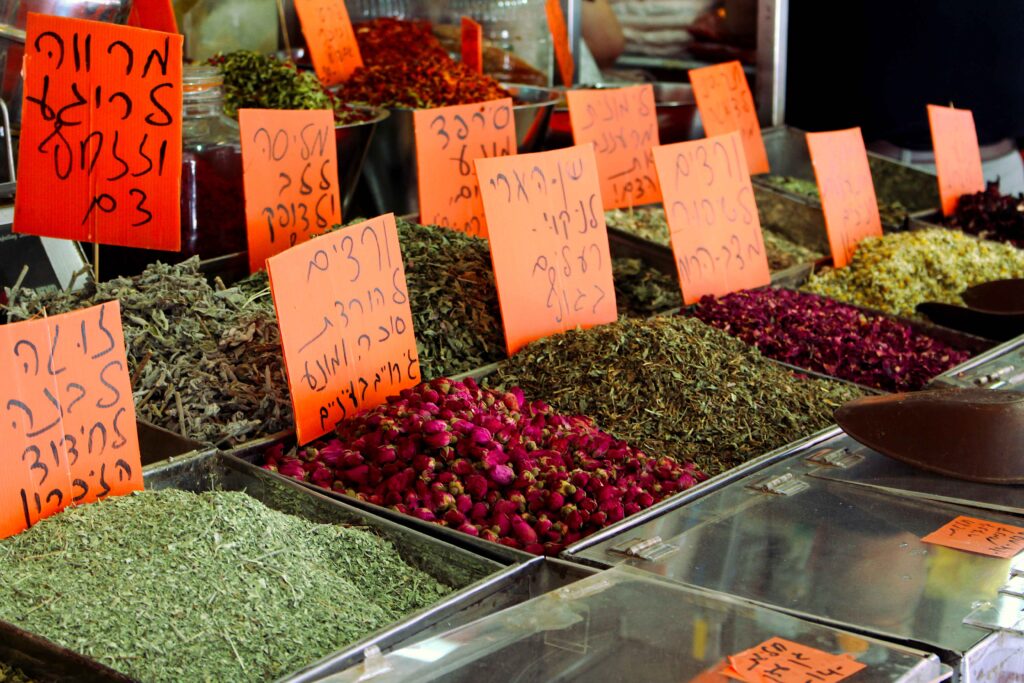
Tel Aviv (AsiaNews) - In the alleys of Levinsky Market, in the trendy Florentin neighbourhood in southern Tel Aviv, spices tell a story that crosses borders, overcomes revolutions and circumvents sanctions. And now even the war so long sought by Benjamin Netanyahu, which is reaping death in Tehran, Israel and throughout the Gulf region. Because spices tell a story that starts in Tehran, passes through the Caucasus, transits through Dubai, and still ends up on Israeli tables thanks to the stubbornness of chefs and traders of Jewish origin who have never stopped chasing the scents of their childhood.
Bijan Barchorderi is a Jew who fled Iran before the 1979 Islamic Revolution. He keeps the memory of his family's origins alive in his Persian restaurant, Gourmet Sabzi. And to prepare traditional dishes such as adas polo (rice with lentils) or khoresht sabzi (meat stew with vegetables and legumes), he needs ingredients that cannot be imitated or substituted: dried black lemons, Iranian saffron, zereshk (barberry, a small sour red fruit). The Persian cuisine at Gourmet Sabzi surprises with its contrasts of flavour and colour, and it is one of the most popular restaurants in Tel Aviv. Patrons cannot help but try the Khoresht-e Fesenjan, chicken stew with walnuts and pomegranate. Or the Tahchin, baked rice cake with a crispy, golden layer. Another standout dish is Bastani Sonnati, ice cream made with saffron, rose water and pistachios. Each dish is a small journey through the cultures and traditions that bind the Middle East.
Yet, since 1979, there has been a total ban on direct trade between Israel and Iran. So, as with many “sensitive” goods, spices travel under other flags: they leave Iran, transit through Georgia or the Emirates, and arrive in Israel from formally different production areas. This is not smuggling, but a “creative”, sometimes unscrupulous, use of regulatory loopholes.
The spice market has always followed the routes of geopolitics. Once upon a time, it was the caravans of the Silk Road; today, it is containers and logistics hubs. The closure of the Turkish channel, following the cooling of relations between Ankara and Jerusalem, has caused prices to rise by as much as 30-40 per cent. Yet demand remains strong. In Levinsky's shops, alongside bourekas (tasty filled pastries) and Greek olives, jute bags full of spices, herbs and dried fruit speak Farsi.
Among the most sought-after products are Iranian pistachios, considered among the best in the world for their aroma and texture. Despite sanctions, pistachios from the province of Kerman continue to be a strategic item in Iranian agricultural exports. Their quality is linked to the dry climate and wide temperature variations of the Persian plateau, which concentrate sugars and essential oils. In the Middle East, pistachios are not just a snack: they are used in festive desserts, savoury fillings and spiced rice dishes. They are a gastronomic bridge between Iran, Iraq, Syria and Israel.
Spices, after all, have always been a “political” commodity. Iranian saffron, which accounts for a large part of world production, is a barometer of international tensions: a banking restriction or trade blockade is enough to cause its price to fluctuate on global markets. But at the same time, it is a common language. When an Israeli customer tastes saffron-scented rice or a soup with Persian black lemon, they are making a gesture that goes far beyond the rhetoric of their respective governments.
During the Shah's reign, Israel imported Iranian oil and exported agricultural technology. Today, indirect trade remains, minimal in numbers but not negligible in symbolic value. The spice trade shows that beneath the surface of the conflict, a web of cultural relations survives. It is a minute form of globalisation, often removed from public discourse, made up of sacks of barberries and khakshir seeds (used to make the refreshing traditional Persian drink), which may not be visible but exists and persists.
So, while today's devastating war was being planned, spices continued to travel. Silently, circumventing bans, changing labels, they cross deserts and always find new landing places. In Bijan Barchorderi's restaurant in cosmopolitan Tel Aviv, as in the shops scattered throughout the souks of the Middle East, the scent of roasted pistachios and the culinary magic that saffron makes possible tell us that history is not only made up of missiles, revolutions and sanctions, but also of an agri-food culture and ancient exchanges that no conflict can truly stop.

.png)
12/02/2016 15:14










