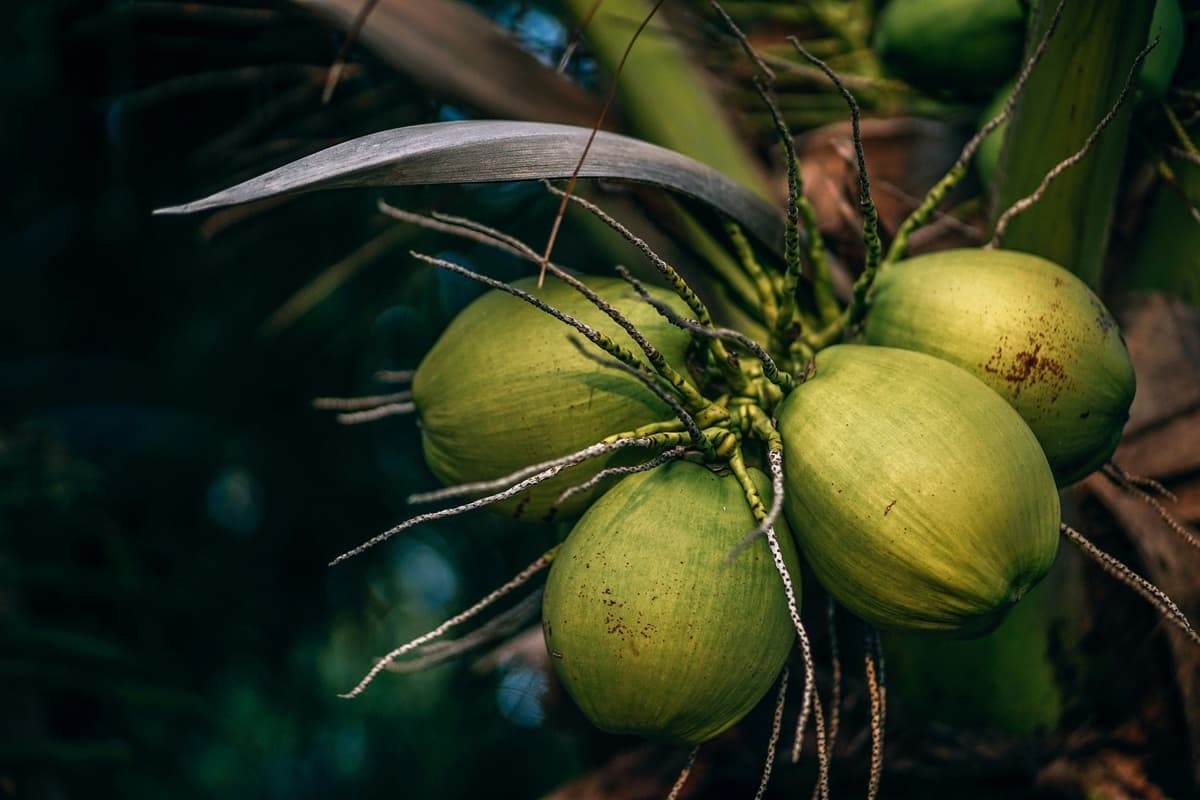
Bangkok (AsiaNews) – Thai farmers blame China for the drop in coconut prices, which have fallen to as low as 2 baht per fruit (about six US cents). With Chinese investors now dominating the supply chain, small farmers’ earnings have been drastically reduced, forcing many to envisage the possibility of shutting down their business if the Thai government does not take urgent action.
Representatives of growers on the Sathing Phra Peninsula in the southern province of Songkhla, have threatened to take their protest to Parliament, explaining that the wholesale price, which before the pandemic was 20 baht per coconut, has plummeted more recently from 10 to 2 baht, while lower-quality fruit is paid as little as 1 baht.
For many, revenues can no longer cover production costs, prompting some farmers to leave the fruit on the trees or consider cutting them down.
According to a senator who heard producers' complaint, the crisis is not simply due to oversupply, but to distorted market mechanisms: a few large companies linked to Chinese investors dominate the supply chain, controlling purchasing and exports to China, with the power to dictate their own prices, while Thai farmers are unable to sell their crops to other buyers.
The problem particularly affects the supply chain of aromatic nam hom coconuts, which are highly sought after in the Chinese market for beverages.
In recent years, the entire trade chain, from harvesting to export, has been progressively taken over by companies registered in the names of Thai citizens but linked to Chinese investors, sometimes operating fraudulently.
According to some estimates, just six or seven large companies now control a large portion of the sector. According to police, these companies purchase the coconuts at very low prices, between 2 and 5 baht, and then export them to China for 35-50 baht each.
Earlier this month, law enforcement raided several warehouses and processing plants in Ratchaburi province, the heart of the coconut trade, questioning more than a dozen people, including several Chinese nationals, as part of an investigation into a network of front companies.
In recent years, the growing presence of Chinese capital has also reduced the role of traditional local intermediaries, known as lhong. These wholesalers collect the produce directly from the farms and transport it to warehouses or sorting centres, where prices are set based on the quality of the harvest and market demand.
According to some industry players, over 80 per cent of the coconut wholesale trade is now controlled by Chinese capital, a situation that further reduces the bargaining room for small farmers.
In recent years, Thai farmers have reconverted their production following the strong demand for sweet coconut water from China.
In some areas of Thailand, palm sugar plantations and shrimp farms have been abandoned in favour of the more profitable and less labour-intensive production of nam hom coconuts.
This has increased supply: Thailand now produces around two million coconuts a day, but foreign demand has not grown at the same rate, putting downward pressure on prices.
According to the Think Forward Center, a think tank affiliated with the People's Party, Thailand's main progressive party, the country produces approximately 550 million coconuts for export annually, over 80 per cent of which comes from the central regions.
In 2025, supply increased by over 55 per cent, while export volumes increased by approximately 9.7 per cent. This brought the total value of sales down to 6.5 billion baht (US$ 200 million).
The fruit sector accounts for over a quarter of Thailand's agricultural exports and employs tens of millions of workers, many informally. Despite the growing challenges posed by climate change, such as severe floods and droughts, the coconut market is worth six billion dollars.
Today, however, the sector is further exposed to market fluctuations due to lower supplies of fertilisers, which, like oil, mostly pass through the Strait of Hormuz, blocked by the US and Israel's war against Iran.
The Thai government has listed coconuts among the agricultural products under monitoring and introduced several support measures for farmers, such as purchasing a portion of coconuts at 5 baht each and launching investigations into purchasing centres suspected of operating through front men. Even with these measures, however, prices averaged 3.20 baht per coconut in February, while in December the price hovered around 5.75 baht.
According to the Think Forward Center, restoring prices would require absorbing approximately 20 million excess coconuts and supporting small and medium-sized businesses that use coconut products, with the goal of restoring the producer price to 7.5 baht per coconut by the third quarter of 2026.
Photo: Nipanan Lifestyle on Unsplash