








The Gulf War: What if migrant labor were to come to a standstill?
While the world’s attention is focused on the passage of ships through the Strait of Hormuz, there is another vital “economic resource” that the war is seriously jeopardizing: the labor of nearly 40 million foreign workers, who make up the majority of the population in many local cities. A prolonged crisis, with a massive wave of returns, would also have serious consequences for the countries of origin in South Asia, Southeast Asia, and other Arab nations.
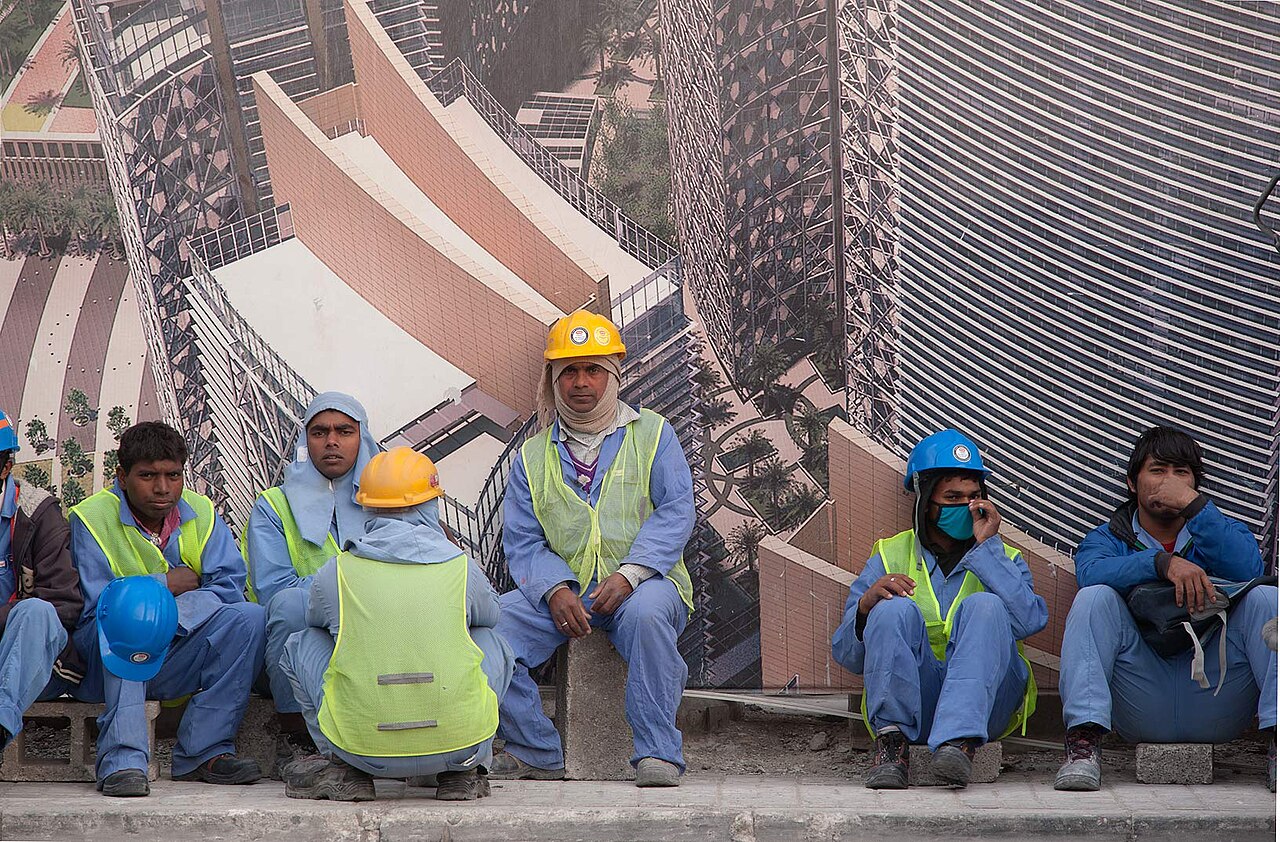
Milan (AsiaNews) - In recent days, the world’s attention has been focused on the economic repercussions of the conflict in the Middle East, with concerns over the blockade of oil and other goods transiting through the Strait of Hormuz. But there is also another “global resource” that the conflict is seriously jeopardizing, even though it is virtually absent from newspaper headlines: it is the labor of millions of people that has made possible the transformation of the Gulf into a major global hub.
In recent decades, the economic growth of the member countries of the Gulf Cooperation Council (Saudi Arabia, the United Arab Emirates, Qatar, Kuwait, Oman, and Bahrain) has been driven by a massive influx of foreign labor. Today, this region is home to one of the largest concentrations of migrant workers in the world: according to various estimates, between 35 and 40 million foreign nationals live and work in the area, largely from South Asia, Southeast Asia, and numerous Arab countries.
In many Gulf states, foreign workers actually make up the majority of the resident population. In the United Arab Emirates, for example, approximately 88–90% of residents are foreigners, while in Qatar the percentage exceeds 80%. In Kuwait and Bahrain as well, migrant workers make up more than half the population. This economic model, which developed starting in the 1960s with the oil boom, has made the Gulf countries heavily dependent on migrant labor.
In this context, the worrying escalation linked to the war between Israel/the U.S. and Iran and the risk of direct involvement by the Gulf monarchies is raising questions about a scenario previously considered remote: what would happen if, as the conflict drags on and widens, millions of foreign workers were suddenly forced to leave the region and return to their countries of origin?
From a logistical standpoint, a large-scale evacuation would be extremely complex. Relocating tens of millions of people would require an unprecedented mobilization of commercial flights, ships, and reception facilities in the countries of origin. The first to leave would be highly skilled workers, specialized technicians, and expatriate families, followed over time by a portion of the less-skilled workforce employed in the most vulnerable sectors.
The economic consequences for the Gulf States would, in this case, be profound. Entire sectors of the economy (major infrastructure, construction, urban services, logistics, tourism, and domestic care) depend almost entirely on foreign workers. In Saudi Arabia, for example, major economic transformation programs such as Vision 2030 call for the construction of new cities, tourism infrastructure, and technology hubs. In this scenario, foreign labor is of vital importance.
Similarly, in the United Arab Emirates and Qatar, numerous real estate and infrastructure projects continue to rely heavily on foreign workers. A sudden reduction in this workforce could slow down or halt numerous strategic construction sites, with immediate effects on economic growth and international investment.
But the negative impact would not be limited to the Gulf region. The workers’ countries of origin would also suffer significant repercussions. Countries such as India, Bangladesh, Pakistan, the Philippines, and Egypt rely heavily on remittances sent by their citizens employed in the Gulf. In some cases, these remittances represent one of the main sources of hard currency and contribute significantly to the economic stability of their respective countries.
The case of Egypt is particularly emblematic. Millions of Egyptian citizens work in Gulf economies, and remittances from abroad constitute a fundamental component of the national economy. A sudden, large-scale return could create a devastating imbalance in the domestic labor market, exacerbate unemployment, and reduce foreign currency revenues. It is true, however, that the return of migrants could also produce some positive effects in the long term. Professional skills acquired abroad and increased spending power could foster the emergence of new economic activities in the countries of origin. It remains to be seen over what timeframe and through what dynamics such a process might unfold, especially in fragile economic contexts.
The history of recent decades shows that migration flows in the Gulf are extremely sensitive to regional crises. During the 1990–1991 Gulf War, millions of workers left Kuwait and Iraq within a few months. However, in the years that followed, the region’s economies quickly resumed attracting foreign labor, confirming how deeply the Gulf’s productive system is intertwined with international labor mobility.
What must be emphasized is that the conflict with Iran is not merely a regional military clash but has a strong economic and strategic dimension. By striking or threatening the Gulf monarchies, Tehran aims to put Western allies (Europe in particular) under intense pressure, targeting the most sensitive point of the global economy: energy.
As we know, attacks on ports, refineries, or oil tankers are causing sharp fluctuations in energy prices and are effectively destabilizing international markets. For Tehran, this is no small objective. The central focus of this strategy is the Strait of Hormuz, one of the world’s most important maritime chokepoints, through which approximately one-fifth of the world’s oil passes. Hence the recent discussions about possible naval operations to ensure the security of trade routes and keep this strategic corridor open.
Unable to compete militarily with the West on a conventional level, Tehran is trying to make the conflict too costly for all parties involved. But instability in the Gulf—a persistent crisis linked to severe stagnation in domestic economies, with the resulting “flight” of labor due to the conflict—are factors that would affect more than just oil prices or the strategic balance of power in the Middle East. They would have significant direct repercussions, with consequences extending far beyond the Middle East, disrupting economic and social balances on a global scale.
Photo: Wikipedia / Alex Sergeev

.png)
11/08/2017 20:05











